Who is Lorena Torres? The Spanish guru of the Valkyries: the 1 billion team revolutionizing the WNBA
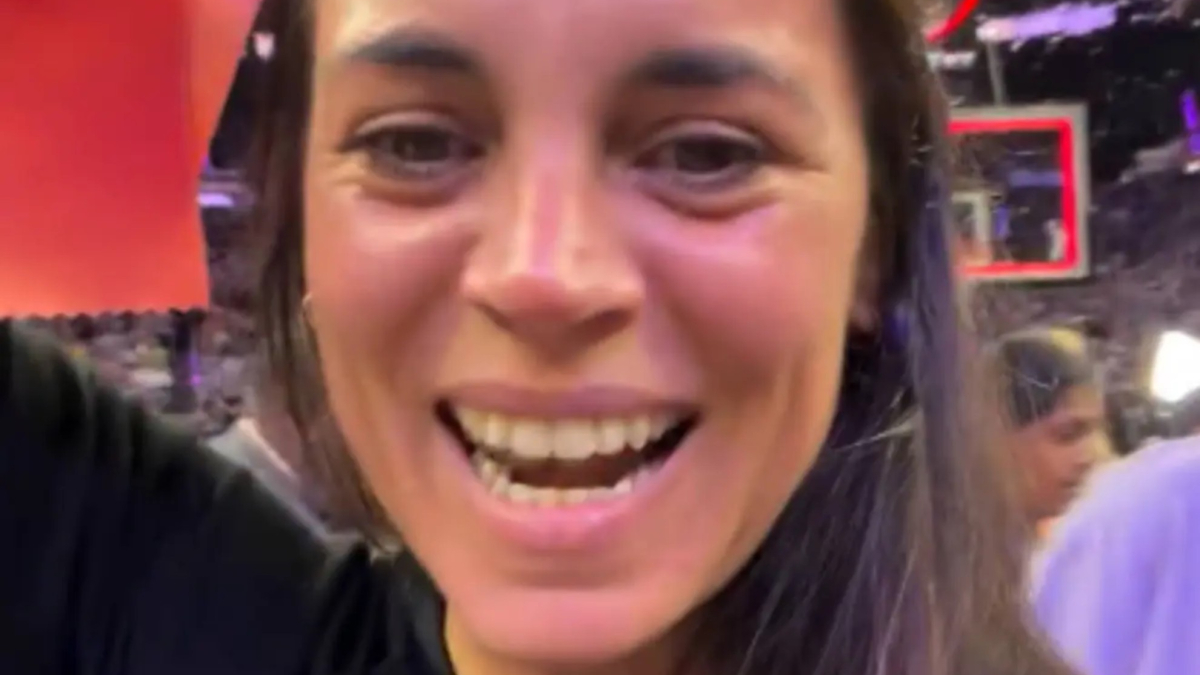
Ibiza-born Lorena Torres has revolutionized women's basketball and the WNBA as director of performance and the medical department for the WNBA champion Valkyries
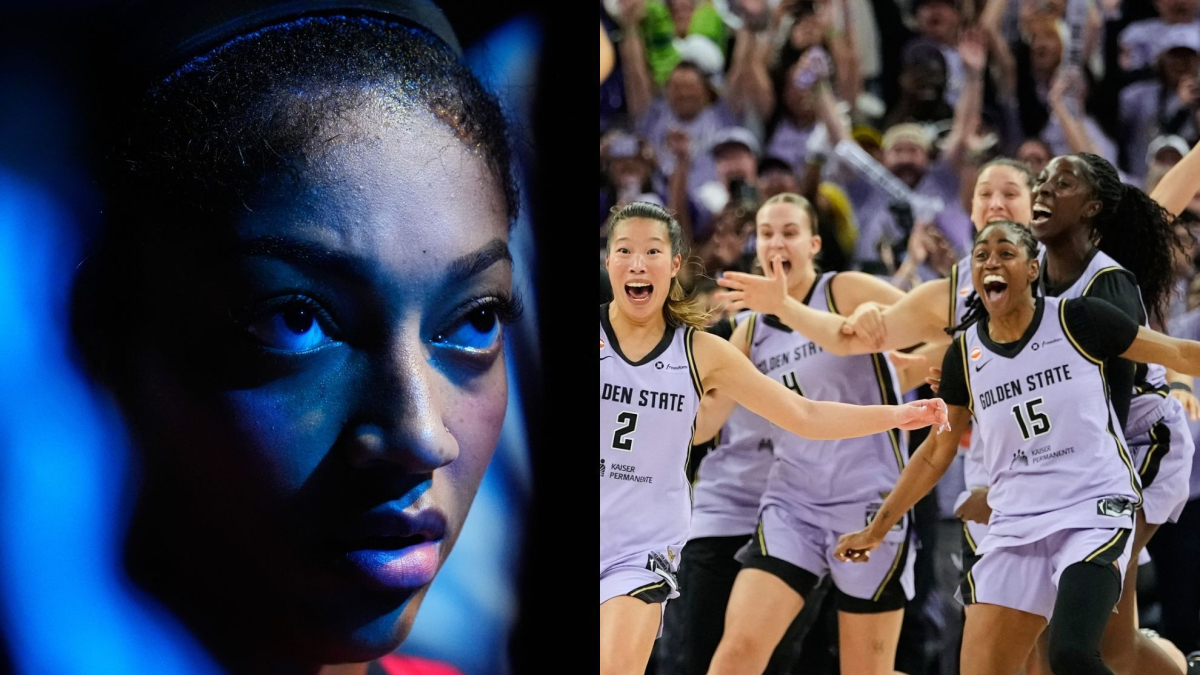
"This is what happens when you invest in women's sports" . Those were the words spoken by shooting guard Tiffany Hayes in front of the 18,064 people who packed the Balhalla arena after the Golden State Valkyries lifted the WNBA champhionship trophy last Saturday.
They take care of every detail so that the only thing you have to worry about is playing basketball
A historic milestone in American sports, since the franchise was created just two seasons ago by signing players other teams had deemed expendable and now everything these Valkyries touch turns to gold.
Golden State Valkyries: the first $1 billion WNBA franchise
A few months ago, they became the first WNBA franchise to be valued at $1 billion , according to U.S. media. In addition, they have sold out every home game they have played during their two years of existence, filling the Chase Center, renamed Ballhala when they play .
Specifically, the seventh game of the finals against the Atlanta Dream has been the most-watched in WNBA playoff history, drawing more than 3.3 million television viewers. Quite a record in the league's 30-year history.
The Valkyries have Spanish native Lorena Torres as director of performance and the medical department
"They take care of every detail so that the only thing you have to worry about is playing basketball," said the "Most Valuable Player" (MVP) of the finals, Gabby Williams , about the way the franchise works.
The French-American forward delivered an unforgettable performance in the decisive game, scoring 28 points in the second half against the Dream. At the most important moment of the season, the best version of Gabby emerged, and one of the people responsible for that was Spanish Lorena Torres, the director of performance and head of the Valkyries' medical department.
Everyone believed in the strategy. I'm happy to have been able to help Gabby Williams, who is the star, and other members of the team perform at their highest level when they needed to do so
"At the end-of-season interviews, analyzing individually how things had gone, Gabby thanked me because she told me: "the minute management worked out super well for me, I felt good when I needed to feel good,"" the woman from Ibiza explained to EFE.
As an expansion team, you don't have access to superstars because the system is what it is. Teams try to have the "Big 3," and we had to think of a different strategy
Torres is ultimately responsible for making sports-related decisions such as, for example, the duration and intensity of training sessions or the players' recovery processes.
We designed a roster in which we had depth on the bench, and that has allowed us throughout the season to manage the players' minutes on the court
"Everyone believed in the strategy. I am happy to have been able to help this player, who is the star, and others on the team perform at their highest level when they needed to do so," she said.
Lorena Torres: "It's hard for people to understand what we have achieved"
The arrival of these Valkyries, with a collective, team-oriented style of play and without major "superstars" on their roster, has caused a real earthquake in American women's basketball, which usually tends toward a more individualistic game centered on star players.
Natalie Nakase's team, with this collective success, has redefined the league's standard and could be the beginning of a new era.
The sixth and seventh players are key. I told that to the General Manager. I think it is a more European style, different and, this year, it has worked
"It’s complex for people to understand what we have achieved. As an expansion team, you don’t have access to superstars because the system is what it is. Teams try to have the 'Big 3' and we had to think of another strategy. We designed a roster in which we had bench depth and that has allowed us throughout the season to manage the players’ minutes, because we knew that when the bench started playing, they were going to hold the score for us," reflected the Spaniard.
Maybe next season we'll have three superstars and I'll have to manage that context
This has been one of the keys to the success on the court of the San Francisco franchise. Frenchwoman J anelle Salaün has been selected as the "Best Sixth Player" of the season , contributing 12.7 points off the bench.
And this recognition is no coincidence because, as Torres herself acknowledges, following her time with the Spanish national team or NBA franchises such as the Spurs or the Sixers throughout her career.
"The sixth and seventh men are key. I told the General Manager that. I think it's a more European style, different and, this year, it has worked. Maybe next season we will have three superstars and I will have to manage that context," she concluded.
Lorena Torres's R&D in the Valkyries' success in the WNBA
In an interview with EFE, Lorena Torres reviews her career and explains how she turned the challenge of building a franchise from scratch into a historic success.
Just two seasons into the franchise's existence and they have already won the championship. Are they aware of the magnitude of what they have achieved?
It has been very exciting. Yesterday in meetings we were all saying: is this real? Have we done it? We are a bit in "shock." We have gone game by game and we have won; although it was the objective, it still feels like wow!. We have filled the Warriors' arena (NBA) in every game with our own fans. The Warriors' fans and ours are not the same, but sport is entertainment and if you provide it, there is room for everyone. It feels like being in the right place at the right time.
How has this success been experienced from the inside?
With great emotion, great joy. People are not aware of how hard it has been, of how little time we had to win a ring. The game started how we wanted because if Atlanta started hitting threes, then it is very difficult to stop them. In the last 45 seconds of the game I was looking at the floor, I didn't want to see what was happening, but I lifted my head and saw that everyone was there with the confetti, jumping…
When you're given the opportunity to build the performance department from scratch, how do you approach it? How do you manage to win the WNBA championship in just two seasons?
In 2024 this franchise didn’t exist. Last year was a bit about survival; we wanted to make the playoffs. I focused on building a working team, a staff, the processes, what our warm-ups were going to be like… We were building everything, while the coaching staff was focused on winning games.
But in the postseason, when we had time to analyze how the season was going, the General Manager, the coach and I, who are the triangle of women who make all the sporting decisions, decided to come up with a strategy to reach the "playoffs" in our best possible form, with the goal of winning.
My role was to design a strategy so that throughout the entire season we could keep the players as healthy as possible. I was responsible for deciding how to train and how to rest, the duration of the training sessions, the intensity, etc. And having depth on the bench has allowed us all season to manage the players' minutes on the court.
The load-recovery strategy and the constant feedback with the players has helped us a lot in what we have achieved.
Throughout her career, she has been part of many winning teams, such as the Spanish men's national team, the San Antonio Spurs, or the NBA's Philadelphia 76ers, but what is different about this franchise compared to the others she has worked for?
The biggest difference is that I had always gone to places where the system was already in place and you arrived to contribute your experience, your knowledge. Building everything from scratch has been different and very beautiful because I had free rein to do whatever I wanted.
The collaboration has also been different. I had never been in a place where I had so much influence in decision-making, in strategy, in my role. For me, the collaboration and communication between the General Manager, the coach, and the person in charge of performance and health (her) has been unique. It has been spectacular.
As a franchise, in my second year I’ve seen that in this franchise, if they believe in you, they help you tremendously. Having them believe in you, respect you, and support you boosts performance tremendously.
For me personally, working in a women's environment. I have worked for many years in male-dominated environments and it is different. It has been a very healthy environment; we want to have good people, to be part of building such a healthy culture in the professional environment, which is often very toxic.
Do you believe that the growth of the WNBA is also helping to drive research and knowledge about women's athlete health?
We are living through a moment in sports history where women have their place. And there is a commitment to women, to understanding women, to conducting research, at least here in the United States.
Many times we use male studies as a reference, and there are few studies on women, which are also of poor quality. In the last two months, the two most powerful sports research groups in the world have contacted me, because women want to know more about women and how to help women, using female parameters.
The other day you said that what is seen as an expense in Spain is an investment in the United States. From your experience, what differences would you highlight between the way the United States and Spain understand, value, and invest in sport?
Sport in Spain runs at a deficit, and that is very hard for me to understand. Here it is a business, and it is a business that is doing very well. It is a cultural issue; sport is constantly on television, men's sports, women's sports, college sports... Fans are exposed to sport for a long time.
In Spain it operates at a deficit and here it makes a huge amount of money, how can that be? What are we not doing in Spain and in Europe for it not to make as much money as it does here? The issue of sponsors and investment is different in Spain. Here you have money from ticketing, from merchandising, as well as sponsors who invest a huge amount of money.
Of course you can get better results if you invest; what people really need to rethink is how to secure resources. It’s the same sport, but in two different parts of the world.
It's not just about having technology; you also have to invest in personnel, and good people want to be paid well. It's an investment issue from top to bottom: salaries, equipment, research collaborations, advertising, marketing, etc. It's very different.
With resources and with talent, from the players, the staff, the people who make decisions, you can win. That’s the beautiful thing about the WNBA, that it’s very difficult for a team to win twice in a row; in Spain we have 3 teams that always win. It’s a complex issue.