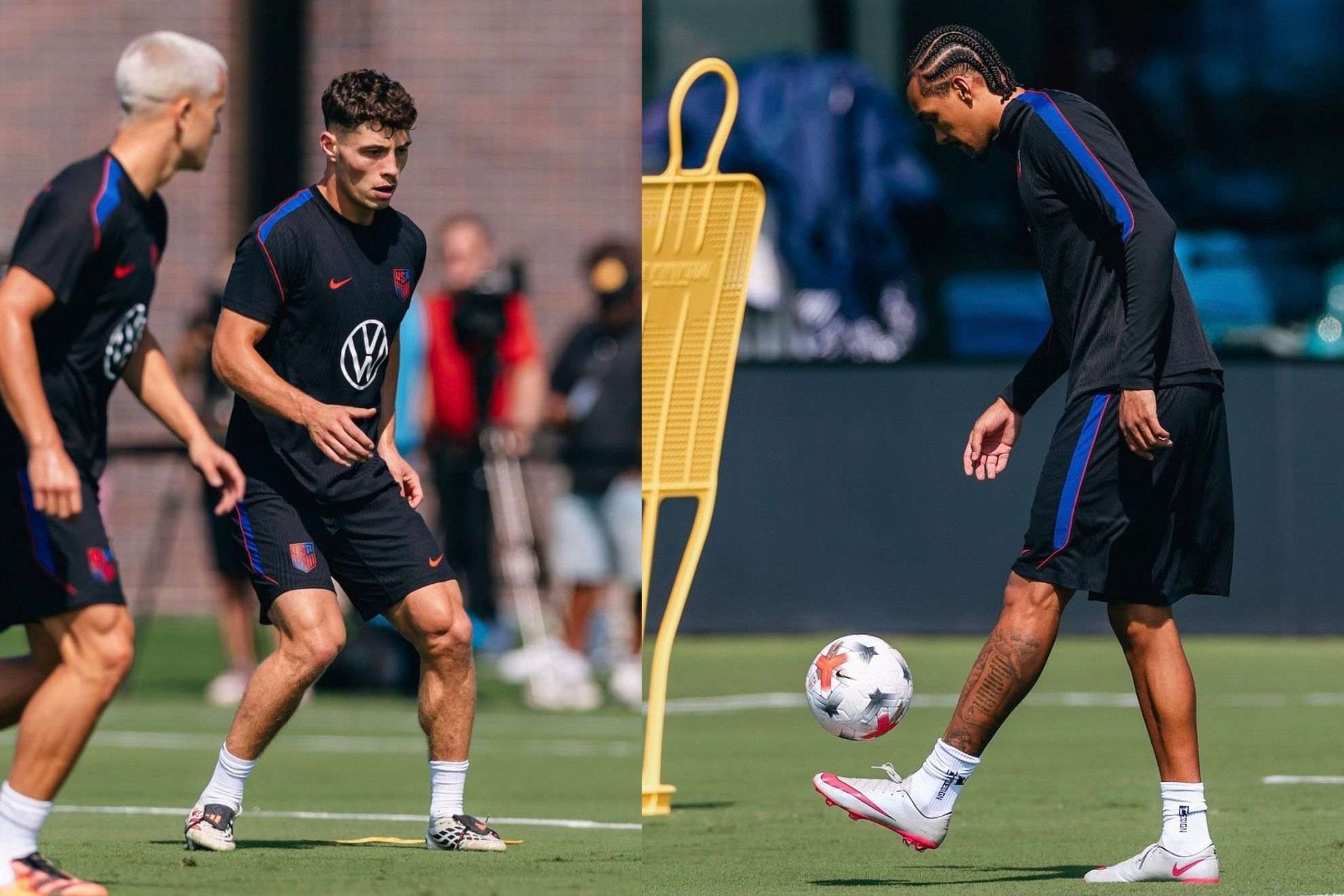
Pochettino’s next test: four matches that could shape the USMNT’s future
The leader would like to create greater competition throughout the roster

The next few days could offer the clearest picture yet of what Mauricio Pochettino wants the U.S. Men’s National Team to become. With friendlies against Peru and Chile in late September followed by high-profile clashes with Mexico and Canada in early October, the United States enters a demanding four-match stretch that will test not only the team’s depth but also the progress of a project still taking shape under the Argentine manager.
The latest roster change highlights both the opportunities and challenges facing Pochettino. PSV Eindhoven striker Ricardo Pepi has been forced to withdraw because of injury after being substituted during PSV’s 3-2 loss to FC Twente. In response, Pochettino called up Damion Downs , the 22-year-old forward currently on loan at St. Louis City SC from Southampton.
The call-up represents another opportunity to strengthen Downs' growing case for a larger role with the national team. The dual U.S.-German citizen has already shown he can deliver in big moments, most notably during the United States’ run to the 2025 Concacaf Gold Cup final when he converted the winning penalty in a shootout victory over Costa Rica in the quarterfinals.
Downs helped FC Köln earn promotion to the Bundesliga during the 2024-25 season, contributing 10 goals and five assists in Germany’s second division. Now back in Major League Soccer with St. Louis City, he will have a chance to play in familiar surroundings when the U.S. hosts Chile at Energizer Park.
Building depth for the future
The United States has spent much of the last decade leaning on a relatively small core of established players. One of Pochettino’s priorities has been broadening that group and creating greater competition throughout the roster.
Pepi’s absence creates another opportunity for a player like Downs , while the four-match window gives the coaching staff a valuable chance to evaluate options across multiple positions. As the program continues to evolve, identifying reliable contributors beyond the first-choice lineup could be just as important as the results themselves.
One of the most intriguing aspects of Pochettino’s tenure has been his effort to make the United States more aggressive without sacrificing structure. Throughout his club career, Pochettino’s teams have been known for high pressing, quick transitions and relentless work off the ball.
Translating those principles to international soccer takes time, particularly because national teams have limited training opportunities compared to club sides.
Mexico and Canada provide measuring-stick moments
Matches against Peru and Chile should offer useful opportunities to continue refining those concepts. Neither opponent will simply allow the United States to dictate play, making them valuable tests before the intensity rises significantly against Mexico and Canada.
The objective extends beyond results. Pochettino is still building patterns, chemistry and a tactical identity that can stand up against top opposition. Mexico and Canada provide measuring-stick moments. While every match in the window matters, the games against its North America neighbors are likely to attract the most attention.
The October 3 showdown with Mexico at State Farm Stadium renews one of international soccer’s most passionate rivalries. Regardless of form or rankings, USA-Mexico matches tend to reveal a great deal about mentality, organization and competitive edge.
Three days later, the Americans travel to Allianz Field in Minnesota to face Canada, a team that has become one of the region’s strongest competitors over the last several years. Together, those two matches should provide a realistic assessment of where the United States stands against the best opposition in Concacaf.