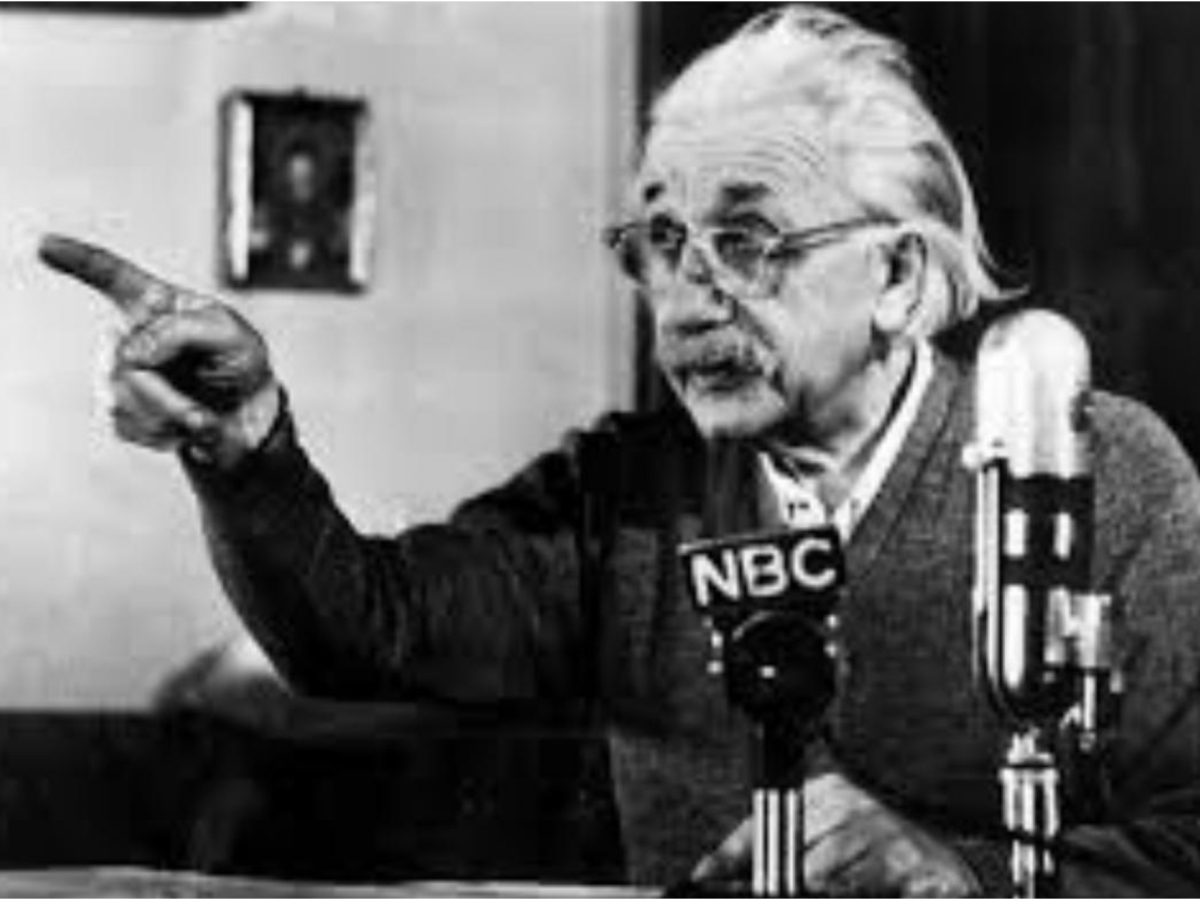
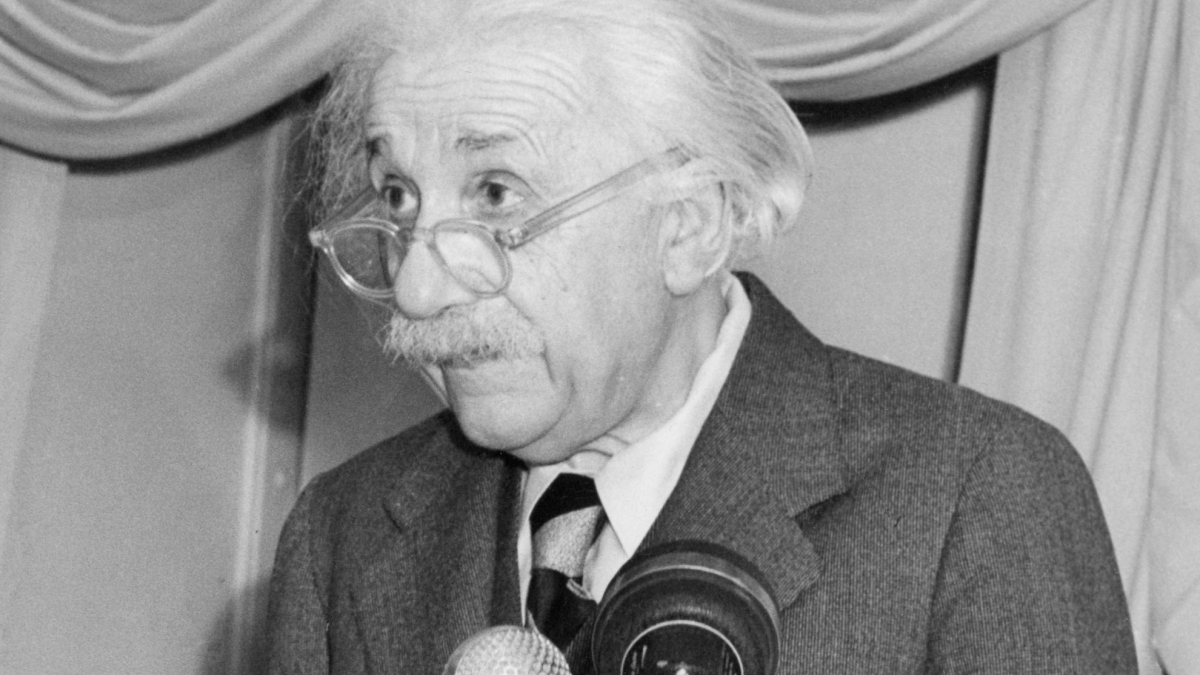
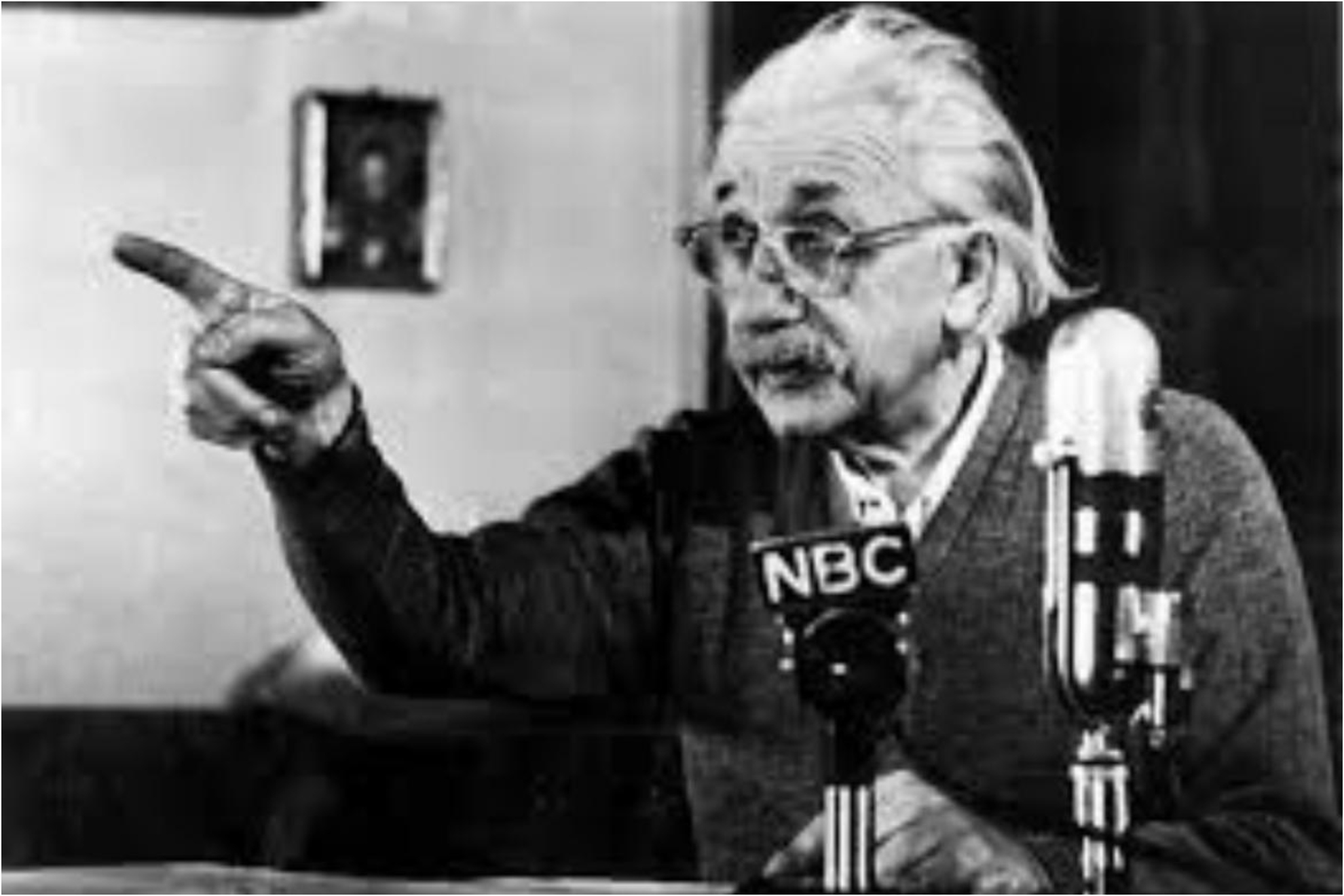
Albert Einstein, Theoretical physicist: "Try not to become a man of success. Rather become a man of value"
The celebrated scientist transformed our understanding of space, time and energy but also of imagination, knowledge and life.
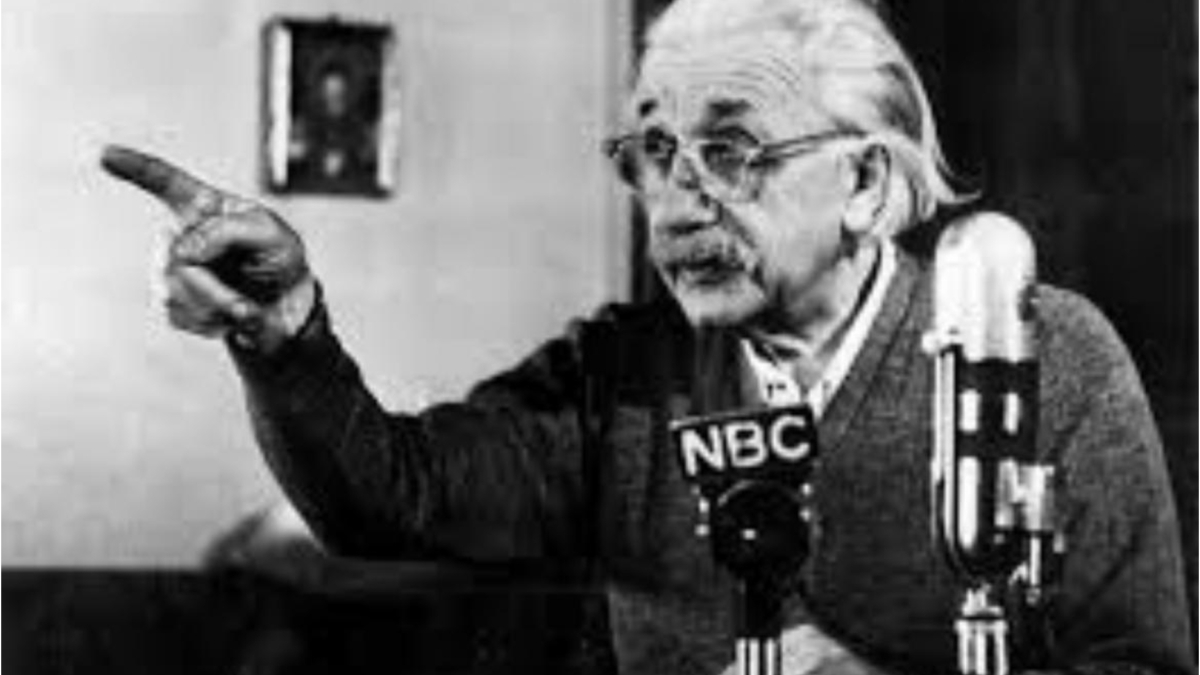
Albert Einstein became one of the most influential scientists in history by reshaping how humanity understood the universe.
Born in Germany in 1879, the theoretical physicist developed the theory of relativity, but his path to scientific prominence was not immediate. At 17, Einstein enrolled in a mathematics and physics teaching program at the Swiss Federal Polytechnic School in Zurich , graduating in 1900.
He later became a Swiss citizen and took a position at the Swiss Patent Office in Bern at the heart of Europe , where he continued developing the ideas that would transform modern physics.
And it was the year 1905 became particularly important in Einstein 's career, often called his “miracle year,” as he published four groundbreaking papers on the photoelectric effect, Brownian motion, special relativity and mass-energy equivalence.
Then decade later, Einstein expanded his work with his general theory of relativity, incorporating gravity into his framework and laying foundations for modern theoretical cosmology.
Einstein's ideas extended beyond physics
His scientific work eventually earned him the 1921 Nobel Prize in Physics , which recognized his work on theoretical physics and especially his explanation of the photoelectric effect.
But he then had to leave his home Germany behind as the scientist took a staunch stance against Nazi fascism, when Adolf Hitler came to power in 1933 as he opted to remain in the United States – horrified by their policies.
The decision saw him become an American citizen in 1940 and continued his scientific work and public activities until his death in 1955 , leaving behind a legacy that reached far beyond the laboratory but as one of the most famous humans to ever walk the Earth.
And Einstein 's legacy is not limited to equations and scientific theories as his observations about human potential, knowledge and achievement have continued to capture minds decades after his death.
And one of his most frequently cited remarks focuses on the difference between achieving recognition and creating lasting value, offering a simple perspective on how people measure a meaningful life.
“Try not to become a man of success, but rather try to become a man of value,” Einstein once said as the quote reflects his emphasis on contribution rather than recognition alone.
The sentiment reflects a broader theme in his writings and public comments: the importance of curiosity, imagination and ideas that extend beyond established knowledge.
He also emphasized the power of imagination in driving discovery and progress, arguing that creativity could help people move beyond the limits of established knowledge and existing ideas.
“Imagination is more important than knowledge. For knowledge is limited, whereas imagination embraces the entire world, stimulating progress, giving birth to evolution,” Einstein said in 1929 to George Sylvester.
Einstein died on April 18, 1955 in Princeton, New Jersey after suffering from internal bleeding caused by an abdominal aortic aneurysm despite undergoing surgery for the problem just seven years earlier.
Einstein embraced his death with open arms and rejected further surgery to prolong his life with another deep thought, saying, "I want to go when I want. It is tasteless to prolong life artificially. I have done my share; it is time to go. I will do it elegantly."