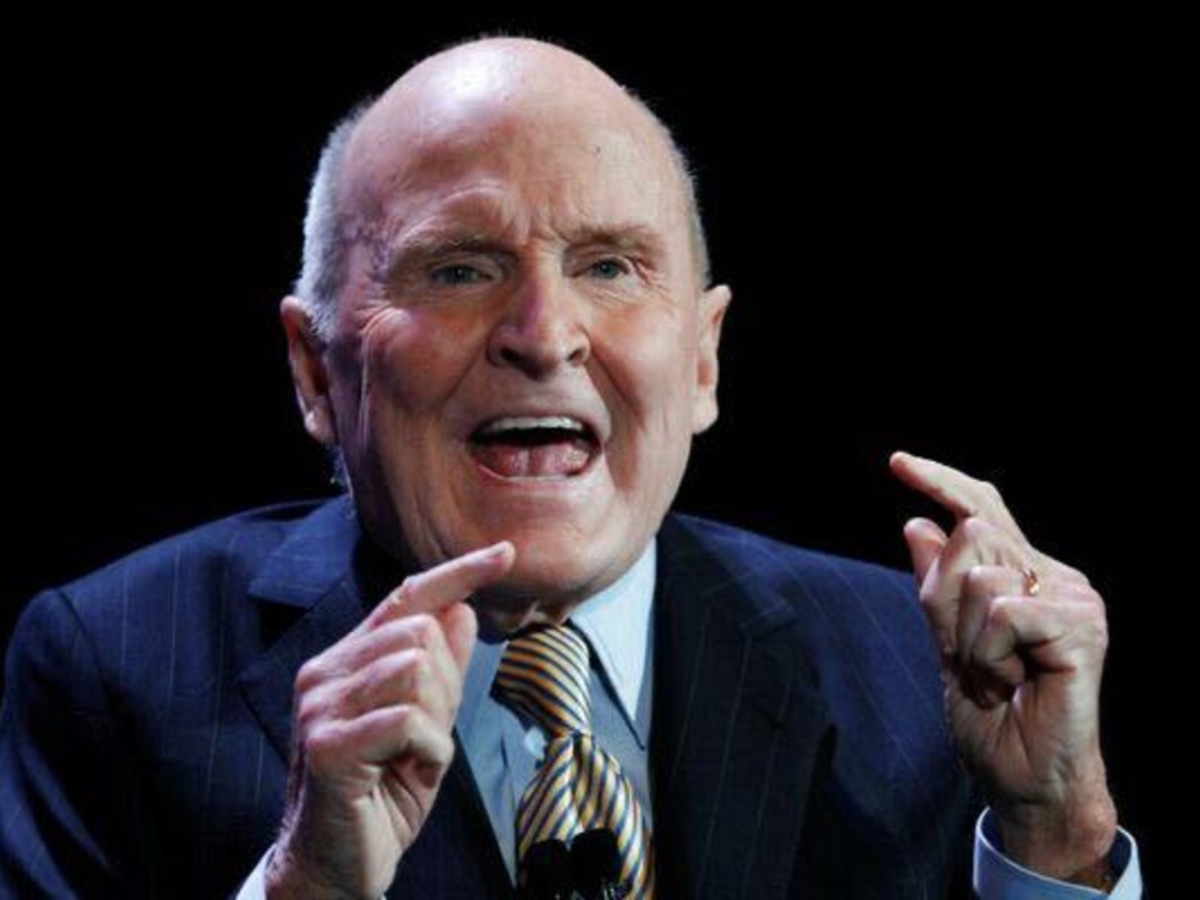
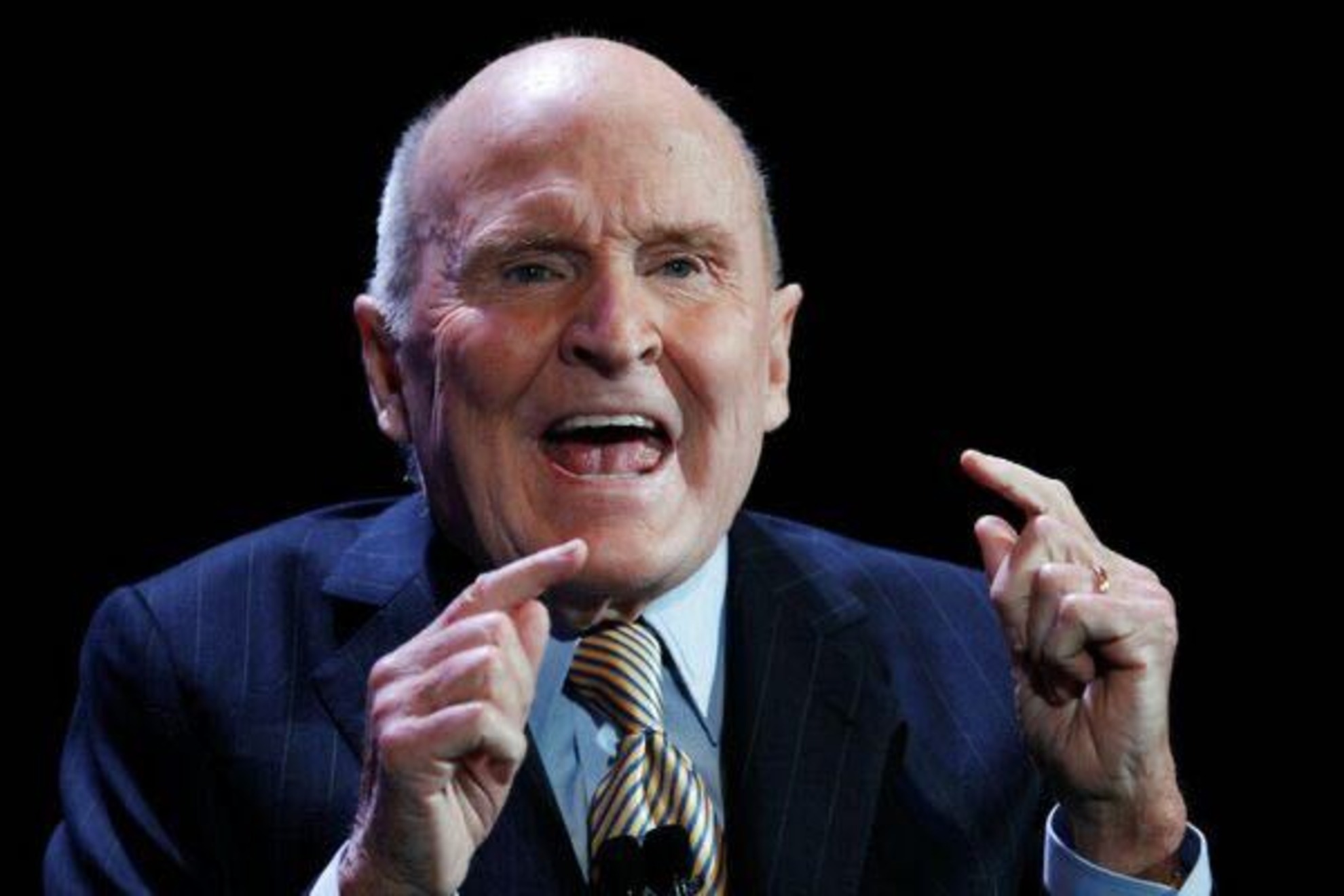
Jack Welch, American business executive: "Face reality as it is, not as it was or as you wish it to be"
Welch was the chairman and CEO of General Electric from 1981-2001
J ack Welch transformed General Electric into one of the world's most valuable corporations during his two decades as chief executive as his leadership emphasized accountability, aggressive restructuring and financial performance – and his philosophical approach was grounded in pragmatism. Born in Peabody , Massachusetts on November 19, 1935, Welch was the only child of Grace Andrews and railroad conductor John Francis Sr. , and he attended Salem High School before studying chemical engineering at the University of Massachusetts Amherst .
Graduating in 1957, Welch continued his education at the University of Illinois Urbana-Champaign , earning a master's degree and a doctorate in chemical engineering in 1960 and later that year, he joined GE as a junior engineer in Massachusetts . Beginning a career that would eventually place him among the country's most prominent corporate leaders, Welch adopted a fearless approach that allowed him to tackle problems as they presented. “Face reality as it is, not as it was or as you wish it to be,” Welch once said, expressing a management philosophy built around confronting difficult decisions rather than avoiding them.
How Welch reshaped General Electric
Welch became GE 's chairman and CEO in 1981, introducing a demanding strategy that required businesses to hold first- or second-place positions in their markets. Divisions that failed to meet the standard faced restructuring, sale or closure, while management layers were reduced. His policies brought substantial workforce reductions, earning him the nickname Neutron Jack. He also rewarded high-performing managers through bonuses and stock options, while promoting competition and accountability. Supporters praised his drive for efficiency, but critics questioned the human cost of his methods as during his tenure, GE expanded beyond its traditional industrial operations. The 1986 acquisition of RCA brought NBC into the company's portfolio, while GE Capital grew into a major financial services business. By 2000, annual revenue had climbed to almost $130 billion. He also introduced Six Sigma quality controls in 1995, seeking to reduce errors and improve business processes. His results earned widespread recognition, including Fortune magazine naming him its Manager of the Century in 1999, cementing his reputation as a defining executive of his era. Welch retired in 2001, leaving GE with an enormous market valuation, securing a huge retirement package estimated at approximately $420 million, one of the largest compensation arrangements of its time. After leaving GE , he advised businesses, spoke publicly about management and co-authored Winning with his third wife, Suzy . Welch died from kidney failure in New York City in March 2020, aged 84.