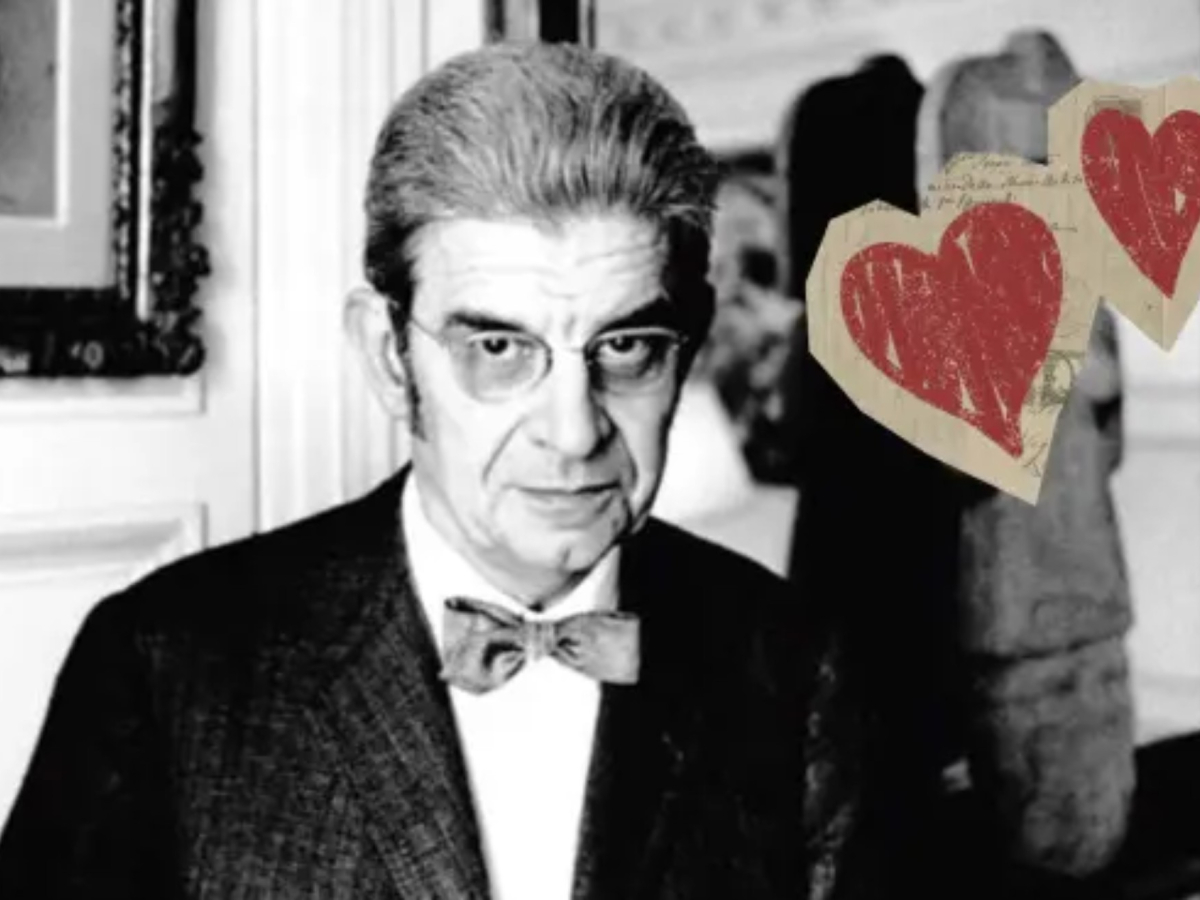
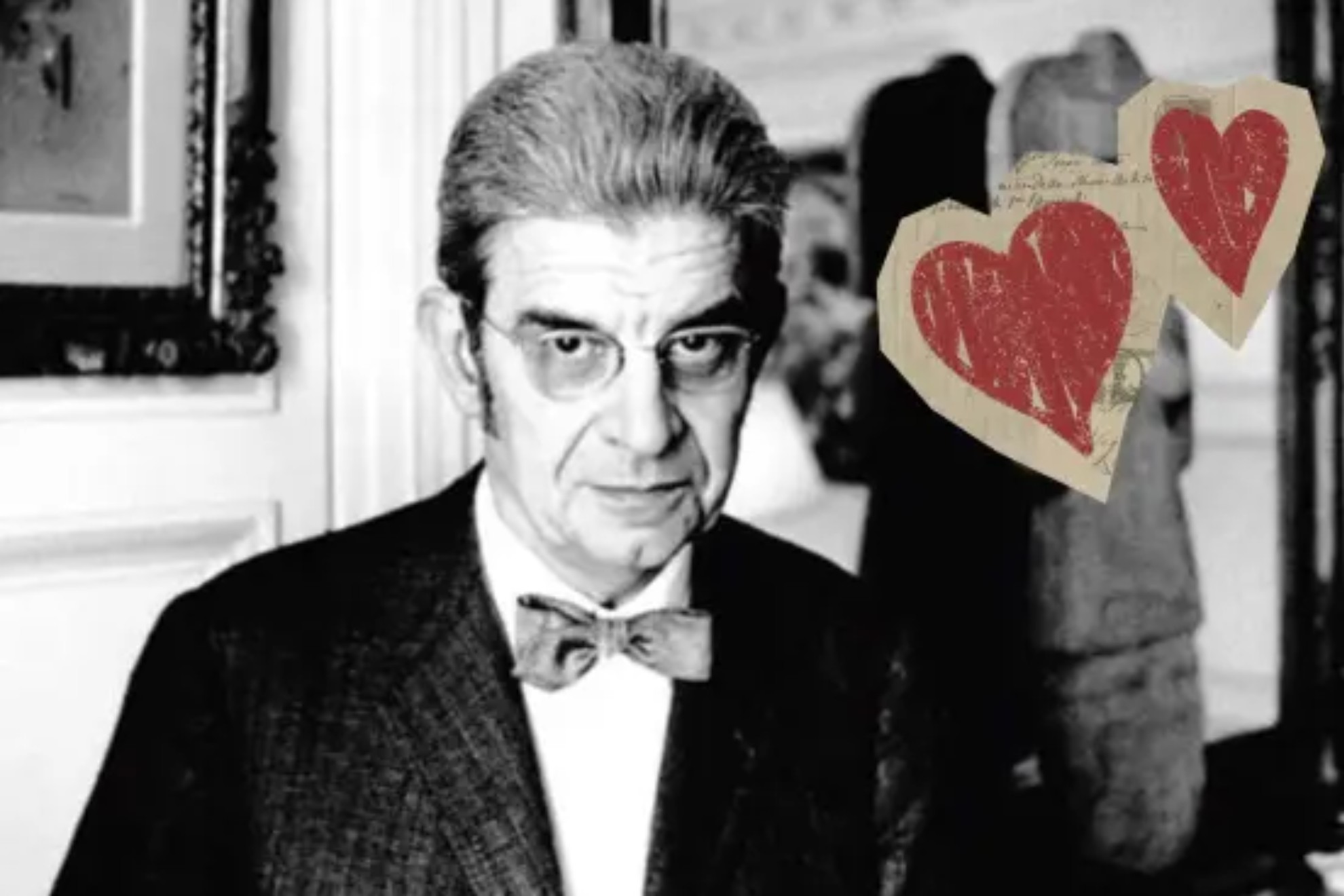
Jacques Lacan, psychoanalyst: “To love is to give what one does not have to someone who is not it”
This is Lacan's reflection on love.

Love is one of the most complex themes of the human experience and has been analyzed from different perspectives, such as philosophy, literature, and psychology. For the French psychoanalyst J acques Lacan , loving does not simply consist of giving something material or satisfying another person's needs, but rather implies recognizing our own shortcomings and accepting that the other is also an incomplete being, with desires and needs that we cannot fully control.
The phrase “To love is to give what one does not have to someone who is not it” is one of Lacan’s best-known formulations. Its meaning may seem contradictory at first glance, but it offers a profound reflection on desire, lack, and the expectations we build around romantic relationships.
Next, on MARCA MX we will tell you more about this reflection by Lacan on love.
What does this phrase by Jacques Lacan mean?
The phrase by Jacques Lacan means that love is not based solely on offering something we possess, but also on sharing our vulnerability, our feelings, and that which we recognize as a lack within ourselves. From the psychoanalyst's perspective, loving implies relating to another person without having the ability to complete them or to turn them into the ideal we imagine.
To understand this idea, it is necessary to analyze its two parts. The first, “giving what one does not have” , can be interpreted as the ability to offer something that is neither a material object nor a possession. A person can give love, trust, attention, or commitment without these feelings being things they can store or hand over as if they were goods. Love implies exposing oneself emotionally , recognizing one’s own limitations, and accepting that we do not always have all the answers.
In this sense, loving does not mean presenting oneself to someone as a perfect person, capable of solving any problem or satisfying all their needs. It also involves recognizing one’s own insecurities, accepting mistakes, and building a bond based on honesty. What is offered is not a nonexistent perfection, but rather a relationship in which both people can show themselves as they are.
The second part of the phrase, “to someone who is not” , often turns out to be even more enigmatic. Within Lacan's thought , it can be understood as a reference to the fact that the other never fully coincides with the ideal image we construct of them.
Sometimes, a person falls in love not only with the person in front of them, but also with what they imagine that person represents: security, happiness, recognition, or the promise of filling an emotional void. However, no person can fulfill all of another's expectations.
Jacques Lacan was a French psychoanalyst and psychiatrist born on April 13, 1901, in Paris and who died on September 9, 1981, in the same city. He is considered one of the most influential and controversial figures in 20th-century psychoanalysis, especially for his reinterpretation of Sigmund Freud's ideas.
Lacan studied medicine and specialized in psychiatry before devoting himself prominently to psychoanalysis. Throughout his career, he developed a theoretical proposal that sought to recover certain Freudian concepts by means of tools drawn from linguistics, philosophy, and other disciplines within the human sciences.
One of his central ideas was that the unconscious is structured like a language. With this formulation, Lacan argued that unconscious desires, conflicts, and experiences could be understood through words, symbols, and the ways in which people construct meaning.