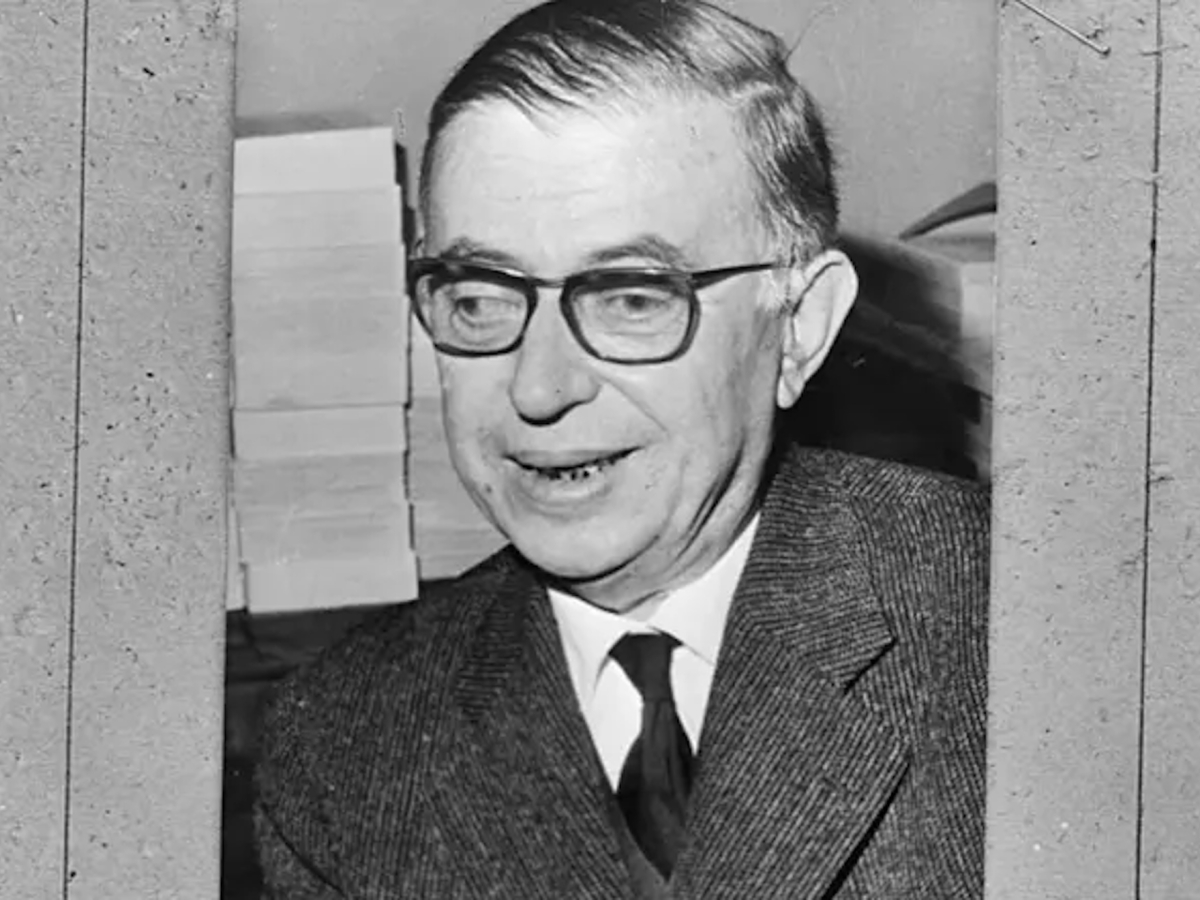
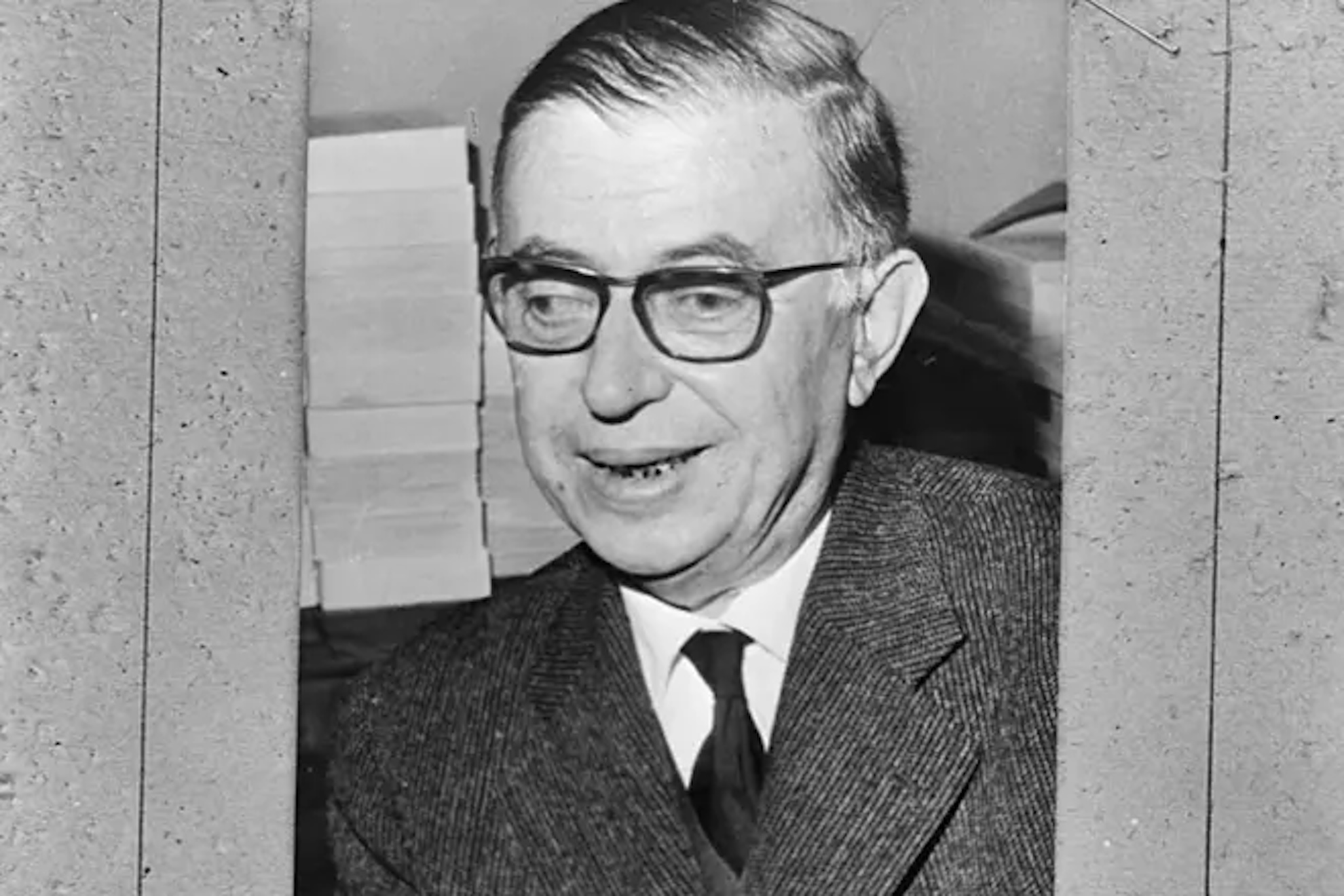
Jean Paul Sartre, philosopher: “Man is condemned to be free; because once thrown into the world, he is responsible for everything he does”
The famous reflection of the French thinker summarizes the essence of existentialism and continues to challenge whoever reads it
There are phrases that outlive their time because they touch on something that never ceases to trouble us. This is the case with one of the best-known ideas of Jean-Paul Sartre , one of the great names in 20th-century philosophy: that the human being cannot escape his own freedom.
The reflection comes from "Existentialism Is a Humanism," the lecture the French philosopher delivered in Paris in October 1945 and which was published as a book the following year. In it, Sartre sought to defend his thought against the criticisms that accused it of being pessimistic and to explain to the general public what existentialism consisted of.
What it means to be "condemned" to be free
The key lies in the paradox. Sartre speaks of condemnation because the human being has not created himself: he does not choose to be born, nor the world into which he appears. However, once he is in it, he can no longer stop choosing. Even not deciding is, for the philosopher, a form of decision.
This idea is based on another of his most famous principles: "Existence precedes essence" . According to Sartre, there is no human nature fixed in advance nor any written destiny. First we exist, and then we define ourselves through our actions. Ultimately, we are what we do with our life.
From this arises the weight of responsibility. If nothing determines us completely, we cannot blame circumstances, education, or character for what we choose. That awareness produces what the philosopher called anguish, and the temptation to flee from it through excuses is what he called "bad faith".
Jean Paul Sartre is the standard-bearer of a philosophy that remains relevant
Far from being a bleak vision, Sartre argued that his philosophy was deeply optimistic, because it places destiny in each person's hands. Moreover, he maintained that in choosing for oneself, one also chooses an image of what the human being should be, which turns every decision into a commitment to others.
Eighty years later , the phrase still resonates in a society that values personal autonomy, but also lives surrounded by options, pressures, and doubts. Choosing a career, a partner, or a way of life can be overwhelming precisely because no one can do it for us.
Sartre, who turned down the Nobel Prize in Literature in 1964 and died in Paris in 1980, thus left one of the most quoted reflections in contemporary thought: being free is not a comfortable privilege, but a task that accompanies human beings throughout their lives.