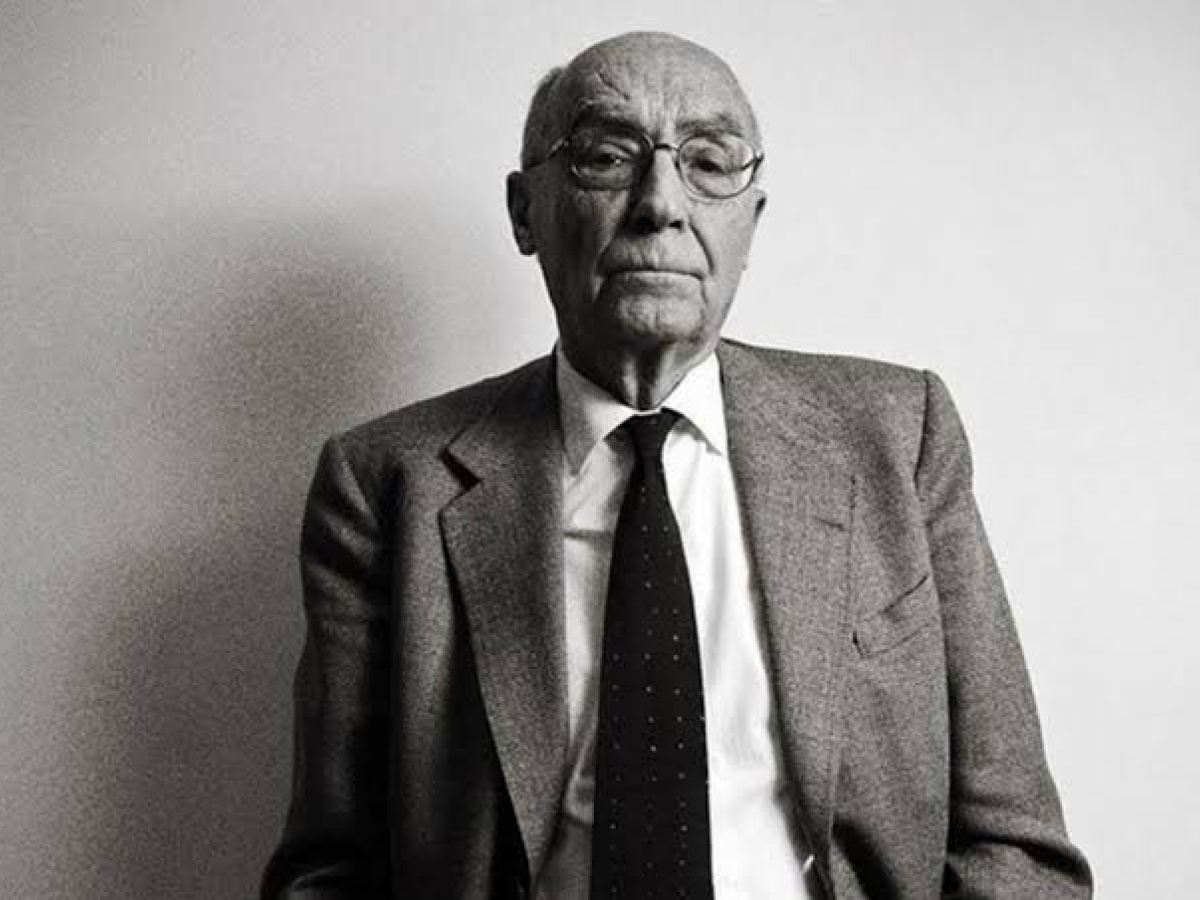
José Saramago, writer: "Tell a blind man that he is free and he does not leave; he has remained motionless in the middle of the road, they do not know where to go"
The struggle to improve life reflects the story of José Saramago, who, through his humble origins, invites us to reflect on self-improvement and the pursuit of social justice
The disorientation that many feel regarding the meaning of life becomes a universal challenge . In Blindness , ch. 13 , Saramago suggests that people, driven by fear and uncertainty, often become paralyzed in the search for their own destiny . This emotional blockage reflects an unsettling truth about human nature : the difficulty of moving forward when the path seems uncertain.
When freedom presents itself as an illusion and action turns into paralysis , the search for direction transforms into anguish. The inability to enjoy existence and the constant worry about the future multiply, revealing the internal struggle we face to find purpose and fulfillment amid the chaos of everyday life.
To understand the feeling that our life has no direction, the thought of José Saramago offers an especially interesting perspective. His reflection on the search for meaning in existence suggests that, through his works, he explores the human need to find a purpose , which resonates deeply with the contemporaneity of our existential dilemmas.
“Tell a blind man that he is free, open the door that separated him from the world, "Go, you are free," we tell him once more and he does not leave, he has remained motionless in the middle of the road, he and the others are terrified, they do not know where to go
The Light of José Saramago in the Darkness of Blindness
José Saramago , born on November 16, 1922 in Azinhaga, Portugal, is an author recognized worldwide for his unique literary style, which blends magical realism with profound philosophical and social reflections. His work has been widely acclaimed, most notably with his Nobel Prize in Literature in 1998. Saramago came from humble beginnings, with peasant parents who influenced his critical view of the world. This upbringing and his political commitment left an important mark on his narrative, making him a writer who challenged norms and conventions.
Saramago's thinking is deeply influenced by life experiences, such as the censorship he endured during the dictatorship in Portugal and his active participation in the Carnation Revolution. His critical approach to society, the pursuit of freedom of expression, and existentialist themes place him in dialogue with other great authors, such as Gabriel García Márquez, who also employs magical realism. Through these elements, Saramago vindicates the power of literature as a tool for reflecting on the human condition and the struggle for social justice.
One of his most striking lines from "Blindness" says: " Tell a blind man that he is free, open the door that separated him from the world" This quote reflects the idea of a freedom that can be illusory; the blind man, although physically free, remains motionless out of fear of the unknown. This metaphor is connected to his criticism of the limitations that society imposes and to the challenge of confronting our own fears and emotional blindness, highlighting that true freedom lies in the ability to choose and to take risks along one's own path.
In the everyday life of the 21st century, many people can find similarities with the struggle described by Saramago . When faced with decisions about their lives, many feel overwhelmed by social expectations, conditioning, and the contemporary censorship imposed by the digital environment. The phrase resonates in a context where freedom of expression and the right to be authentic are threatened by social pressure.
People, although they have tools to communicate and express themselves, often choose silence for fear of judgment or disapproval. In this sense, Saramago's words invite reflection on our reality , seeking to reflect on how to confront emotional blindness and choose the true freedom that allows us to move toward an authentic and desired future.