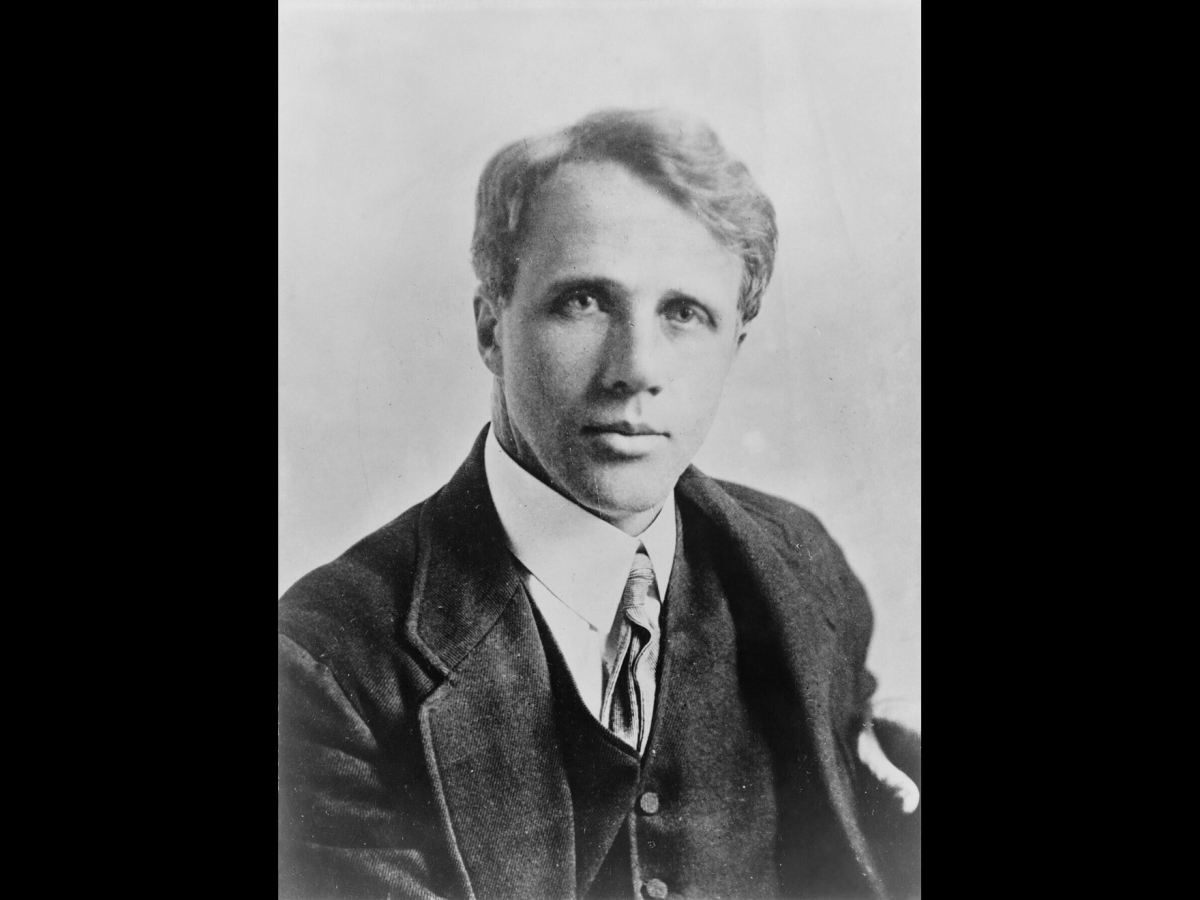
Robert Frost, American poet: "Half the world is composed of people who have something to say and can't, and the other half who have nothing to say and keep on saying it"
Frost was born on March 1874 and was one of the United States’ most celebrated writers
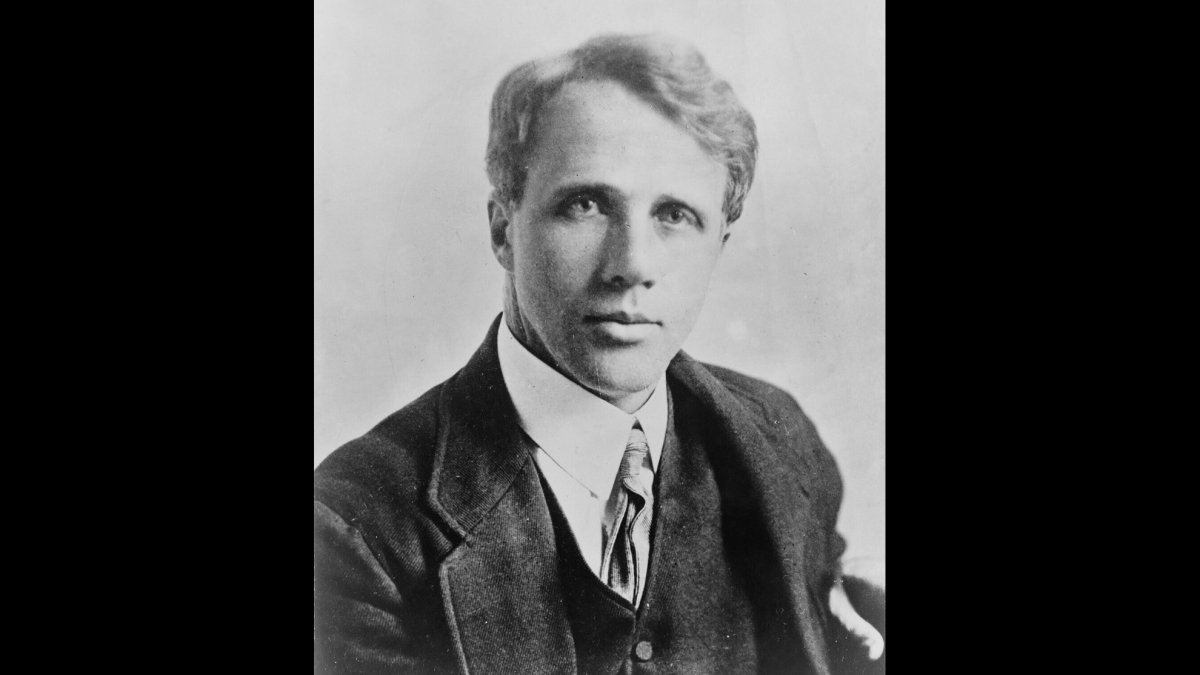
R obert Frost became one of the United States ' most influential poets, building a literary career around the complexities of ordinary people and the difficulty of expressing what they truly think and feel through his early experiences of loss and family hardship. Frost had an unconventional path into literature helped shape a writer deeply interested in human behavior as after moving to Massachusetts following his father's death, he developed a passion for poetry that eventually took him from teaching and farming to international literary recognition.
His work became renowned for turning everyday conversations, rural landscapes and familiar experiences into reflections on relationships, isolation and the thoughts people struggle to communicate. That perspective is captured in one of Frost ’s most memorable observations as he wrote, "Half the world is composed of people who have something to say and can't, and the other half who have nothing to say and keep on saying it." The remark distinguishes between those who struggle to express meaningful thoughts and those who mistake constant conversation for genuine communication as he understood that speaking is not the same as communicating. Sometimes silence can sometimes contain more meaning than an entire conversation and his greatest achievement was giving readers the words to consider things they might otherwise struggle to say. And Frost ’s insight allowed him to have impressive success as he won four Pulitzer Prizes for Poetry and became a celebrated public speaker, and in 1961, President John F. Kennedy invited him to read at his inauguration – where he recited The Gift Outright , becoming the first poet to participate in a presidential inauguration ceremony.
Robert Frost: The life and legacy of the American poet
Frost was born on March 26, 1874, to William Prescott Frost Jr. , a journalist and teacher, and Isabelle Moodie as his father's death from tuberculosis in 1885 forced the family to relocate, where relatives helped support them. He developed his interest in literature during his school years, graduating as co-valedictorian in 1892 alongside his future wife, Elinor White as he briefly attended Dartmouth College and Harvard University . However, he never completed a degree, instead moving between teaching, farming and other occupations and his first published poem, My Butterfly: An Elegy , appeared in The Independent in 1894. Frost 's career took a decisive turn in 1912 when he moved his family to England after struggling to establish himself in the USA , finding his breakthrough with 1914’s North of Boston attracted wider critical attention, with poet Ezra Pound helping to promote his work. His poetry made complex ideas accessible without stripping away their ambiguity as ordinary speech became a way to explore difficult questions about human behavior and the limitations of communication. Beyond his quote, his Mending Wall work is particularly relevant to the observation attributed to him and his two neighbors repeatedly debate the need for a boundary between their properties. The conversation is not simply about a wall, but about the different ways people interpret the world whilst The Road Not Taken similarly examines personal decisions and the stories people construct around their choices. Frost died in Boston on January 29, 1963, aged 88 but to this date, his writing still encourages readers to recognize the uncertainty and contradictions within ordinary human experiences.