4 astronomical events you won’t want to miss before September ends
September is almost over, but the sky still has a few moments that might make you stop and look up.
T here are only a few days left before September comes to an end, and fall is practically here . But before the season changes, there are still several reasons to take a moment and look toward the sky.
Venus will have one of its brightest nights
On September 22, Venus will reach one of the most striking moments of the month as it reaches its greatest brightness of the year.
The planet will be visible to the naked eye shortly after sunset, toward the west, where it will appear as an especially bright white point . You won’t need a telescope to find it, making this one of those opportunities when all you have to do is look up at the right time.
The date will also have another significance: around the same time, the fall equinox will arrive, officially marking the change of seasons in the Northern Hemisphere. The exact moment of the equinox will be at 12:05 a.m. UTC on September 23 , meaning it will take place during the night of September 22 into September 23, depending on your time zone.
Mars will have some very special company
Three days later, on September 25, it will be time to look toward another part of the sky.
Before sunrise, toward the east, Mars will appear alongside Castor and Pollux, the two brightest stars in the constellation Gemini. The planet, recognizable by its reddish color, will form a visual alignment with them .
This does not mean that the three objects will actually be aligned in space. From our perspective on Earth, however, they will appear to line up, creating a particularly striking scene for anyone who enjoys watching the sky before sunrise .
And just as September enters its final days, an even more special night will arrive.
The Harvest Moon will appear alongside Saturn
September 26 will likely be the date that catches the attention of those who prefer looking at the sky after sunset.
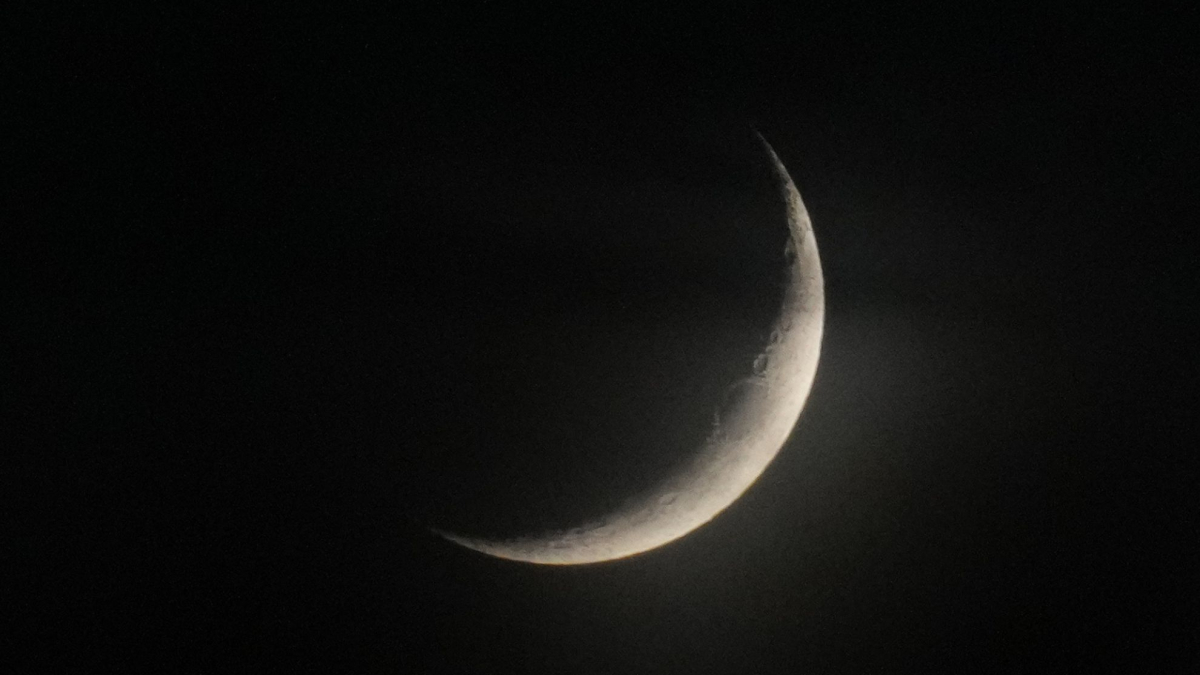
The Harvest Moon, the traditional name for the full moon closest to the fall equinox , will reach full illumination and appear in the eastern sky shortly after sunset.
Saturn will be visible very close to the Moon, creating a pair that should be relatively easy to spot with the naked eye . For those who don’t regularly follow astronomical events, this could be one of the simplest scenes to look for during the final days of September: wait for nightfall and look toward the east.
And that same night, another planet will be waiting nearby, although finding it will be much more difficult.
Neptune will be nearby too, but you’ll have to look for it
On September 26, Neptune will reach opposition , a moment when it will be in a particularly favorable position for observation from Earth.
But this is where the experience changes completely.
Unlike Venus, Mars or Saturn, Neptune is too faint to be seen with the naked eye. You’ll need binoculars or a telescope to locate it, where it may appear as a tiny bluish point.
That night, Neptune will also be in the same area of the sky as the Moon and Saturn, creating a sort of visual triangle . However, while the other two objects should be relatively easy to spot, Neptune will require a little more patience and the right equipment.
And perhaps that is part of the appeal of these final days of September: not every event is meant to be viewed in quite the same way.