Edgar Allan Poe, writer: “Fear is an emotion that feeds on the unknown”
Edgar Allan Poe, writer: “Fear is an emotion that feeds on the unknown”

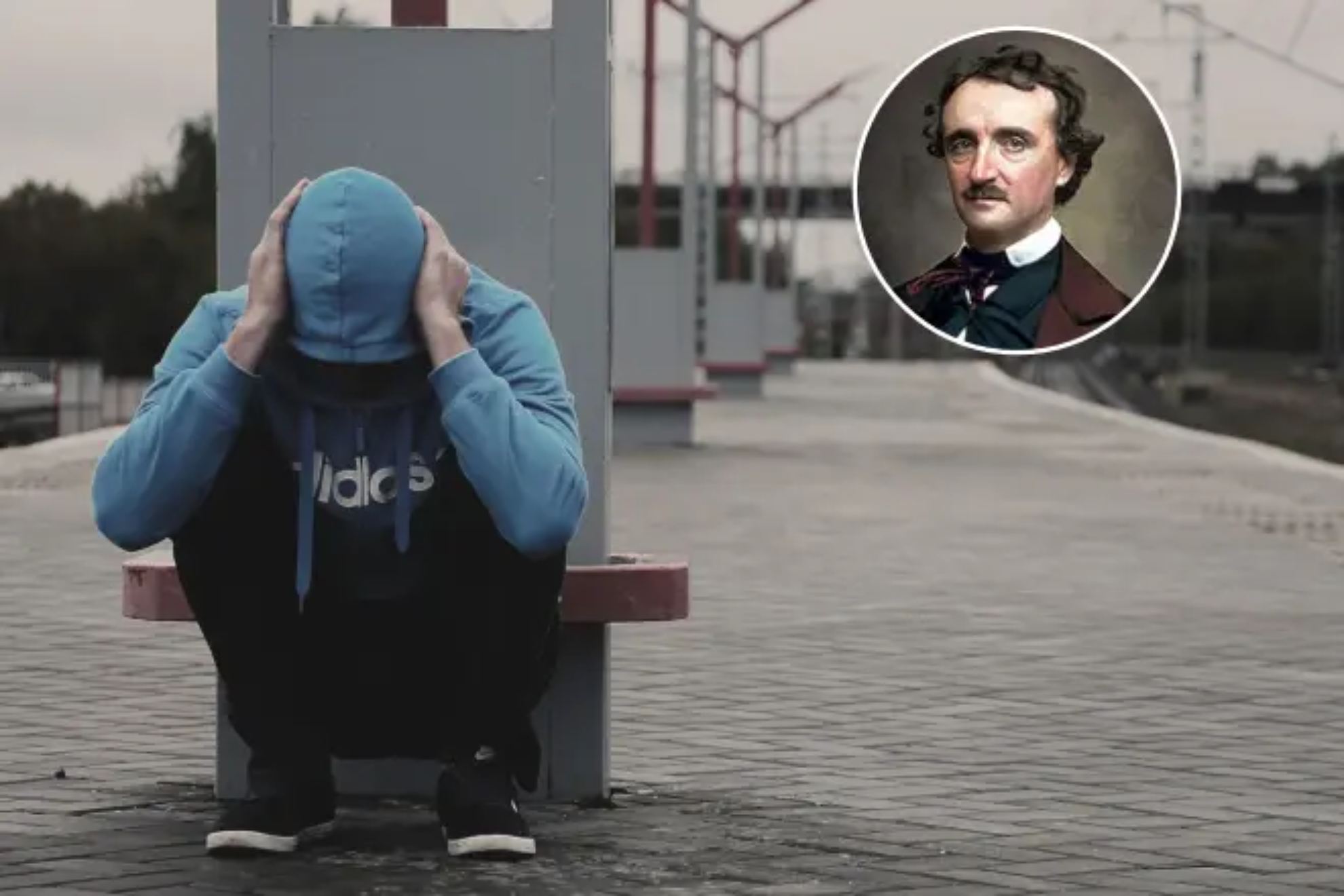
Fear has accompanied us since the origin of humanity. It is one of the most primal emotions and, at the same time, one of the most difficult to explain. With Halloween just around the corner, few voices are as fitting to speak about it as that of Edgar Allan Poe , the master of horror to whom this reflection on its origin is attributed.
The idea connects with something psychology knows well: uncertainty triggers our internal alarm . When we do not know what is behind a door or what a noise in the middle of the night means, the brain fills in the gaps by imagining the worst. That is why a vague threat usually distresses us more than a concrete danger, and why horror films and literature play with shadows, silences, and what never quite comes into view.
Poe turned that mechanism into art. In his stories, horror rarely appears all at once : it grows in the minds of his characters, fueled by suspicion and guilt.
Edgar Allan Poe was born in Boston in 1809 . Orphaned at the age of two, he was raised by the merchant John Allan in Richmond, with whom he had a stormy relationship. He attended university and the military academy of West Point , from which he was expelled, and married his cousin Virginia Clemm, whose death from tuberculosis in 1847 devastated him. He achieved fame with the poem ‘The Raven’ in 1845 and is considered the father of the modern detective story . He died in Baltimore in 1849 , at the age of 40 and under circumstances that remain a mystery to this day.
A legacy that still haunts
Almost two centuries later, his work continues to inspire writers and filmmakers, and reminds us that what we fear most is that which we fail to understand.