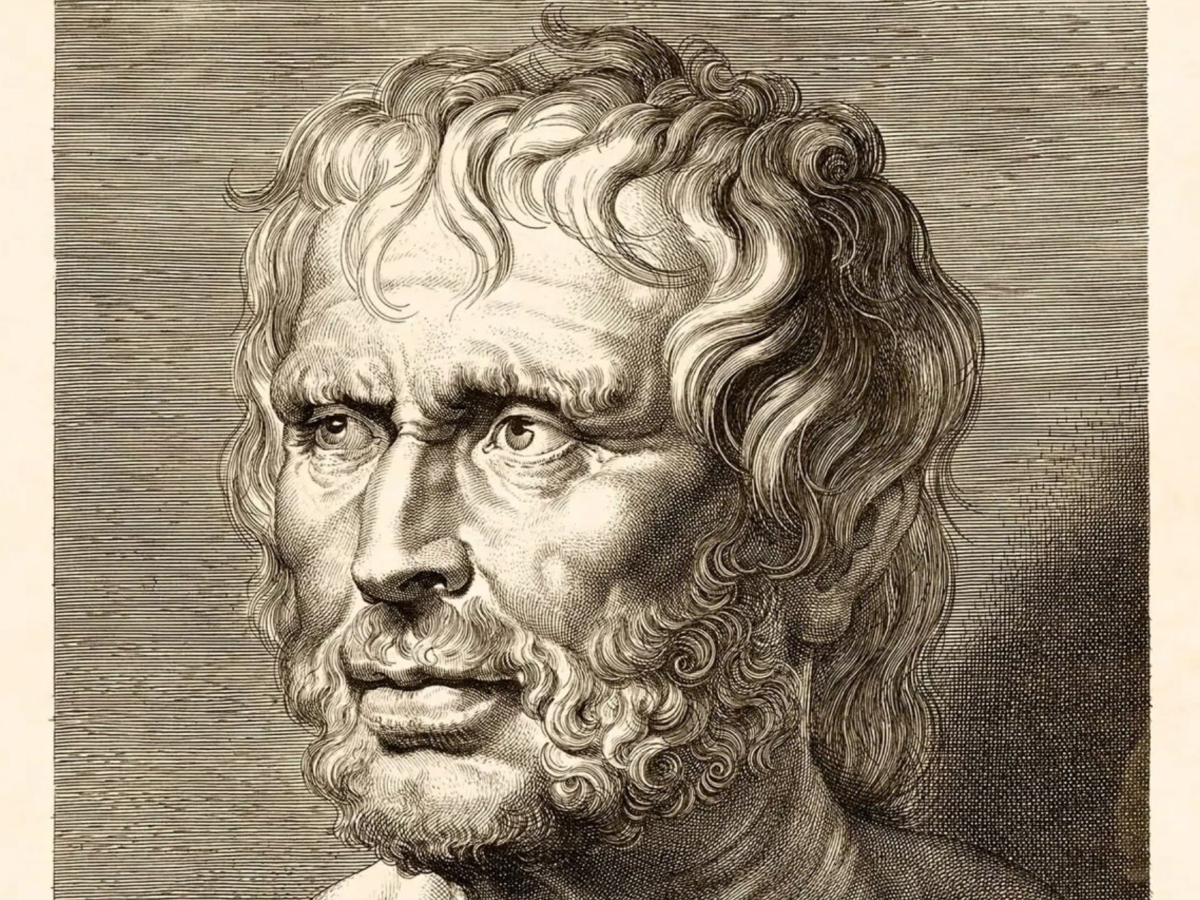
Seneca, philosopher: “We suffer more often in imagination than in reality"
The Roman Stoic explored how fear can turn an uncertain future into a present burden, a reflection that still resonates in a world of unanswered messages, constant updates and everyday worries
A message goes unanswered, and we imagine rejection. A meeting appears on the calendar, and we fear losing our job. Something has not happened, yet we are already living through its worst possible outcome. Nearly 2,000 years ago, Seneca examined the distance between what happens to us and what we fear might happen.
“We suffer more often in imagination than in reality,” he wrote in Letter 13 of his Moral Letters to Lucilius , in the English translation by Richard M. Gummere. The passage concerns groundless fears and the habit of becoming distressed before a threatened difficulty has arrived or before we know whether it will arrive at all.
The sentence offers a useful starting point for reflection: how much of what troubles us belongs to the situation in front of us, and how much belongs to the story we have built around it?
The question is what has happened and what we only fear will happen
In Letter 13, Seneca encourages Lucilius to examine the evidence behind his expectations of future trouble. He distinguishes between difficulties that are present and those that remain possible. His concern is the additional suffering created when uncertainty is treated as confirmation that something bad is coming.
Read in a contemporary setting, that distinction can feel familiar. Someone waiting for an answer after a job interview may begin imagining financial problems before receiving a decision. A brief reply from a friend may become, in their interpretation, evidence that the relationship has changed. In both examples, an unanswered question acquires a definite and painful answer.
The feeling is real, even when the feared event remains uncertain. This is what makes the reflection more demanding than a simple instruction to stop worrying. It invites readers to pause over their conclusions: what do they know, what are they assuming, and what information is still missing?
That practical approach helps explain Seneca’s enduring appeal. A major Stoic thinker of the Roman Imperial Period, he wrote in Latin and developed philosophical ideas through letters, essays and consolations. His works helped shape later understandings of Stoicism and contributed to its revival during the Renaissance . Many readers still encounter the tradition through his writings.
His letters bring philosophy close to ordinary experience. Rather than leaving readers with an abstract principle, they invite participation: a person must consider the argument, test it against their own circumstances and decide whether to accept it. The Stanford Encyclopedia of Philosophy identifies this active engagement as an important feature of his approach.
Applied to modern life, the passage offers a way to think about the gaps that digital communication leaves open. We can see that a message was read without knowing why it has not received a reply. We can encounter alarming news without knowing how events will develop. Those gaps leave room for interpretations that can become more frightening with each repetition.
Preparing for a possibility and assuming it is inevitable are different acts. Preparing might mean reviewing expenses, asking a clear question or gathering information. Assuming the worst can mean repeatedly rehearsing an outcome without learning anything new. This is a contemporary reading of Seneca’s reflection, rather than a claim that he was addressing today’s technology.
The passage should also be read with care. It does not establish that every fear is unfounded or that hardship can be removed by changing one’s thoughts . Its value lies in the question it encourages us to ask before accepting our own prediction as a fact.
The future may bring a difficult conversation, a disappointment or an unexpected change. Until we know, however, there is a difference between acknowledging that possibility and allowing it to occupy the whole present. Seneca’s reflection remains compelling because it asks us to notice when we have begun suffering through an event that has not yet happened.