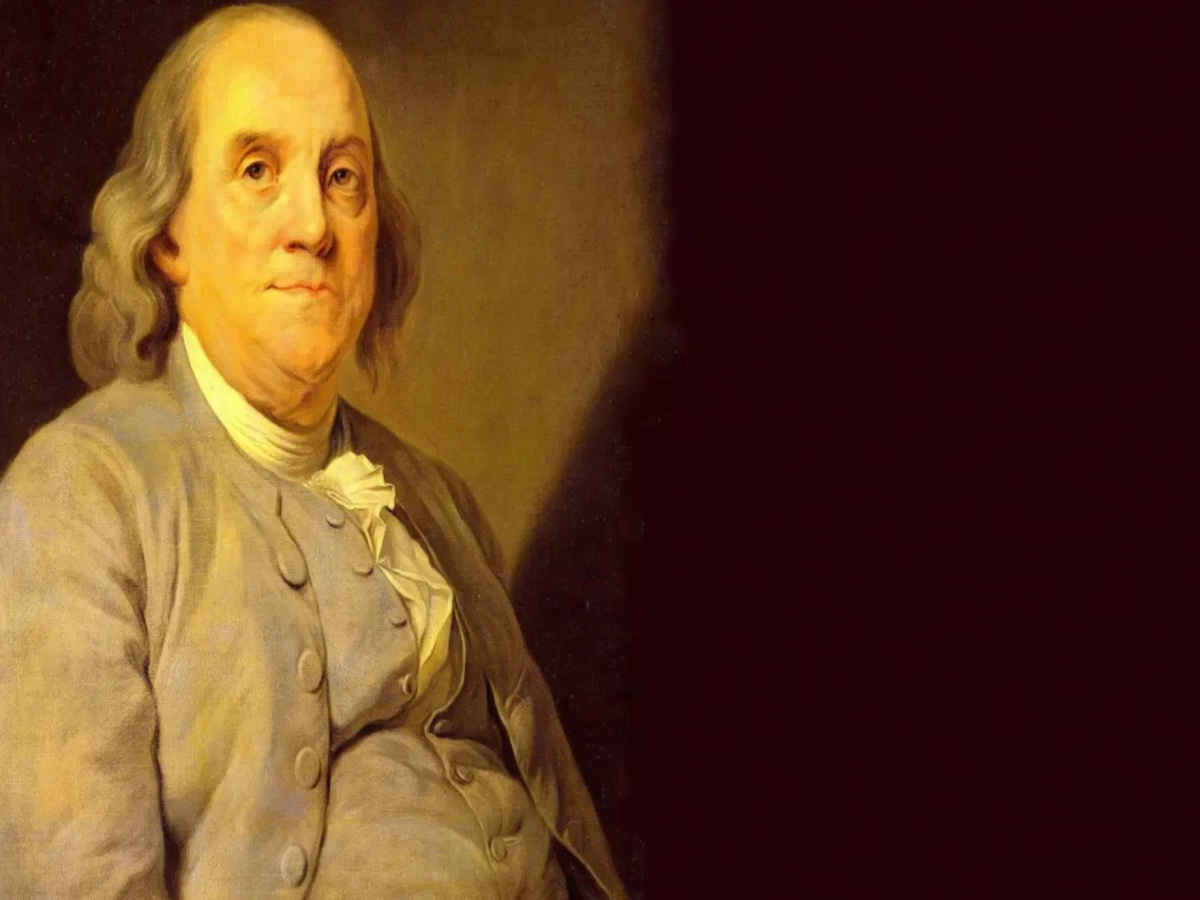
Benjamin Franklin, Founding Father of the United States: "An investment in knowledge always pays the best interest"
The famous saying captures the importance of education and personal development, but there is a surprising detail behind its connection to Benjamin Franklin
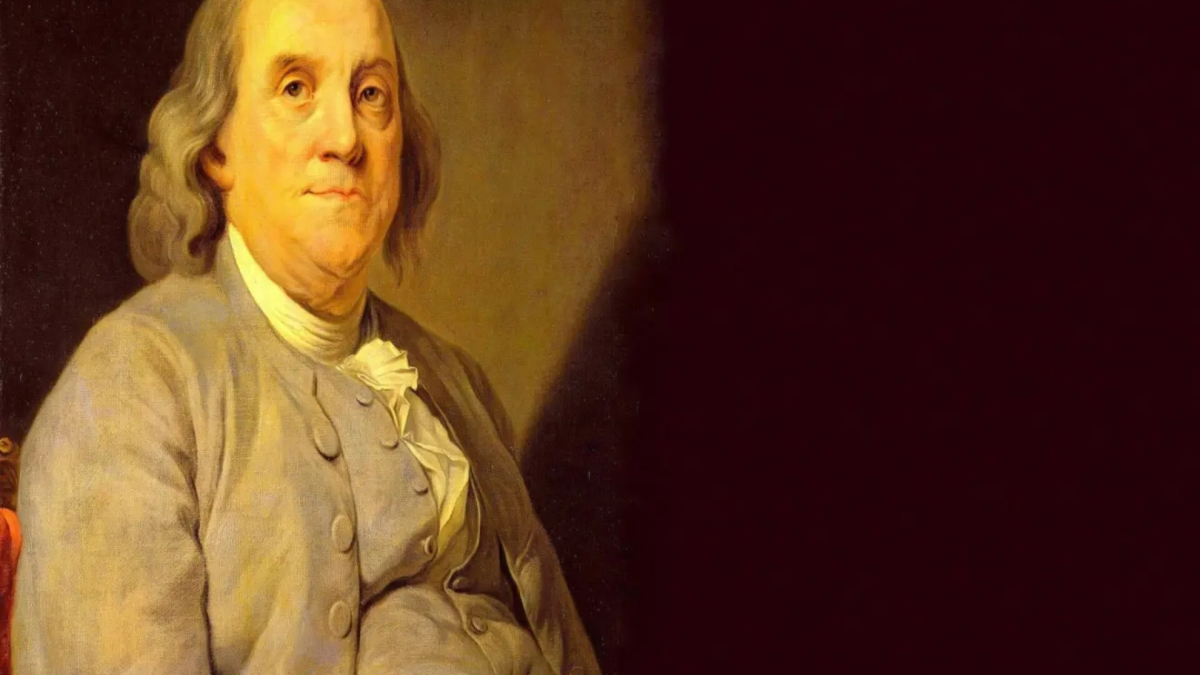
Few historical figures are as closely associated with practical wisdom as Benjamin Franklin .
The American Founding Father built a reputation as a scientist, inventor, writer and diplomat, while his observations about money, hard work and self-improvement continue to circulate centuries after his death.
One of the most popular sayings attributed to him is: "An investment in knowledge always pays the best interest".
It suggests that education should be viewed as something more valuable than an expense, because the skills and understanding gained through learning can create opportunities throughout a person's life.
The comparison with financial investment is particularly effective. Money placed in a savings account or investment can generate returns, but knowledge can provide benefits that extend far beyond a single financial reward.
It can improve decision-making, encourage independence and help people adapt when circumstances change.
However, there is an important historical qualification. Despite appearing on countless quotation websites and motivational posters under Franklin's name, the saying cannot be verified as his work.
Research into the quotation traces its earliest known appearance to the Daily Evening Transcript newspaper in Boston in November 1848.
A longer version appeared in the same publication in February 1849, almost six decades after Franklin died in 1790. The Library of Congress reference book Respectfully Quoted also identifies the attribution as unverified.
The saying may reflect Franklin's philosophy, but there is no documented evidence that he personally used those exact words.
Why Franklin believed education could transform lives
Franklin's own experiences help explain why the quotation became so closely associated with him.
Born in Boston in 1706, he received relatively little formal education before becoming an apprentice printer. He moved to Philadelphia as a teenager and gradually established himself as a successful businessman, publisher and intellectual.
Rather than relying on traditional schooling, Franklin continued learning throughout his life. In 1727, he established the Junto, a discussion group in Philadelphia where members exchanged ideas, debated subjects and explored ways to improve their community.
He also helped establish the Library Company of Philadelphia in 1731, one of America's earliest subscription libraries. The initiative reflected his belief that access to books and information should not be restricted to wealthy individuals.
His commitment to education extended into higher learning. In 1749, Franklin published proposals for improving education in Pennsylvania and helped organize the institution that eventually became the University of Pennsylvania.
His vision included practical subjects alongside traditional academic disciplines, preparing students for careers in business, government and public service.
Franklin's achievements were not limited to education. His scientific experiments helped advance understanding of electricity, while inventions such as the lightning rod, bifocals and Franklin stove demonstrated how knowledge could be applied to everyday problems.
His political career was equally influential. He became one of the key figures in the American Revolution, helped draft the Declaration of Independence and played an important diplomatic role in securing French support for the American cause.
The lasting value of investing in knowledge
The message behind the famous quotation remains relevant because education does not necessarily end when someone leaves school or university.
Learning new skills can help workers progress professionally, allow entrepreneurs to make better business decisions and give individuals greater confidence when dealing with unfamiliar situations.
It can also have benefits that are difficult to measure financially. Understanding history, science, technology and different cultures encourages people to question assumptions and approach problems from different perspectives.
Franklin's life provides a particularly strong example of this principle. His limited formal schooling did not prevent him from becoming one of the most influential Americans of the 18th century. Curiosity, experimentation and a willingness to keep learning helped shape his career.
Although the famous investment quotation should not be presented as a verified Franklin statement, its underlying message is consistent with many of his documented activities.
His efforts to establish libraries, support education and promote practical knowledge demonstrate how seriously he regarded intellectual development.
Ultimately, the greatest return from learning may not be measured in dollars. Knowledge can create opportunities, strengthen communities and remain useful long after material possessions have lost their value.