Trump administration blames ‘overloaded’ systems for ground stop after FAA lets flights resume
Hundreds of thousands of travelers were affected by Friday's interruption.
Trump administration officials said Friday that new technology being added to the nation’s air traffic control system overloaded antiquated parts of it and caused “intermittent” communications and radar gaps , leading to the longest nationwide ground stop in 25 years.
It was lifted in the evening after a five-hour stretch when most flights were not allowed to take off from airports in the U.S.
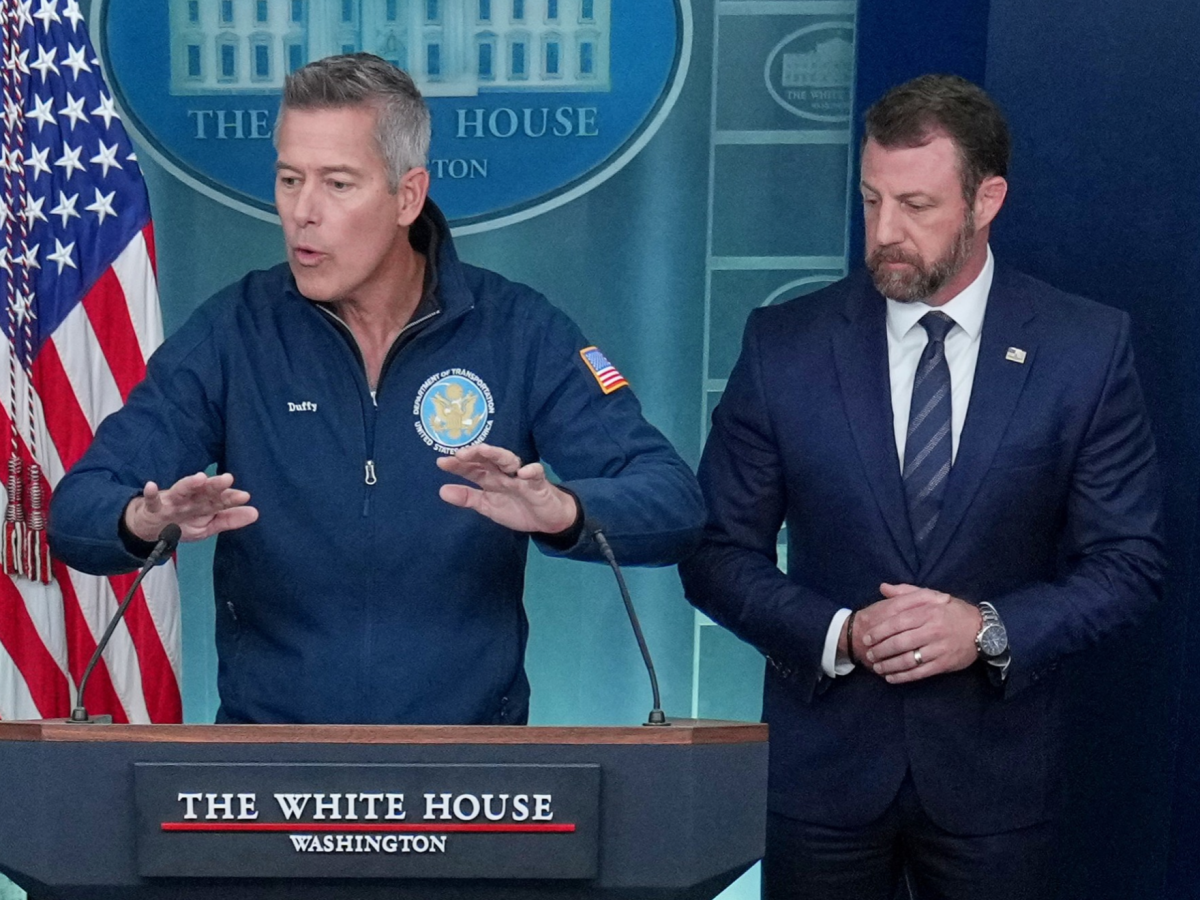
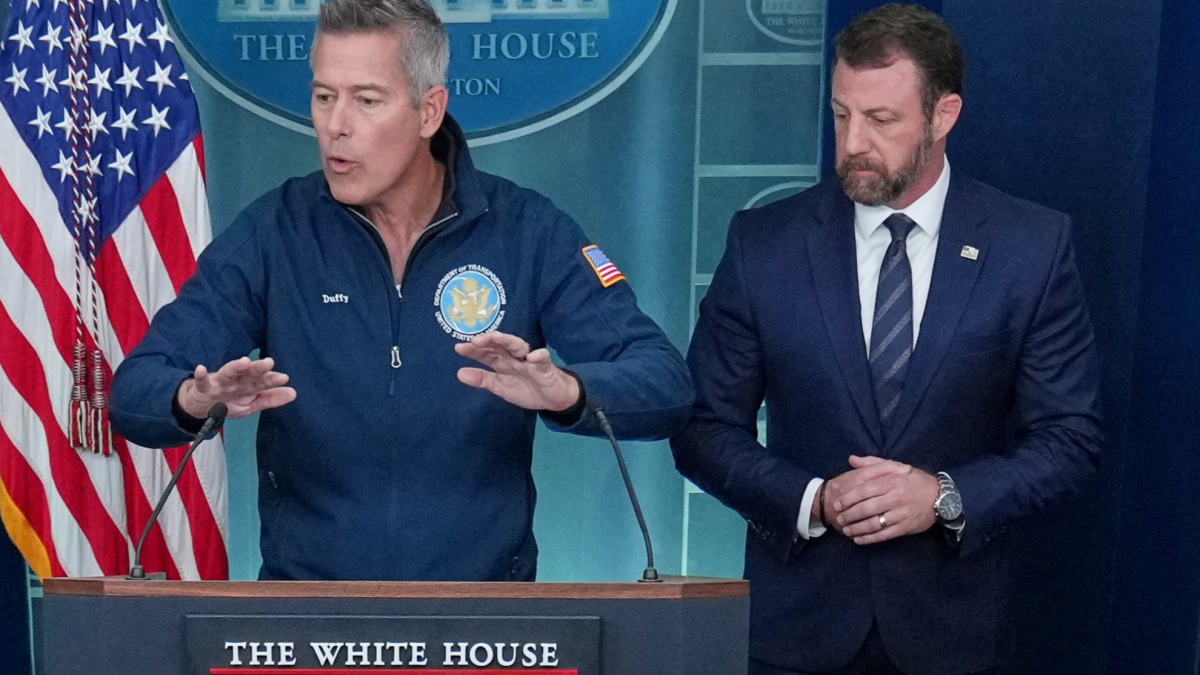
Thousands of flights and potentially over a million travelers were affected . Secretary of Homeland Security Markwayne Mullin told reporters at the White House that no one was in any danger as more than 3,000 flights were safely landed. But Secretary of Transportation Sean Duffy said he could not guarantee it wouldn’t happen again.
Mullin said the FAA was installing “ new equipment, new technology ” and “ it was overwhelming the older system .” There appeared to be no indication of a cyberattack, he said.
A limited number of domestic flights began departing late Friday after the ground stop was lifted, but it will likely take days for airlines to fully recover because so many planes and crews were out of position. Officials said they think the system will be back to normal in time to handle the Thanksgiving travel rush.
The nationwide ground stop was the first since January 2023 , when another key FAA computer system that sends notices to pilots malfunctioned, and the second since the aftermath of the Sept. 11, 2001 attacks.
Duffy was defensive, blaming Congress for failing to approve more funding for new technology, while downplaying the fact that trying to implement new fixes overtaxed the system. He implored lawmakers to act.
“ By doing nothing, you inject way more risk into the system ,” he said.
Duffy said he expected flights around the country to be “ back up and operational as we come into the heat of travel ” next weekend ahead of Thanksgiving, but he also suggested more disruptions might occur.
“ We didn’t think we would have this kind of outage. We did ,” he said, while also noting, “ We were able to review what went wrong, and then reboot the system and go. But, you will have more of these .”
Duffy said the problems were not linked to the FAA’s new AI-powered system the agency is rolling out to help predict problems in the sky because that isn’t connected to what failed on Friday.
“ This is all the old legacy equipment. All of the new equipment that’s been deployed did not go down ,” Duffy said.
The FAA has already replaced thousands of old copper wires with fiber optic lines and upgraded hundreds of radio systems as part of the overhaul that began last year after Congress approved $12.5 billion of funding. Duffy and the White House are pushing for $30 billion more to complete the work.