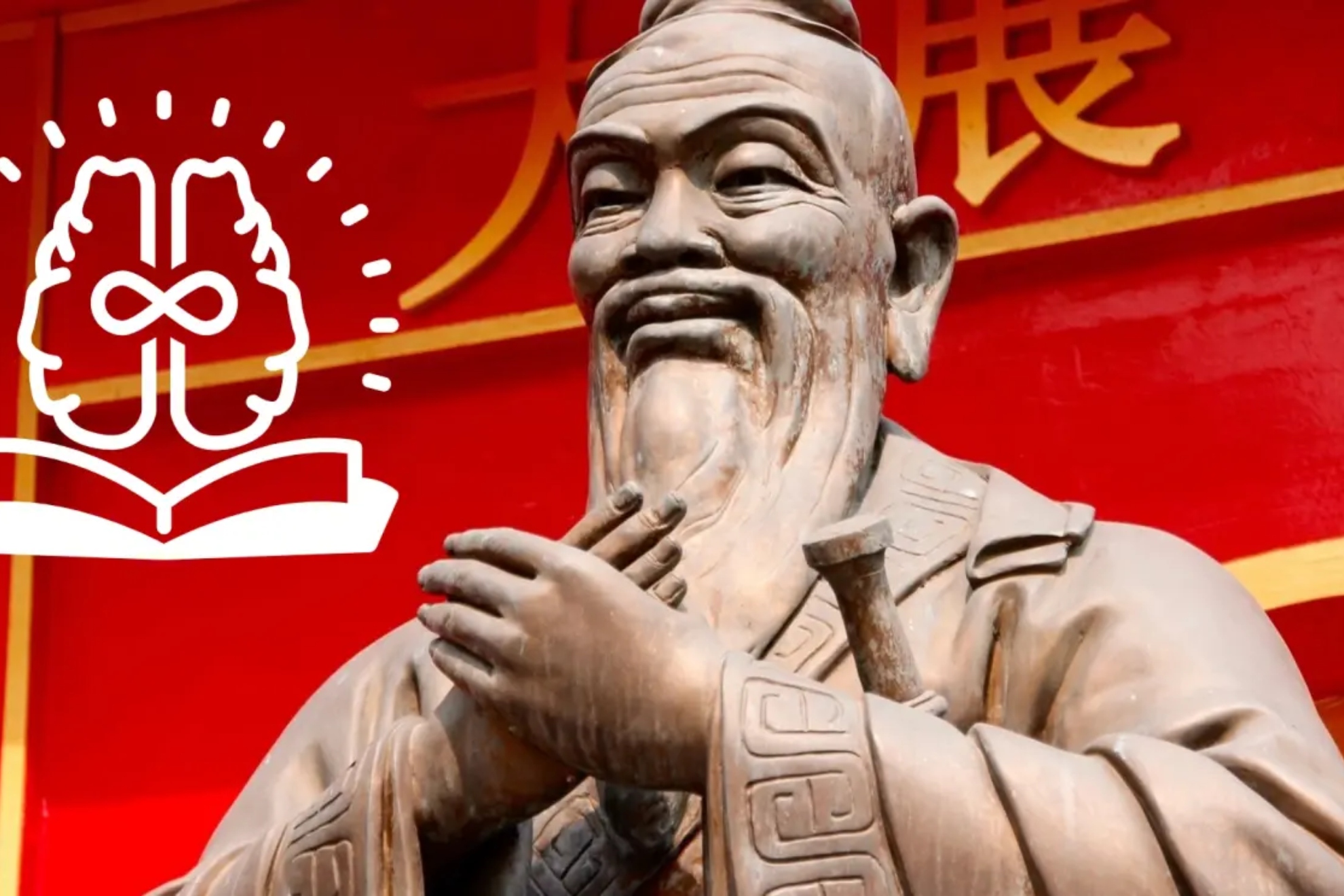
Confucius, Chinese philosopher: "Learning without thought is labor lost; thought without learning is perilous"
The ancient Chinese philosopher's enduring words highlight the importance of combining education with independent thinking
More than 2,500 years after Confucius lived, his observations about human behaviour, education and personal development continue to inspire readers around the world .
Among his most enduring teachings is a short statement about the relationship between acquiring knowledge and reflecting on what we learn: "Learning without thought is labor lost; thought without learning is perilous".
The quote captures a fundamental challenge in education. Reading books, memorising information and listening to experienced teachers can provide a valuable foundation, but knowledge becomes far more useful when people take the time to question it, interpret it and consider how it applies to real situations.
At the same time, independent thinking has its limitations when it is disconnected from evidence or experience.
People can develop convincing opinions without fully understanding a subject, potentially allowing assumptions and misinformation to shape their decisions.
Confucius ' message is therefore not simply an argument for studying harder or thinking more deeply. Instead, it encourages a balance between the two, suggesting that meaningful understanding depends on bringing knowledge and reflection together.
The saying appears in the Analects, a collection of conversations and teachings associated with Confucius and his followers.
The work became one of the central texts of the Confucian tradition, influencing education, ethics and political thought throughout East Asia.
Why Confucius believed learning must be accompanied by reflection
Confucius , traditionally dated to 551–479 BC, lived during a period of political fragmentation in ancient China.
He became known as a teacher and thinker who believed education and the cultivation of personal character could help individuals improve themselves and contribute to a better society.
His approach to learning extended beyond the simple accumulation of facts. Studying established teachings and learning from experienced people were important, but students also needed to consider what that knowledge meant and how it should influence their behaviour.
The first part of the quotation warns against studying without reflection. Someone might spend hours reading a textbook or listening to a lecture, yet retain little meaningful understanding if they never examine the material.
Memorisation can help people recall information, but recalling a fact is not necessarily the same as understanding its significance.
The second part offers an equally important warning. Thinking without learning can become dangerous because ideas developed without sufficient knowledge may rest on false assumptions.
Confidence alone cannot guarantee that a conclusion is correct, and personal intuition cannot always replace careful research.
The Analects presents these two weaknesses as complementary problems. One person gathers information but fails to make sense of it; another develops opinions without building a reliable foundation. Both approaches can prevent genuine progress.
The quotation's wording also varies between English translations. Some versions use "unavailing" or "fruitless" instead of "labor lost", while others describe thinking without learning as dangerous or leading to confusion.
These differences reflect the challenges of translating a classical Chinese text into modern English, but the central message remains consistent.
How the ancient teaching applies to modern life
The principle is particularly relevant in an era when information is readily available through search engines, social media and artificial intelligence tools.
Access to information has become easier, but deciding whether that information is reliable and understanding what it means still require effort.
Students, for example, may memorise material to prepare for an examination. However, the ability to explain a concept in their own words, connect it to other subjects and apply it to an unfamiliar problem demonstrates a deeper level of learning.
The same distinction applies in professional life. An employee who follows instructions without considering why a process works may struggle when circumstances change.
By contrast, someone who understands the underlying principles can evaluate new situations and make more informed decisions.
The other half of Confucius ' warning is just as relevant. Forming an opinion after reading a single headline, accepting a rumour without checking its source or making a major decision based solely on instinct can lead to avoidable mistakes.
Thought becomes more useful when it is informed by evidence, experience and a willingness to reconsider an initial conclusion.
The lesson also encourages intellectual humility. Learning should not end once someone believes they understand a subject. New evidence can challenge established assumptions, while discussion with others can reveal weaknesses in an argument that initially seemed convincing.
Ultimately, Confucius ' words offer a straightforward reminder that education is not merely about collecting information or producing ideas.
It is about developing the ability to connect the two. Knowledge provides the material for understanding, while reflection helps turn that material into sound judgment.
That balance explains why the quotation has survived across centuries and cultures. Whether someone is studying for an examination, developing a career or trying to make sense of a complicated issue, lasting progress depends on remaining curious, thinking critically and recognising the value of learning throughout life.