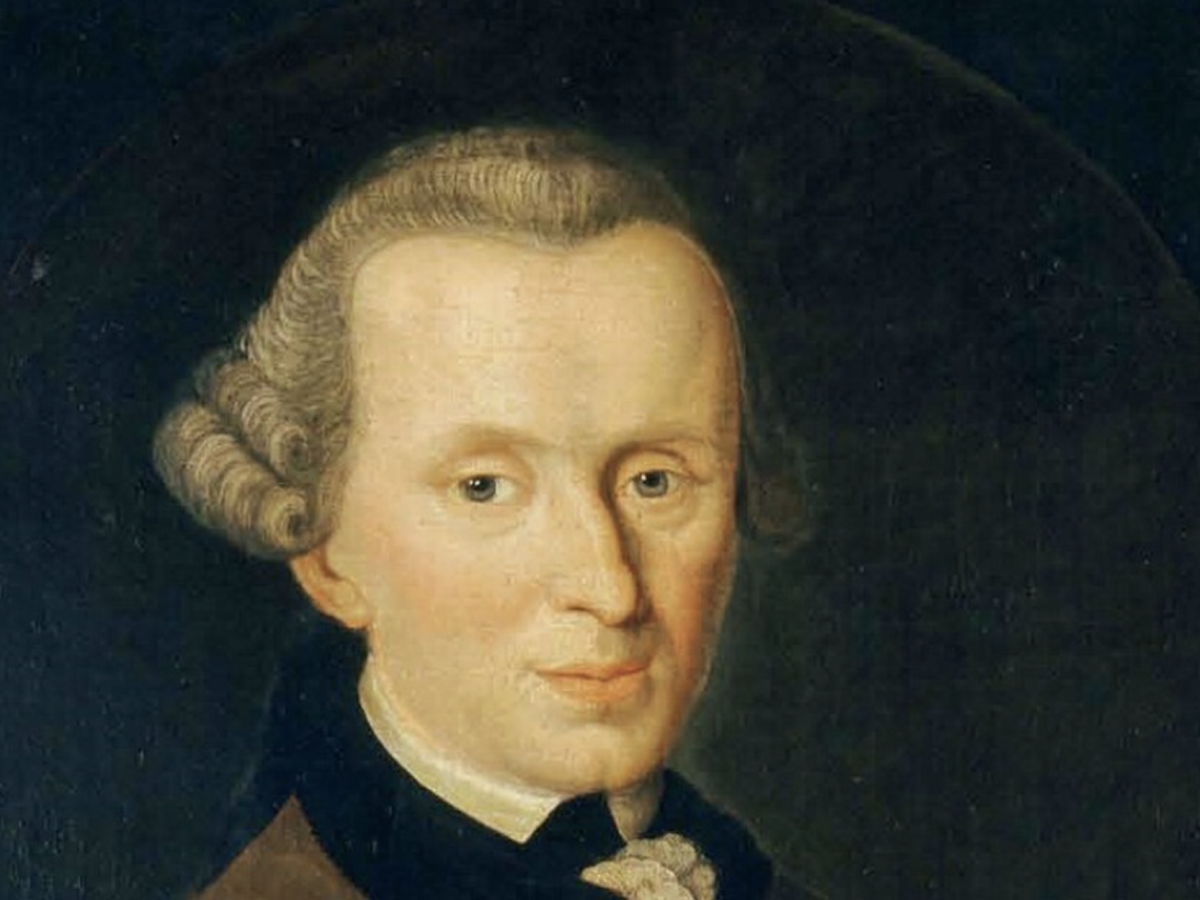
Immanuel Kant, philosopher, "Rules for Happiness: something to do, someone to love, something to hope for"
The famous three-part formula for a fulfilling life is widely attributed to Kant, although the historical record points elsewhere
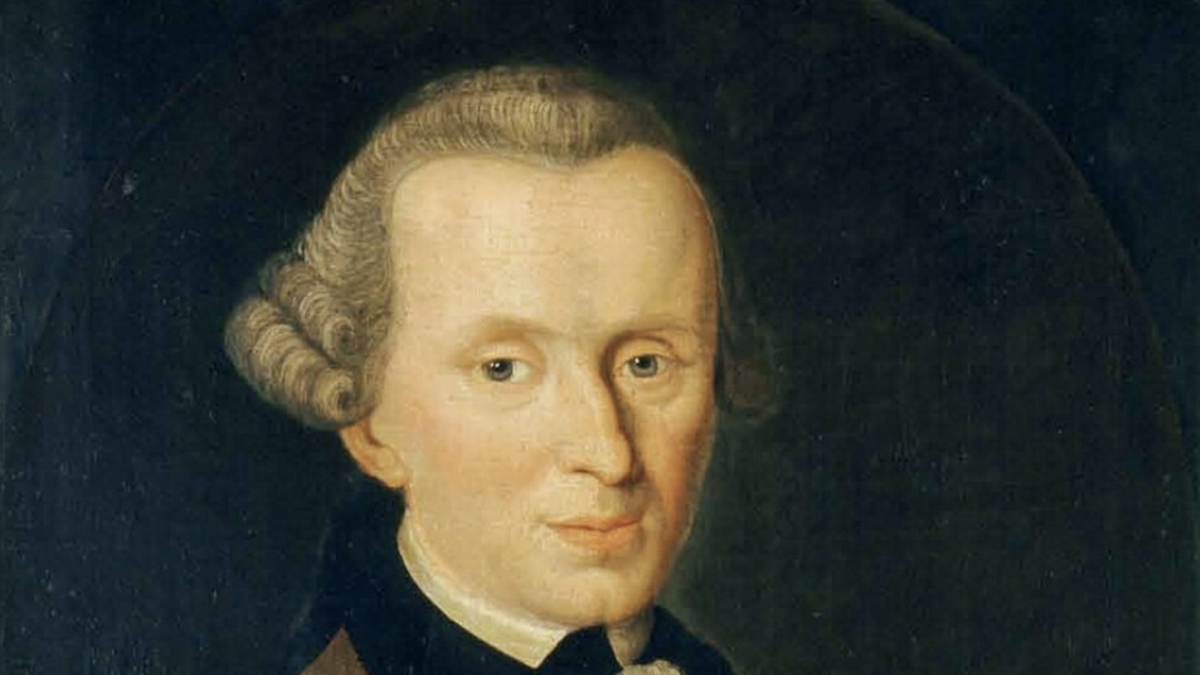
Few ideas about happiness are as concise as the famous formula attributed to Immanuel Kant : “Rules for Happiness: something to do, someone to love, something to hope for.”
The quotation has circulated widely online, appearing on collections of philosophical sayings and motivational websites. Goodreads lists it under Kant's name, while Play For Thoughts also includes it among its collection of philosophical reflections on happiness.
Yet there is an important historical qualification. Goodreads itself notes that its quotations are community-submitted and not verified. More detailed research into the wording has found no known work by Kant containing the sentence.
Instead, the closest documented source is George Washington Burnap , a 19th-century American clergyman who published a remarkably similar formulation in The Sphere and Duties of Woman: A Course of Lectures in 1848.
Burnap wrote: "The grand essentials to happiness in this life are something to do, something to love, and something to hope for."
The line has subsequently been attributed to several different figures, including Kant and Joseph Addison , helping explain why it remains attached to famous names across the internet.
That does not make the sentiment irrelevant to Kant's philosophy. In fact, the relationship between happiness, morality and hope was an important part of Kant's thinking, although his position was considerably more sophisticated than the three-part maxim suggests.
Kant's philosophy saw happiness as more complicated than a simple formula
Immanuel Kant , born in Königsberg in 1724, became one of the most influential philosophers of the modern era.
His work transformed discussions of knowledge, ethics, reason and human freedom. The Stanford Encyclopedia of Philosophy identifies human autonomy as a central feature of his critical philosophy, particularly the idea that practical reason gives itself the moral law.
For Kant , happiness was something human beings naturally sought, but it could not simply serve as the foundation of morality.
He argued that people have different desires and ideas about what would make them happy, meaning that happiness is too indeterminate to provide a universal moral rule.
This distinction is crucial. Kant did not argue that happiness was unimportant. Rather, he separated the desire to be happy from the question of how a person ought to behave.
His concept of the "highest good" brought morality and happiness together. Kant argued that virtue and happiness should ultimately coexist, with happiness understood as appropriate to moral worth.
The Stanford Encyclopedia of Philosophy describes this as an ideal combining virtue with happiness rather than treating pleasure or satisfaction as the sole measure of a good life.
Hope was also especially significant in Kant's philosophy. The Stanford Encyclopedia notes that Kant treated "What may I hope?" as one of philosophy's fundamental questions, alongside questions about what humans can know and what they ought to do.
That makes the final element of the famous three-part quotation particularly interesting. Although the exact wording is apparently not Kant's , hope genuinely occupied an important position in his philosophical system.
The three ideas also remain compelling because they describe different dimensions of ordinary life. "Something to do" suggests purpose and activity.
"Someone to love" points toward relationships and connection. "Something to hope for" introduces a future-oriented element, giving people something beyond the present moment toward which they can direct their expectations.
The enduring appeal of the quotation may therefore have less to do with Kant himself than with the simplicity of the formula.
It does not promise that happiness comes from wealth, fame or constant pleasure. Instead, it describes a life containing activity, meaningful relationships and an expectation of something still to come.
At the same time, readers should be careful when presenting the sentence as a direct Kant quotation. Multiple sources now identify Burnap as the likely original author, and scholarly discussions have highlighted the attribution problem.
So while the headline attribution remains popular, the historical evidence tells a more complicated story.
Kant undoubtedly wrote extensively about happiness and hope, but the memorable three-part rule appears to have acquired his name long after the words were first published.
Whether credited to Kant or understood through Burnap's original formulation, however, the basic idea has survived because it offers an unusually accessible way to think about a fulfilling life: purpose in the present, meaningful human connection and something worth looking toward in the future.