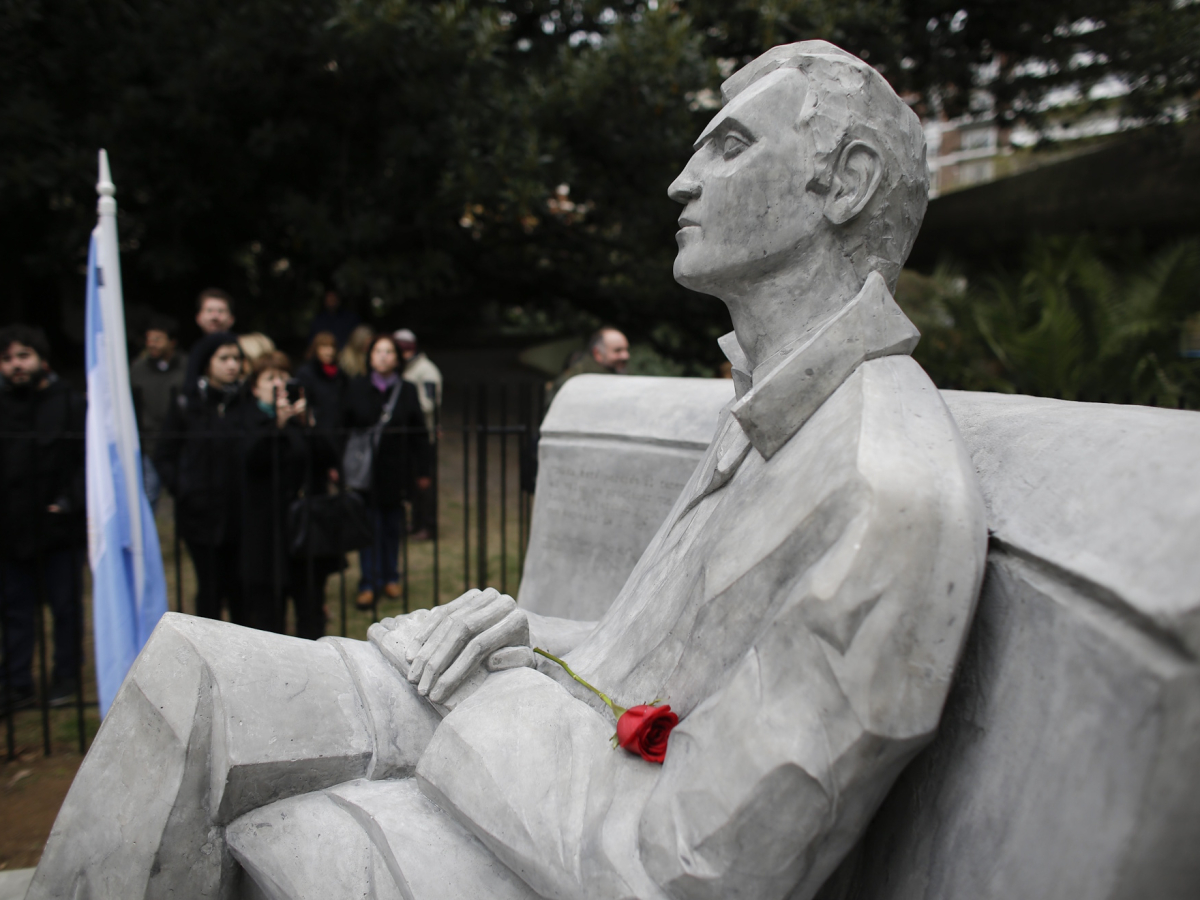
Julio Cortázar, Argentine writer: “I don’t renounce anything, I simply do what I can so that things renounce me”
The search for identity in a changing world can find answers in the literary legacy of Julio Cortázar, who through his work explores the complexity of being human.
'J ulio Cortázar , a key figure in contemporary literature, explores in his work "Hopscotch" the search for meaning in a chaotic world . The quote “I renounce nothing; I simply do what I can so that things renounce me” reflects an inner struggle that still resonates today in a context of hyperconnectivity and social pressure. In the age of social media, many feel that their lives lack direction, dragged along by others’ expectations and the constant bombardment of stimuli.'
Individualism and the speed of everyday life amplify feelings of uncertainty. This situation is manifested in the difficulty of being alone and the need for validation, problems that Cortázar addresses through characters who navigate their own search for authenticity . In a world where social comparison is the order of the day, his work invites reflection on creative freedom and the true meaning of happiness.
I renounce nothing, I simply do what I can so that things renounce me
The Literary Legacy of Julio Cortázar
'Julio Cortázar (1914-1984) was an Argentine writer who stood out for his innovative approach and his ability to intertwine the real with the fantastic . He was born in Brussels and grew up in Argentina, where he began his literary career. Cortázar became one of the most relevant figures of the Latin American "boom," which included authors such as Gabriel García Márquez and Mario Vargas Llosa. With works such as "Hopscotch," the author transformed Hispanic narrative and left a legacy that continues to resonate in contemporary literature.'
Cortázar's thought is deeply linked to his political commitment and to his search for new forms of expression. He used elements of magical realism and surrealism to explore human experience and the complexity of identity. Through his activism, especially during the military dictatorship in Argentina, he reflected in his writing a critique of oppression and a search for freedom. His style has influenced numerous contemporary authors, and his work continues to be a reference point in modern literature.