Massive pharaoh statue discovered by accident in Egypt could stand more than 27 feet tall
The remains are attributed to Ramses II, also known as Ramesses the Great
An Egyptian farmer reportedly stumbled upon a carved stone block that led archaeologists to the remains of a towering royal statue of Ramses II, one of ancient Egypt’s most powerful rulers and a figure often associated with the biblical story of Moses.
An ordinary day of farming has reportedly led to an extraordinary archaeological discovery: the remains of a colossal statue of Ramses II, the ancient Egyptian pharaoh commonly linked to the biblical account of Moses and the enslavement of the Israelites.
The discovery began in Behbeit El Hagar, a village in Egypt’s Gharbia province, where a farmer reportedly struck a carved stone block while tilling the land in front of his home. Rather than dismissing the find, he alerted local antiquities officials, setting an excavation in motion, according to reports by the Egyptian Gazette and Heritage Daily.
A colossal pharaoh emerges from the ground
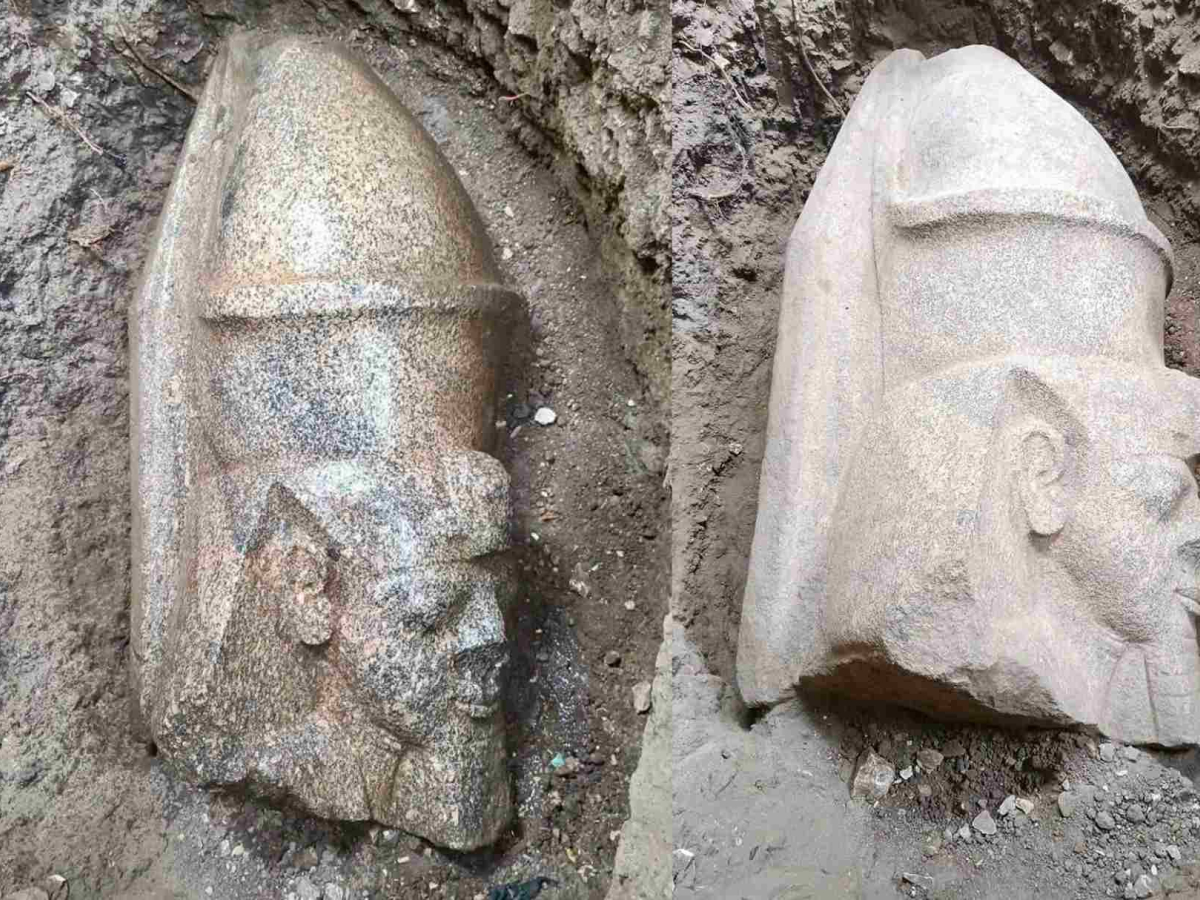
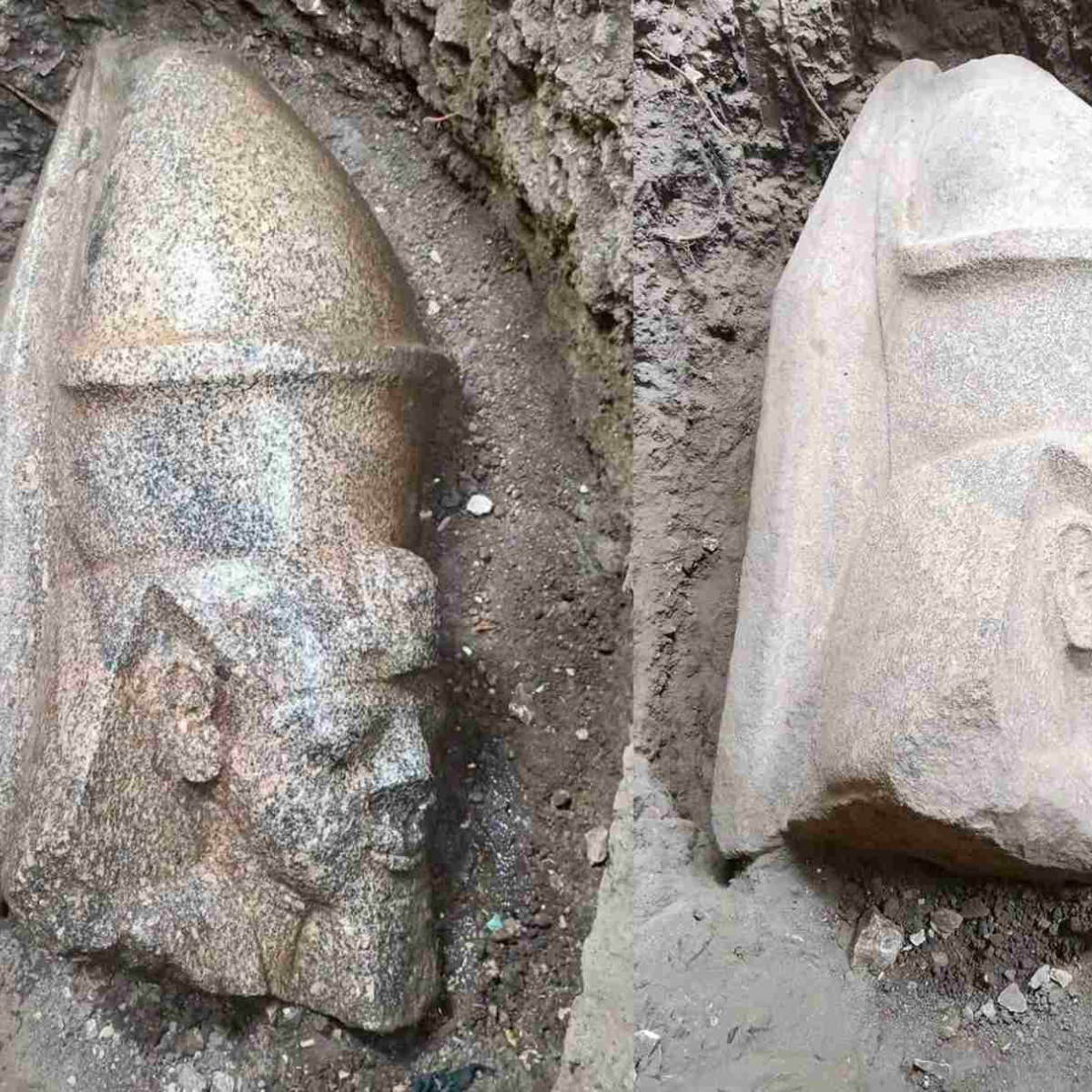
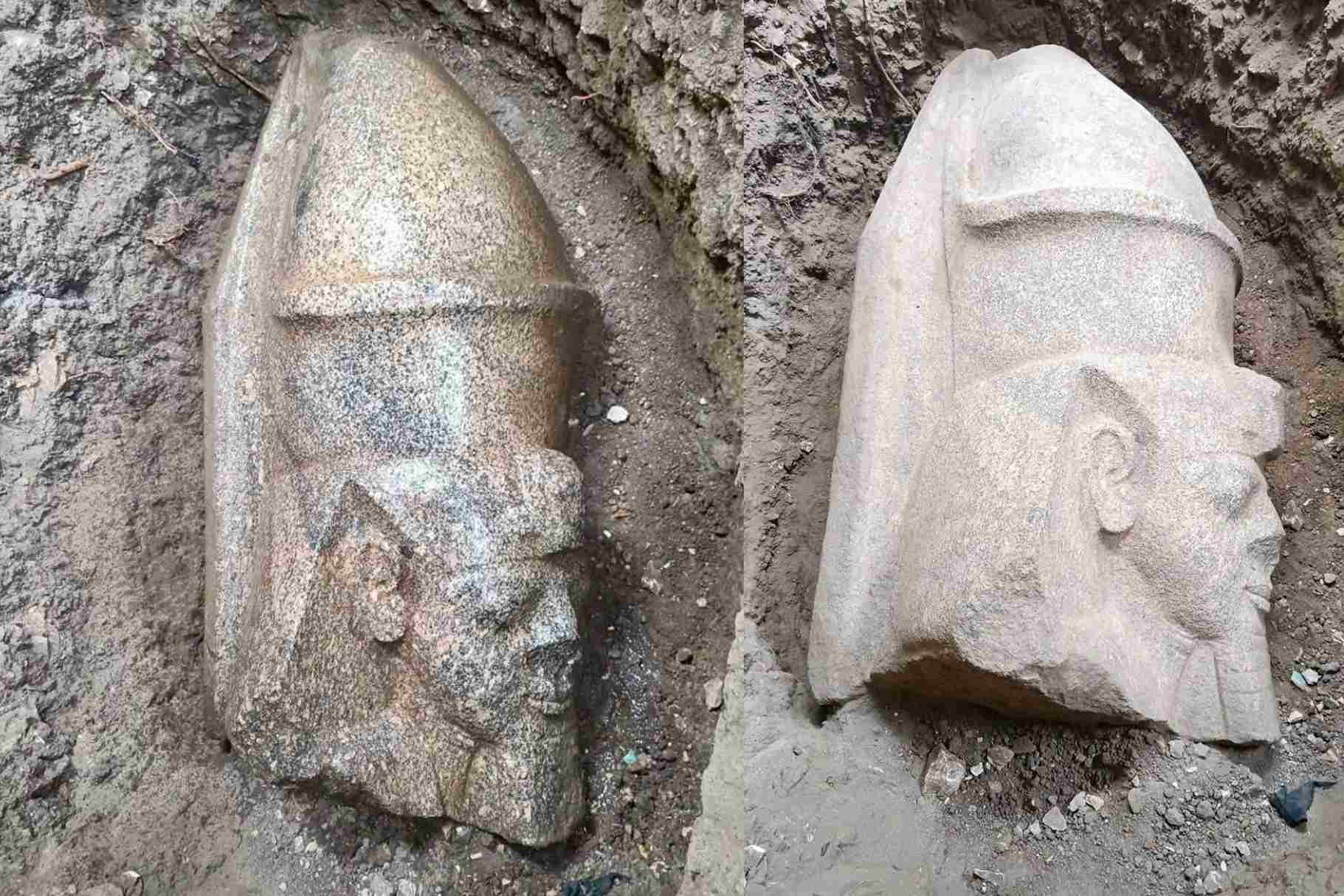
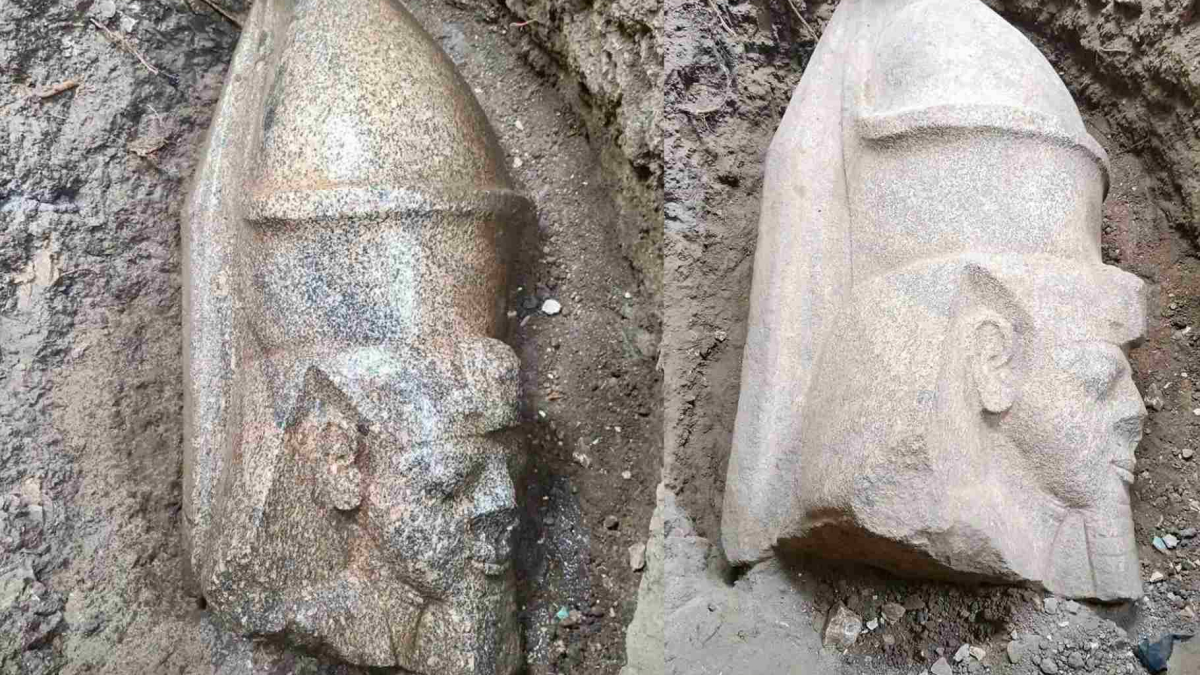
A team working under Egypt’s Supreme Council of Antiquities subsequently uncovered the head of a royal statue measuring more than five feet tall. Based on its proportions, archaeologists estimated that the complete monument would have stood more than 27 feet tall, including its base.
The remains are attributed to Ramses II, also known as Ramesses the Great, whose monumental building projects and lengthy reign made him one of the most prominent rulers of Egypt’s New Kingdom. The discovery offers another glimpse into the scale of royal sculpture in ancient Egypt, and the history preserved beneath the modern landscape of the Nile Delta.
The most striking find was the massive head of Ramses II , depicted wearing the double crown representing Upper and Lower Egypt. The crown symbolized the pharaoh’s authority over the unified Egyptian kingdom.
The most striking find was the massive head of Ramses II, depicted wearing the double crown representing Upper and Lower Egypt . The crown symbolized the pharaoh’s authority over the unified Egyptian kingdom.
The statues could help archaeologists better understand the site’s history
Archaeologists also reportedly recovered a second, smaller royal statue measuring just under eight feet tall. Although its legs and base were missing, its face remained clearly visible, framed by a nemes, the distinctive striped headdress worn by Egyptian kings.
The resemblance between the second statue’s face and the larger sculpture, along with its royal headdress, led researchers to suggest that it could also represent Ramses II. A separate block of pink granite, approximately four feet high, added another important piece of evidence.
It contained fragments of hieroglyphic inscriptions identifying the ruler with the titles “Nesu Beti,” meaning King of Upper and Lower Egypt, and “Sa Ra,” meaning Son of Ra, the ancient Egyptian sun god. Together, the statues and inscribed stone could help archaeologists better understand the site’s history, its royal connections and the role of monumental art in communicating a pharaoh’s power.
Born around 1303 B.C., Ramses II ruled Egypt for approximately 66 years, from about 1279 to 1213 B.C. He became famous for his military campaigns, diplomatic achievements and ambitious construction projects, including monumental temples and statues designed to preserve his image for generations.
His reign coincided with the height of Egypt’s New Kingdom, a period when the kingdom wielded considerable political and cultural influence across northeastern Africa and parts of the eastern Mediterranean. Ramses II commissioned some of ancient Egypt’s best-known monuments, including the temples at Abu Simbel.
His enormous statues were more than decorative works: they projected royal authority, reinforced religious traditions and connected the pharaoh with the gods. The newly reported sculpture’s estimated height of more than 27 feet would place it among the imposing royal monuments created to make a ruler’s presence felt on a monumental scale.
The discovery also touches on a longstanding question at the intersection of archaeology, religion and ancient history: Was Ramses II the pharaoh described in the biblical Book of Exodus?
In the biblical narrative, a pharaoh enslaves the Israelites, refuses Moses’ demands to release them and suffers a series of divine punishments before the Israelites escape Egypt. The ruler is not named in the text.
Ramses II is frequently associated with the story partly because of his prominence and his connection to the city of Pi-Ramesses, a royal center established in the eastern Nile Delta. Some popular interpretations identify him as the Exodus pharaoh, but historians and biblical scholars have not reached a consensus on the identity of the ruler. or on the historical chronology of the Exodus narrative.
There is no definitive archaeological evidence establishing Ramses II as the specific pharaoh described in the Bible. The statue’s discovery therefore does not prove the biblical account, even if it adds to the material record of the ruler whose name has become closely associated with it.