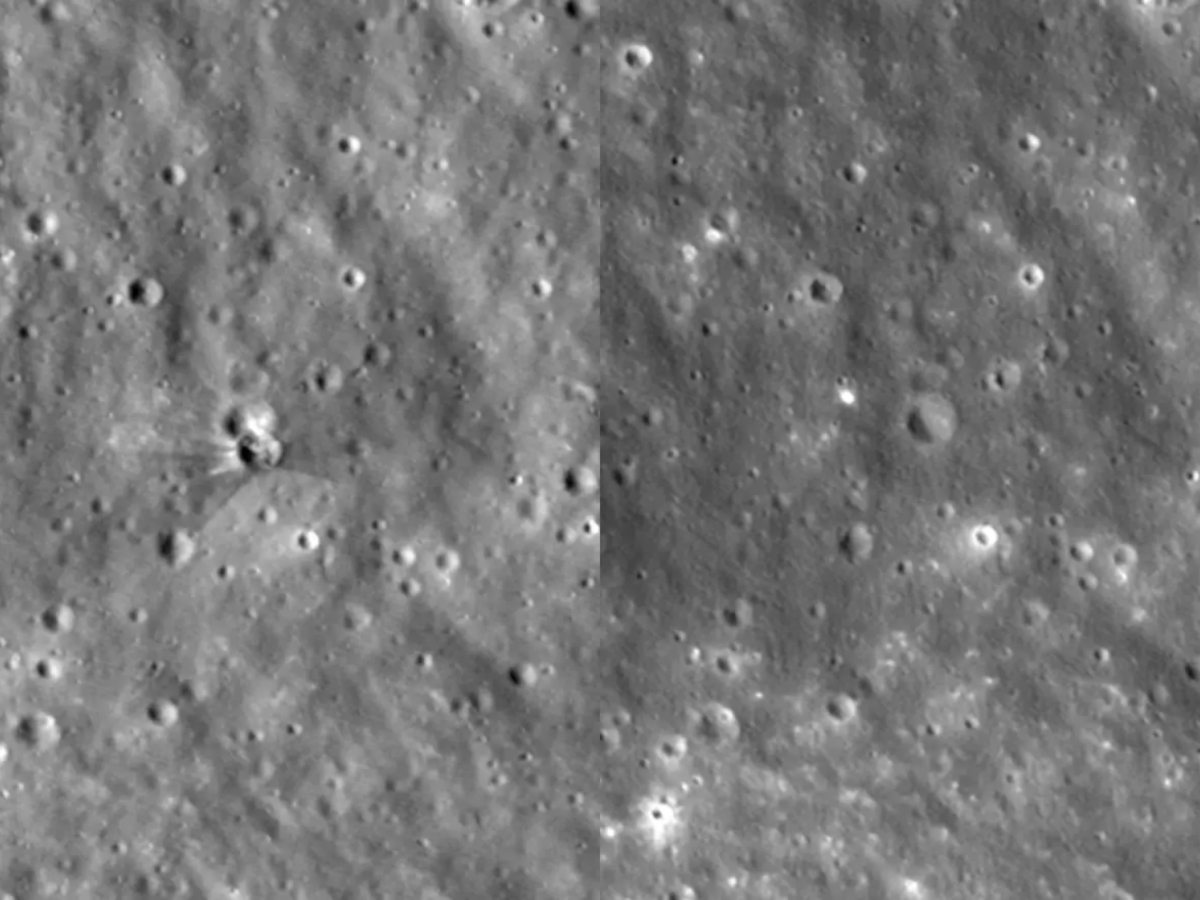
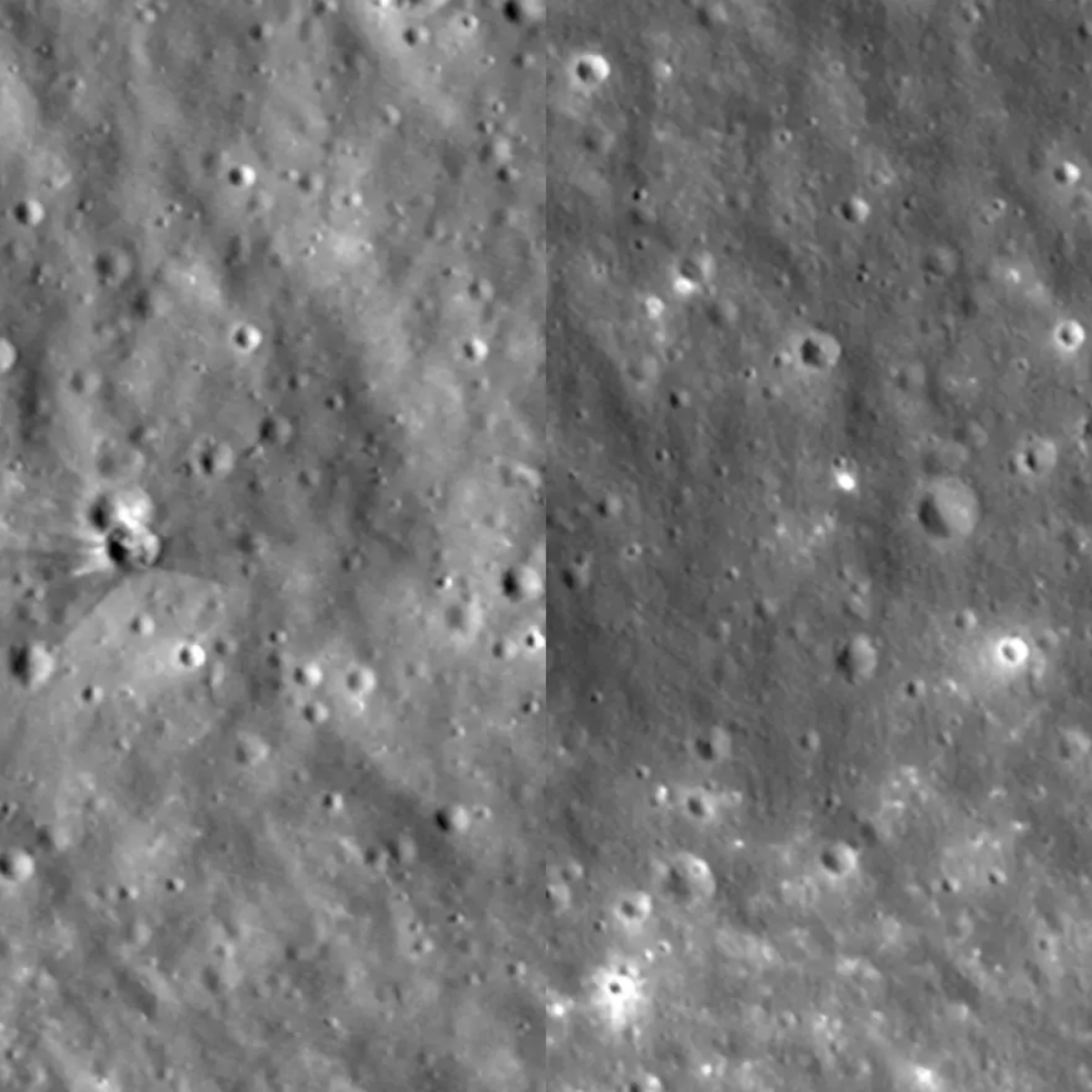
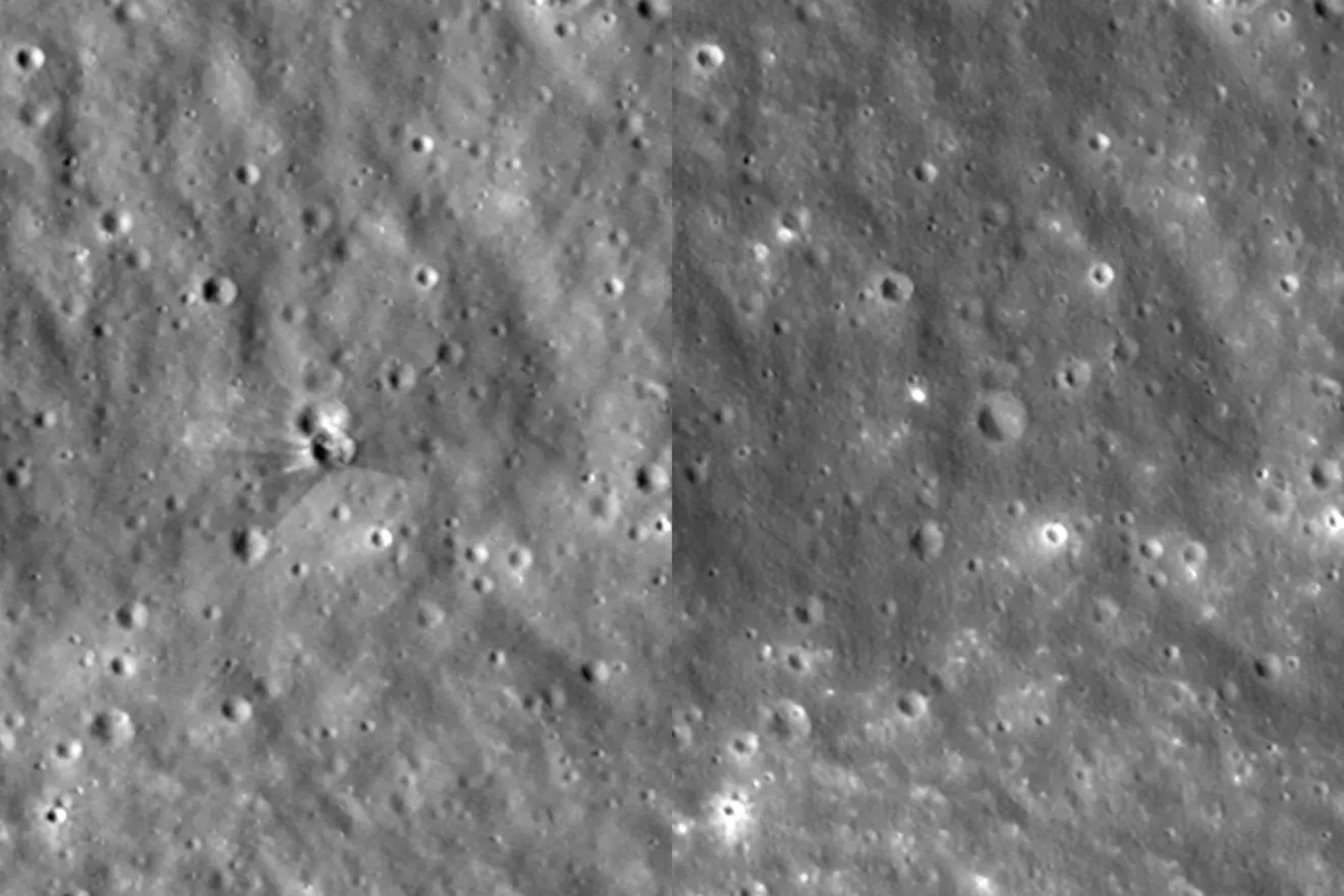
NASA publishes images of the location on the Moon where the SpaceX rocket impacted
The space agency confirms the creation of a new crater
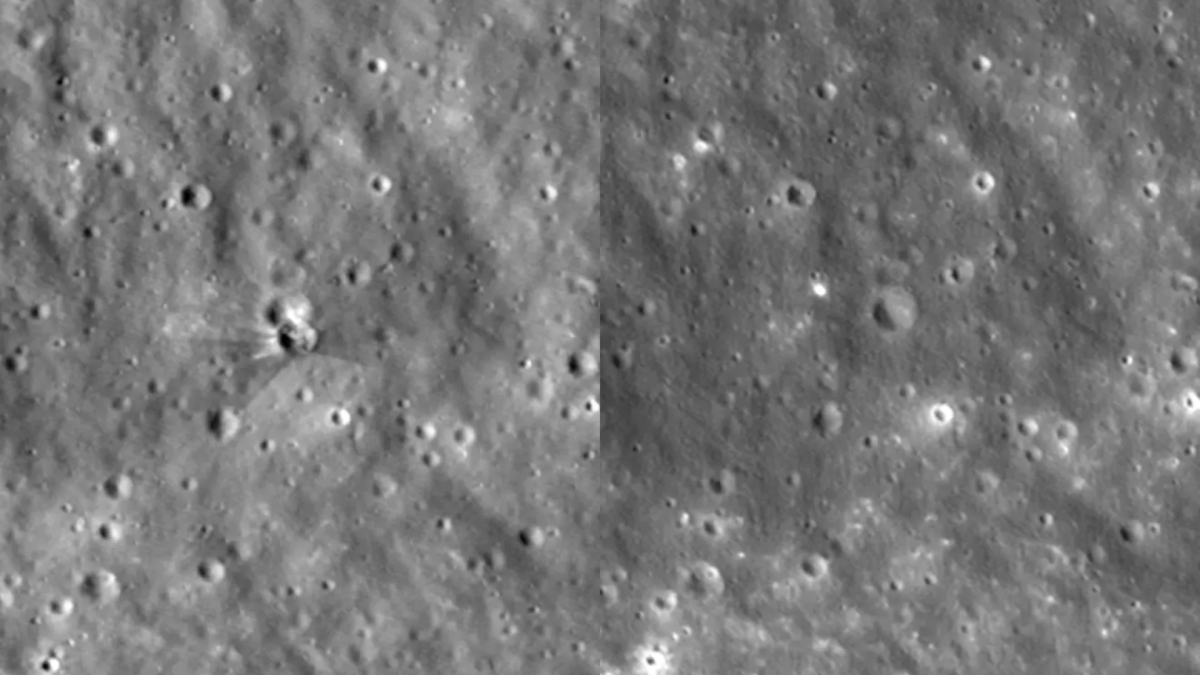
The NASA has released new images of the Moon's surface showing the crater formed after the impact of a Falcon 9 rocket from SpaceX . Although the launch took place in January 2025, it was not until last August 5 of this year that the collision occurred and the crater was consequently created.
“Thanks to the variety of viewing angles, scientists were able to see the crater under various lighting conditions that revealed unique features. In the images where the crater rim stood out, they measured its width at 18 meters (60 feet). They also determined that the crater is less than three meters (10 feet) deep based on the length of its shadow,” NASA explains on its website.
Maximum precision for capturing the impact images
To capture images of the impact, engineers tilted the spacecraft so that its cameras pointed toward the crater each time the LRO passed about 96 kilometers (60 miles) above the Moon, traveling at an approximate speed of 1.6 kilometers per second (one mile per second).
“Getting the orientation right was only half the challenge; the timing also had to be precise. If the camera captured the image just 10 seconds too early or too late, the target would be 16 kilometers (10 miles) off from its central position.”, NASA notes.
To capture these details, LRO used its Narrow Angle Camera, which can detect features as small as 90 centimeters (three feet) wide.
Thanks to this study, NASA has been able to verify that “the lighter bands near the edge of the crater are made of fresh material excavated from deeper in the subsurface.”
In the released images, some darker areas can be seen that correspond to dust and rocks from the surface itself. Meanwhile, the brighter areas are composed of “more recent material that had remained buried at greater depth and was exposed after the collision”.