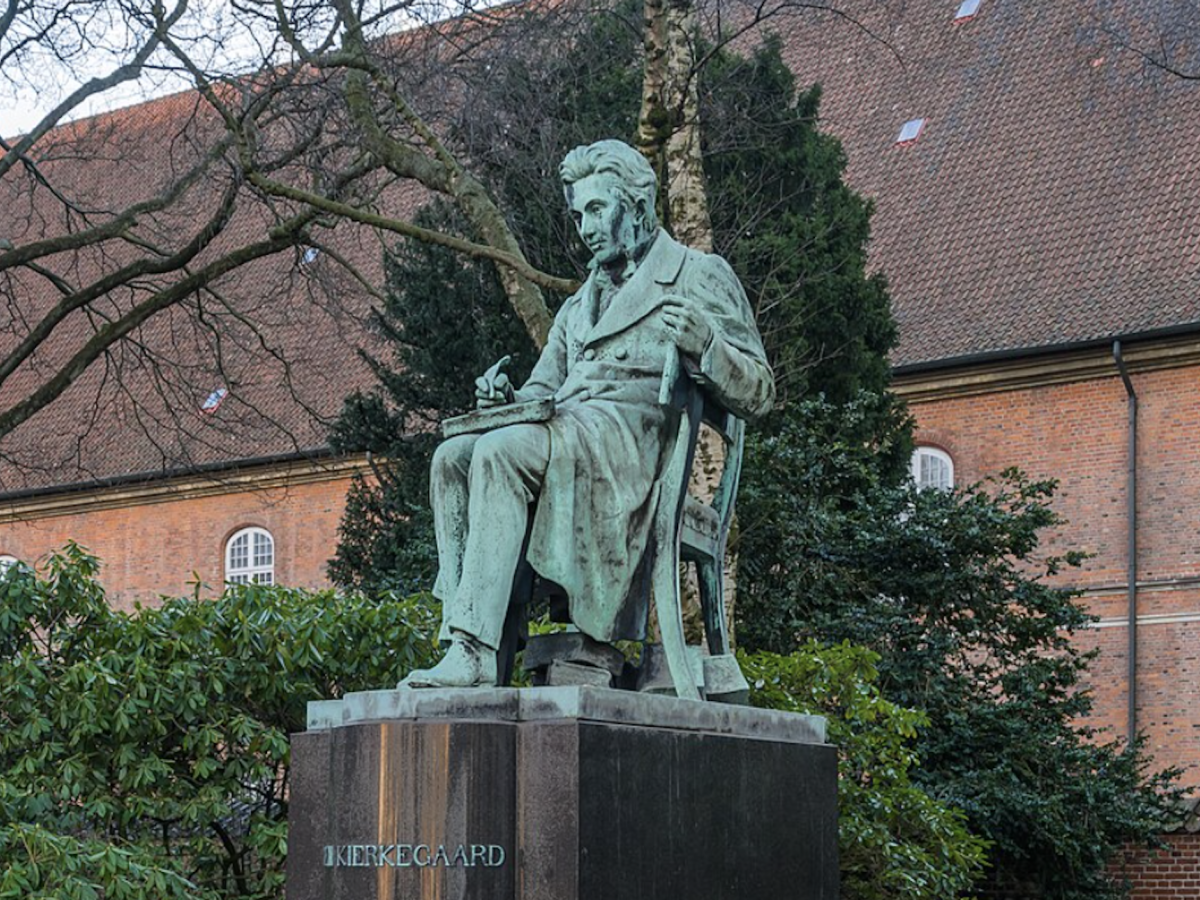
Søren Kierkegaard, Philosopher: "The function of prayer is not to influence God, but rather to change the nature of the one who prays"
The Danish philosopher believed that prayer should not be treated as an attempt to change God's decisions

Prayer is often associated with asking for help, seeking answers or hoping that a difficult situation will improve.
For many believers, it represents a way of communicating with God and placing their worries, ambitions and fears into a higher power's hands.
However, the Danish philosopher Søren Kierkegaard offered a different perspective on its purpose, suggesting that its greatest effect might not be on the world around us, but on the individual who chooses to pray.
His widely circulated observation, "The function of prayer is not to influence God, but rather to change the nature of the one who prays", challenges the idea that prayer is primarily a request for divine intervention. Instead, it presents prayer as a process through which people can examine themselves, reconsider their priorities and develop a different relationship with the circumstances they face.
The quote is frequently shared online, including on Goodreads, where it has attracted thousands of likes.
However, there is an important detail concerning its wording. The shorter formulation generally associated with Kierkegaard is: "The prayer does not change God, but it changes the one who offers it." The idea is connected to his 1847 religious discourse, An Occasional Discourse: On the Occasion of a Confession, included in Upbuilding Discourses in Various Spirits.
Kierkegaard was born in Copenhagen in 1813 and became one of the most influential religious and philosophical thinkers of the 19th century.
Often described as a precursor to existentialism, his writing explored subjects including anxiety, freedom, responsibility, faith and the difficulties involved in understanding one's own existence.
His philosophy frequently returned to the individual's relationship with themselves and with God. Rather than treating religious belief as something that could be reduced to intellectual arguments or established rules, he emphasised the importance of personal commitment. Faith, in his view, involved a deeply individual struggle that required honesty and reflection.
Why Kierkegaard believed prayer should transform the individual
The meaning behind the quote becomes clearer when considered alongside Kierkegaard's understanding of human nature.
People often approach prayer with a particular outcome in mind: they want a problem solved, a relationship repaired, an illness overcome or an uncertain future made more manageable.
Kierkegaard's argument shifts the attention away from whether those requests change God's intentions. Prayer, instead, can reveal what a person truly desires and why they desire it.
Through that process, individuals may recognise selfish motivations, confront uncomfortable truths or discover that their priorities need to change.
This does not necessarily mean that asking God for something is meaningless. Rather, the emphasis is on what happens internally while someone prays. The experience can encourage patience, humility, acceptance and a willingness to take responsibility for personal decisions.
An article published by America Magazine in February 2020, titled The startling prayer life of Søren Kierkegaard , explored this more personal side of the philosopher. It described how prayer was an important part of his private life, despite his public reputation as a sharp and sometimes humorous intellectual.
The article also highlighted the emotional struggles that influenced his religious reflections, including the melancholy and anxiety he experienced from an early age.
Academic research has also examined this interpretation. In a 2017 paper published in Kierkegaard Studies Yearbook, philosopher Joshua Cockayne argued that prayer, in Kierkegaard's writing, can provide a route towards greater self-knowledge and a closer relationship with God. This suggests that prayer is not simply about expressing what someone wants, but also about understanding the person making the request.
Ultimately, Kierkegaard's observation remains relevant because it offers a different way of thinking about faith.
It does not promise that prayer will immediately remove hardship or deliver the outcome someone hopes for. Instead, it asks people to consider whether the experience can change how they respond to life's challenges.
The central message is that prayer may not alter every circumstance, but it can alter the person facing them. Through reflection, honesty and humility, the individual may develop a greater understanding of themselves and what truly matters.