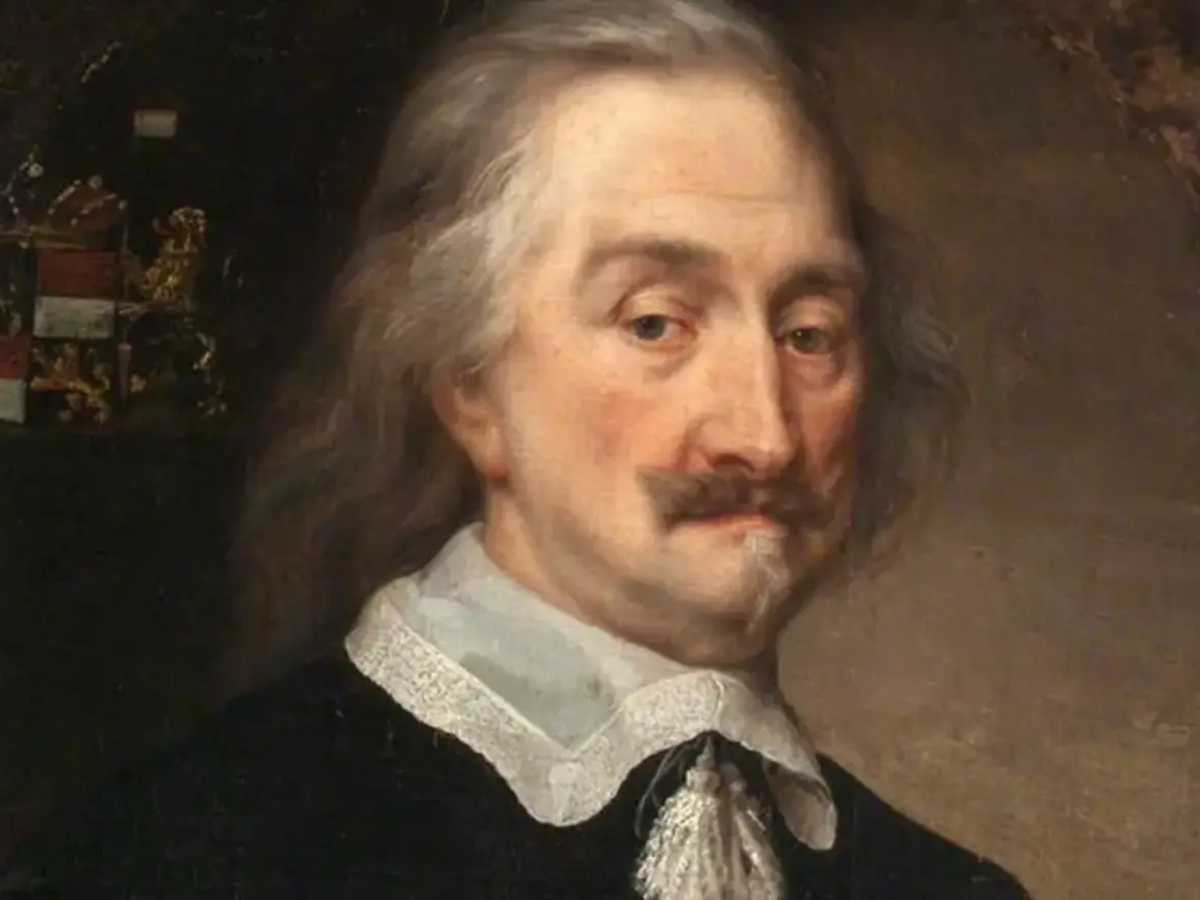
Thomas Hobbes, philosopher: "Curiosity is the lust of the mind"
Hobbes's social contract theory can help us understand the legitimacy of our governments

The relentless pursuit of happiness and the fear of loneliness are essential dilemmas that we face throughout our existence. Hobbes’s phrase , which suggests that curiosity is a form of mental lust , highlights the contemporary unease about our inability to find satisfaction in the present. The need for approval and the constant fear of making mistake s fuel our frustration and divert us from our path toward a fulfilling life.
In a world where the future seems uncertain, many feel lost and distressed. The work " Leviathan " reflects how these universal problems affect our human nature, portraying a cycle of dissatisfaction that leads us to constantly desire more, without being able to enjoy the present.
To understand the problem of the legitimacy of government and the obligation of citizens, the thought of Thomas Hobbes offers a particularly interesting perspective. His reflection on the social contract proposes that individuals give up certain freedoms in exchange for protection and order through an implicit agreement that justifies governmental authority.
“Curiosity is the lust of the mind”
The theory of the social contract in Thomas Hobbes's thought
Thomas Hobbes (1588-1679) was an English philosopher notable for being one of the founders of modern political philosophy. His most influential work, " Leviathan ", lays the foundations of social contract theory and addresses topics such as political absolutism and the legitimacy of power. In a context of political instability and civil war, Hobbes reflected on the need for a strong government that would guarantee security and social order.
Hobbes's thought centers on the idea that, in its natural state, human beings live in constant chaos, a "war of all against all." This state of nature, according to him, requires the creation of a social contract in which individuals give up certain freedoms in exchange for protection and stability. His ideas are interrelated with those of philosophers such as John Locke, who, although he also deals with the social contract, defends a more optimistic view of human nature and individual rights, contrasting with Hobbes's pessimism.
One of his most famous phrases, "Curiosity is the lust of the mind" , reflects his view of human desires as drivers of behavior. For Hobbes, curiosity, as an uncontrollable desire, can lead to dissatisfaction and the transformation of individuals into destructive beings. This ties in with his idea that regulation and social control are necessary to prevent our impulses from generating chaos and disorder in everyday life.
The phrase "Curiosity is the lust of the mind" is still relevant today, since in daily life in the 21st century, where access to information is almost unlimited, we can observe the effects of this unbridled curiosity. Social media, the constant search for novelty, and information overload create a scenario in which mental and emotional disorder can prevail. The need to establish limits and a sense of order in our pursuit of knowledge and experiences is a reflection that Hobbes anticipated in his analysis of human psychology and politics.