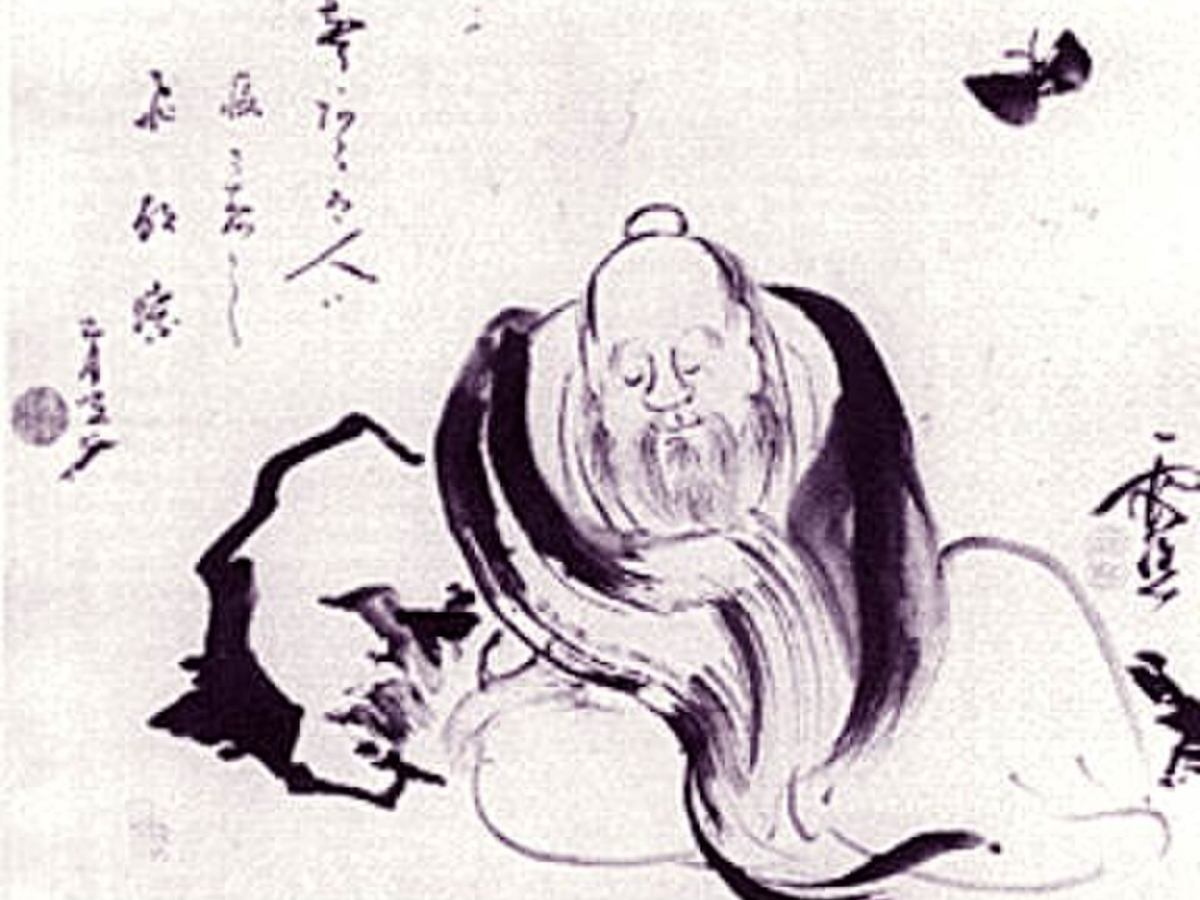
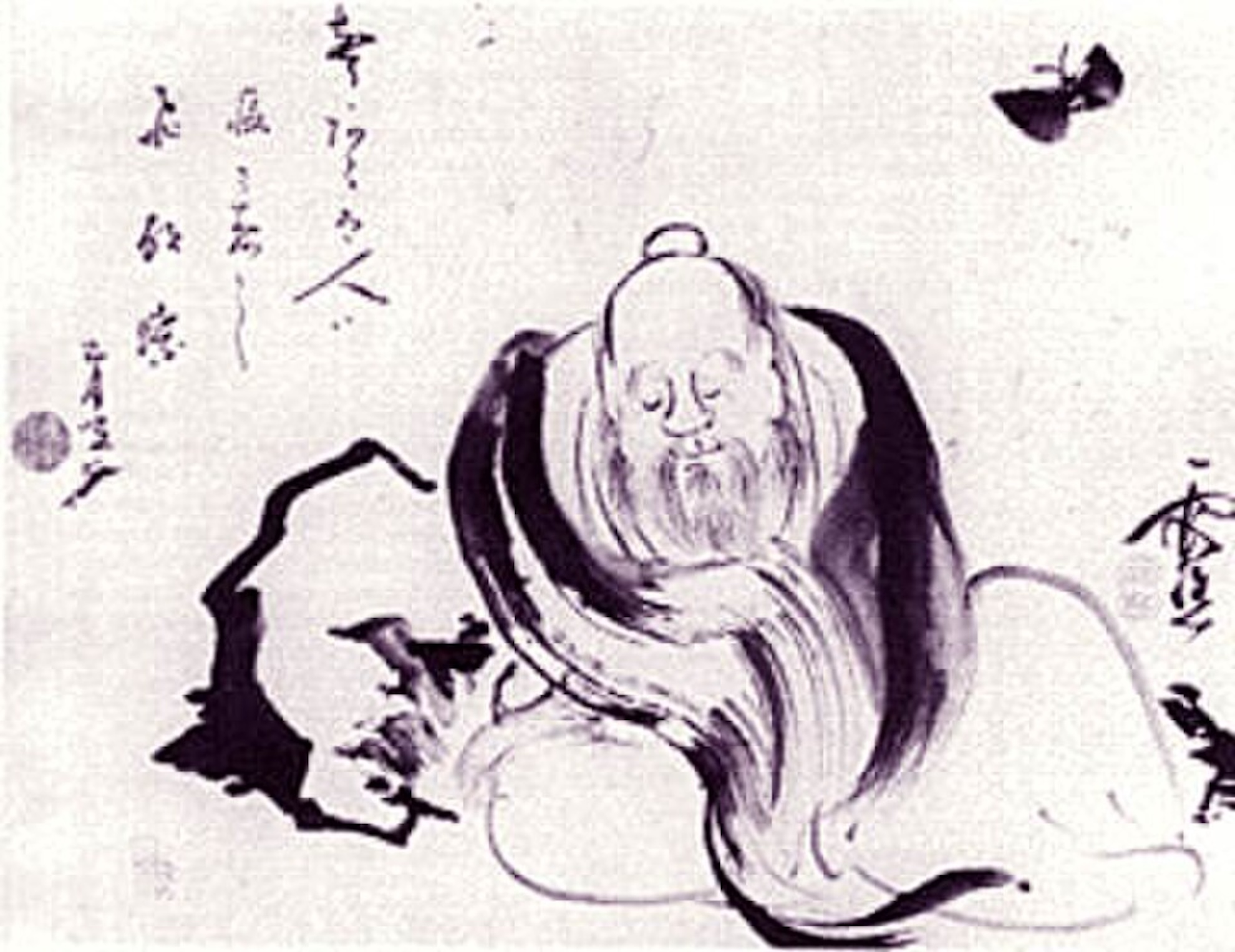
Zhuangzi, Chinese philosopher: "Rewards and punishment are the lowest form of education"
The ancient Chinese thinker's philosophy challenges the idea that people learn best through prizes and penalties, arguing instead for a deeper understanding that comes from within
The way people are taught can shape not only what they learn, but also why they choose to learn it.
A student might work hard to earn high marks, an employee may chase a bonus, and a child could follow the rules simply to avoid being punished. But what happens when the rewards disappear or nobody is left to enforce the rules?
A quote commonly attributed to the ancient Chinese philosopher Zhuangzi offers a thought-provoking answer: "Rewards and punishment are the lowest form of education".
The statement questions an approach to learning that depends heavily on external pressure rather than genuine curiosity or personal understanding.
Instead of encouraging people to explore ideas for themselves, rewards and penalties can turn education into a transaction in which the main objective is to gain something or avoid an unpleasant consequence.
Zhuangzi , also known as Chuang Tzu, was a central figure in classical Daoist philosophy who lived during China's Warring States period, around the fourth century BCE.
His teachings challenged conventional assumptions about how people should live, think and behave, often using imaginative stories and philosophical puzzles to question established ideas.
His approach placed considerable importance on living naturally and responding to the world without becoming overly constrained by artificial expectations.
In this context, the criticism of rewards and punishment reflects a broader concern about the limits of trying to control people from the outside.
There is, however, a distinction worth making about the quotation itself. Although the wording is widely circulated under Zhuangzi's name, the precise English phrase is not necessarily a direct, verifiable translation of a specific passage from the original text.
A quotation reference traces similar wording to Lionel Giles' 1906 translation and selection of Zhuangzi's writings, illustrating how translated philosophical sayings can evolve over time.
Why rewards and punishment can undermine the desire to learn
The idea behind the quotation has a striking connection with modern research into human motivation.
Psychologists distinguish between intrinsic motivation, in which people undertake an activity because they find it interesting or meaningful, and extrinsic motivation, in which they act to obtain an external benefit or avoid a negative consequence.
Neither form of motivation is automatically good or bad. A qualification can open career opportunities, while clear rules can help maintain a safe and productive learning environment.
The difficulty arises when external incentives become the main reason for doing something.
A major meta-analysis published in Psychological Bulletin in 1999 examined 128 studies on external rewards and intrinsic motivation.
Researchers Edward Deci, Richard Koestner and Richard Ryan found that certain expected, tangible rewards tied to participation, completion or performance could reduce people's intrinsic motivation. Their findings also indicated that positive feedback could support interest rather than undermine it.
The implications for education are significant. When students focus exclusively on grades, they may concentrate on memorising information for an examination instead of developing a lasting understanding of the subject. Once the assessment is over, the incentive to revisit the material can disappear.
Punishment can create a similar problem from the opposite direction. A student who fears detention or embarrassment might comply with classroom expectations without understanding why those expectations matter.
The behaviour may change temporarily, but the underlying attitude does not necessarily follow.
Research published in Perspectives on Psychological Science in 2021, analysing 344 samples involving more than 223,000 participants, also found that intrinsic motivation was associated with student success and well-being.
Motivation driven by rewards or avoiding punishment was not associated with performance or persistence in the same way and was linked to lower well-being.
Zhuangzi's philosophical perspective therefore invites a different question: rather than asking how to make someone obey, how can we help them understand the value of what they are doing?
That does not mean eliminating discipline, expectations or accountability. Children need boundaries, students require guidance, and institutions must maintain standards. Instead, the lesson is about ensuring those measures do not become substitutes for genuine learning.
Teachers can encourage curiosity by giving students opportunities to ask questions, explore different solutions and understand the reasons behind what they are studying.
Parents can praise persistence and effort rather than making approval dependent entirely on achievement. Employers can offer constructive feedback and opportunities for development instead of relying solely on financial incentives.
Ultimately, the quotation's enduring appeal lies in its challenge to the assumption that external control is the best way to encourage lasting change.
Rewards can offer short-term encouragement, and punishment can discourage unwanted behaviour, but neither guarantees that a person will develop independent judgment or a genuine interest in learning.
The deeper message is that education should help people become capable of directing themselves, rather than simply teaching them to respond to whoever holds the power to reward or punish them.