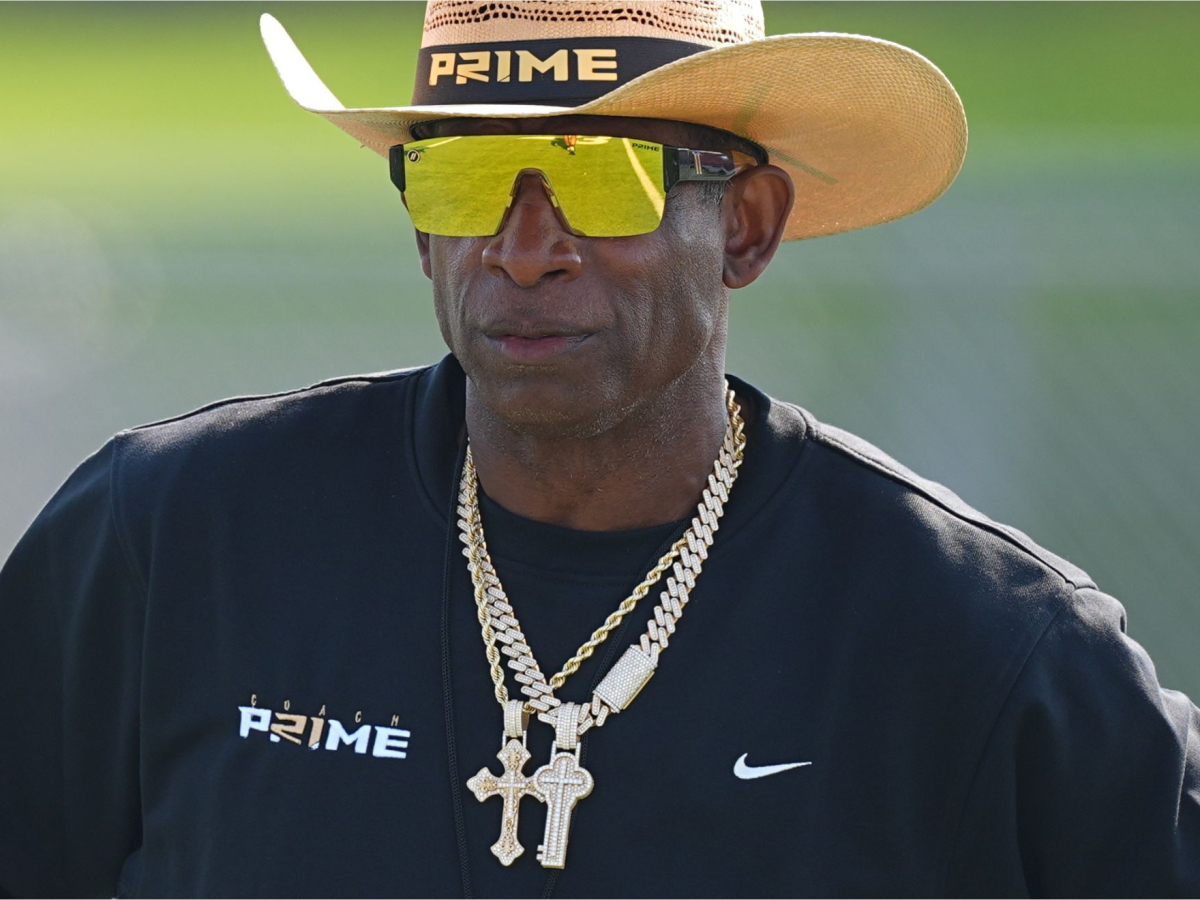
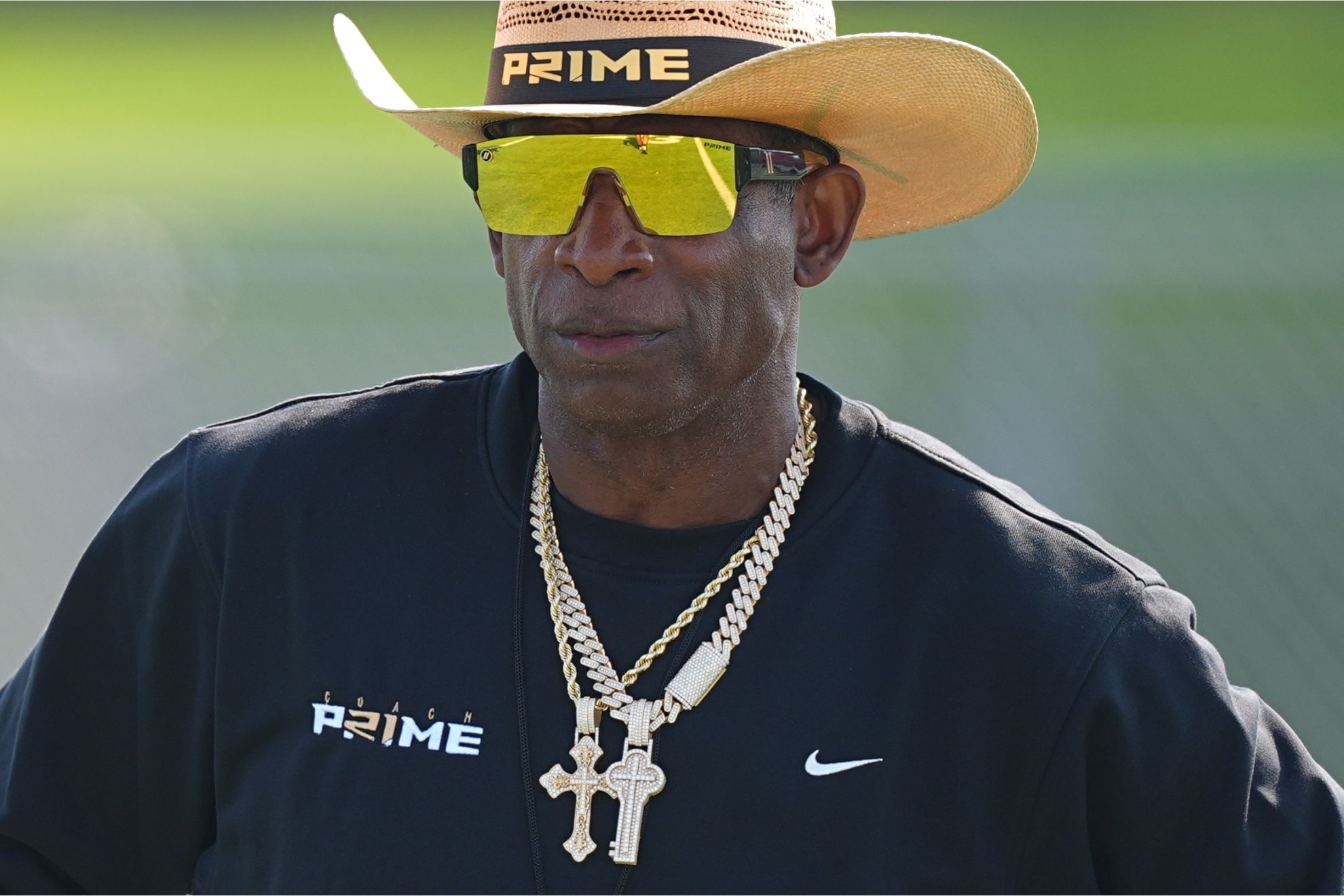
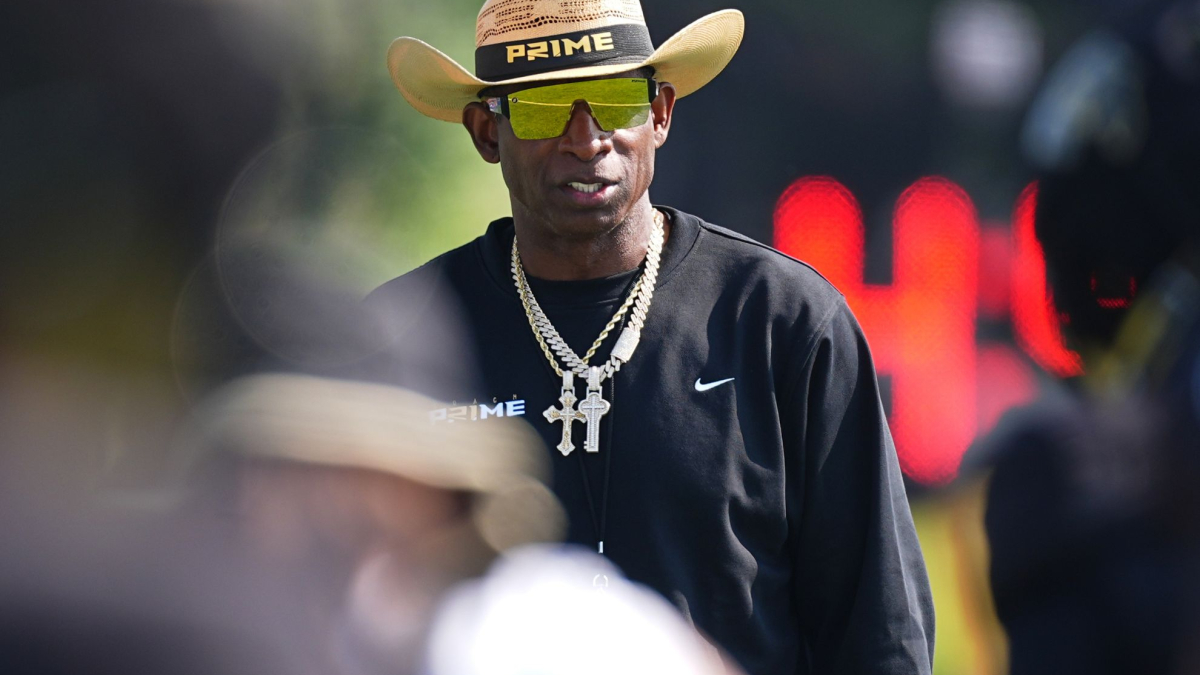
Coach Prime Tax? Colorado player claims that playing for Deion Sanders is harming him and accuses the NCAA of foul play
Ezra Christensen is still waiting for a decision on his eligibility as the Colorado transfer argues that he is losing valuable preparation time ahead of the 2026 season
E zra Christensen 's move to Colorado was supposed to be the next step in a remarkable football journey.
Instead, the defensive lineman has found himself watching the start of the season approach from the sidelines while his eligibility remains tied up in court.
Christensen transferred to the Buffaloes after an impressive 2025 season at New Mexico State, where he earned first-team All-Conference USA recognition after recording 42 tackles, 11 tackles for loss and six sacks.
Pro Football Focus also gave him an 88.6 overall grade, placing him among the country's most highly regarded interior defensive linemen.
Yet his place on Deion Sanders ' roster remains uncertain because of a dispute over whether he should receive another season of college eligibility.
Christensen has taken his fight against the NCAA to court, seeking an injunction that would allow him to play for Colorado during the 2026 campaign.
The dispute stems from the NCAA's eligibility rules and the way his previous seasons, including his time at junior college, have been counted.
For Christensen , the delay has become increasingly difficult to accept.
Speaking to DNVR, he suggested that the profile of his new program could be contributing to the complications.
“It’s frustrating to talk about it,” Ezra Christensen confessed. “I don’t know if it’s a politics thing. I don’t know if it’s a Coach Prime or Colorado thing. I know for sure if I was at another institution, this would’ve been a lot easier.”
That is a serious allegation, although there is currently no established evidence that the NCAA has treated Christensen differently because he plays for Sanders or Colorado.
His comments instead reflect the frustration of a player who believes the process is costing him an opportunity to prepare for a potentially important season.
Christensen questions why similar cases moved faster
The timing is particularly damaging because Christensen is missing the portion of the year when players establish themselves within a new defensive system.
He cannot simply replace weeks of fall camp by training independently in Florida. Colorado's defensive linemen are already building chemistry, learning assignments and competing for playing time, while Christensen remains separated from the team as his legal case continues.
His frustration has also been heightened by other recent eligibility cases. His attorney, Darren Heitner , has pointed toward rulings involving other athletes as evidence that players in comparable circumstances have received relief.
Recent litigation has challenged the NCAA's approach to its five-year eligibility framework, with courts issuing injunctions that have allowed some athletes to continue competing.
“We provided every similar case to the judge,” Ezra Christensen said. “These guys got their injunctions, and there’s no difference from my case. What’s taking you two weeks to decide?”
The wider legal landscape has indeed become complicated. In a separate Colorado case, a federal judge granted a preliminary injunction involving athletes seeking a fifth season, and on August 10 the court rejected the NCAA's attempt to stay that injunction while its appeal proceeds.
Christensen's own case, however, remains distinct and still requires a ruling.
The consequences extend beyond football. Christensen's background makes the uncertainty particularly significant.
He grew up in an orphanage in Sierra Leone, was adopted at 16 and arrived in American football without the knowledge of NCAA eligibility rules.
His high school career was also disrupted by the COVID-19 pandemic, before he eventually worked his way through junior college and into the FBS. His attorney has argued that those unusual circumstances should be considered in determining his eligibility.
That journey makes the current impasse especially painful. Christensen had already established himself as a productive college defender and was viewed as a potential NFL prospect before arriving in Boulder.
PFF previously ranked him among the top defensive tackles in the country, while his 40 pressures and six sacks at New Mexico State demonstrated the disruptive ability Colorado hoped to add to its defensive front.
For Sanders and Colorado, his availability could significantly strengthen the defense. For Christensen , though, the immediate concern is much more personal: every day spent waiting is another day of preparation he cannot recover.
The suggestion of a “Coach Prime tax” remains Christensen's suspicion rather than a proven explanation for the delay.
The NCAA's eligibility dispute is part of a much broader battle over how college football should handle athletes whose careers have been shaped by junior college, transfers and changing eligibility regulations.
Until the court makes its decision, Christensen can only train away from Boulder and wait.
His original ambitions for the season may have included a major statistical campaign and a run toward the NFL. For now, simply getting onto the field for Colorado has become the priority.