Dante Moore injury: Desman Stephens II’s disturbing actions cast a shadow over his apology
A one-game suspension leaves unresolved questions about his conduct while Moore’s recovery remains uncertain
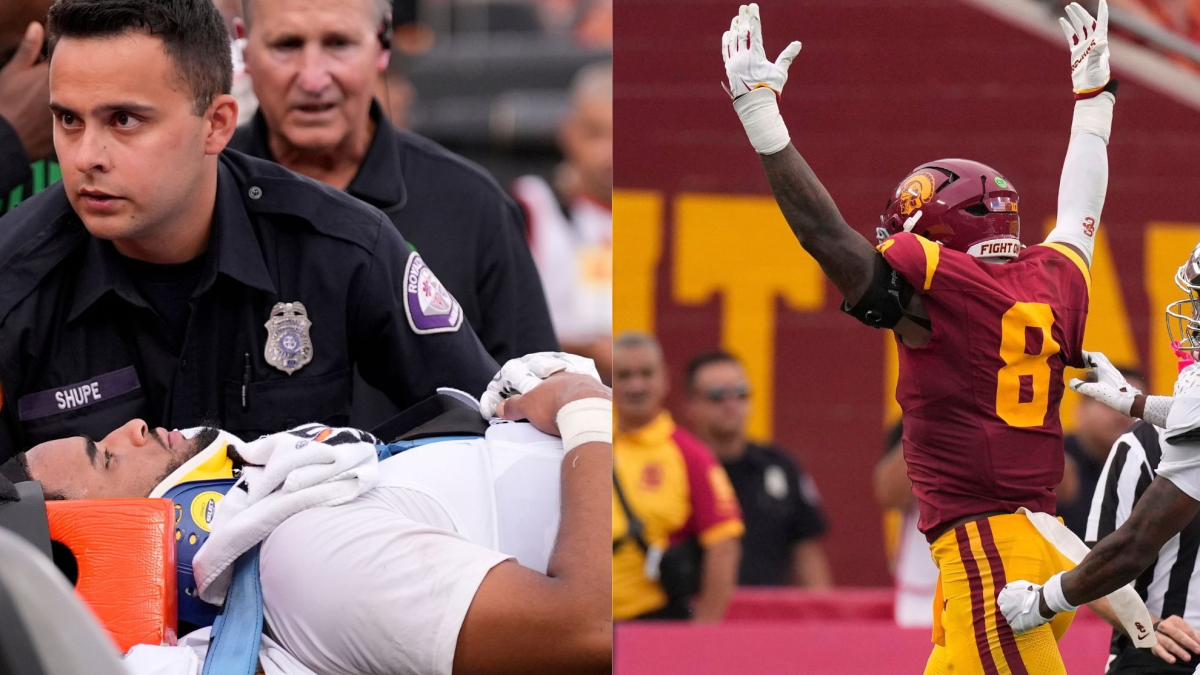
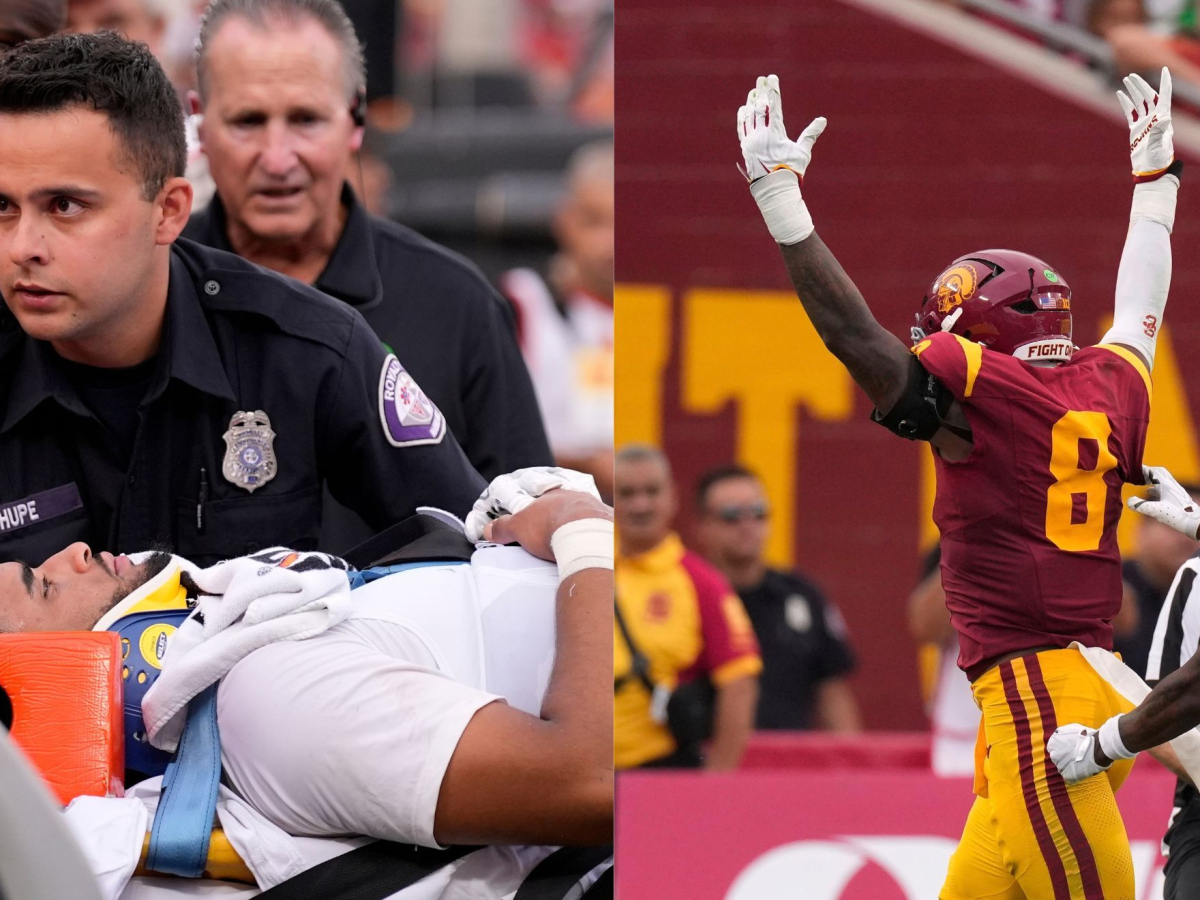
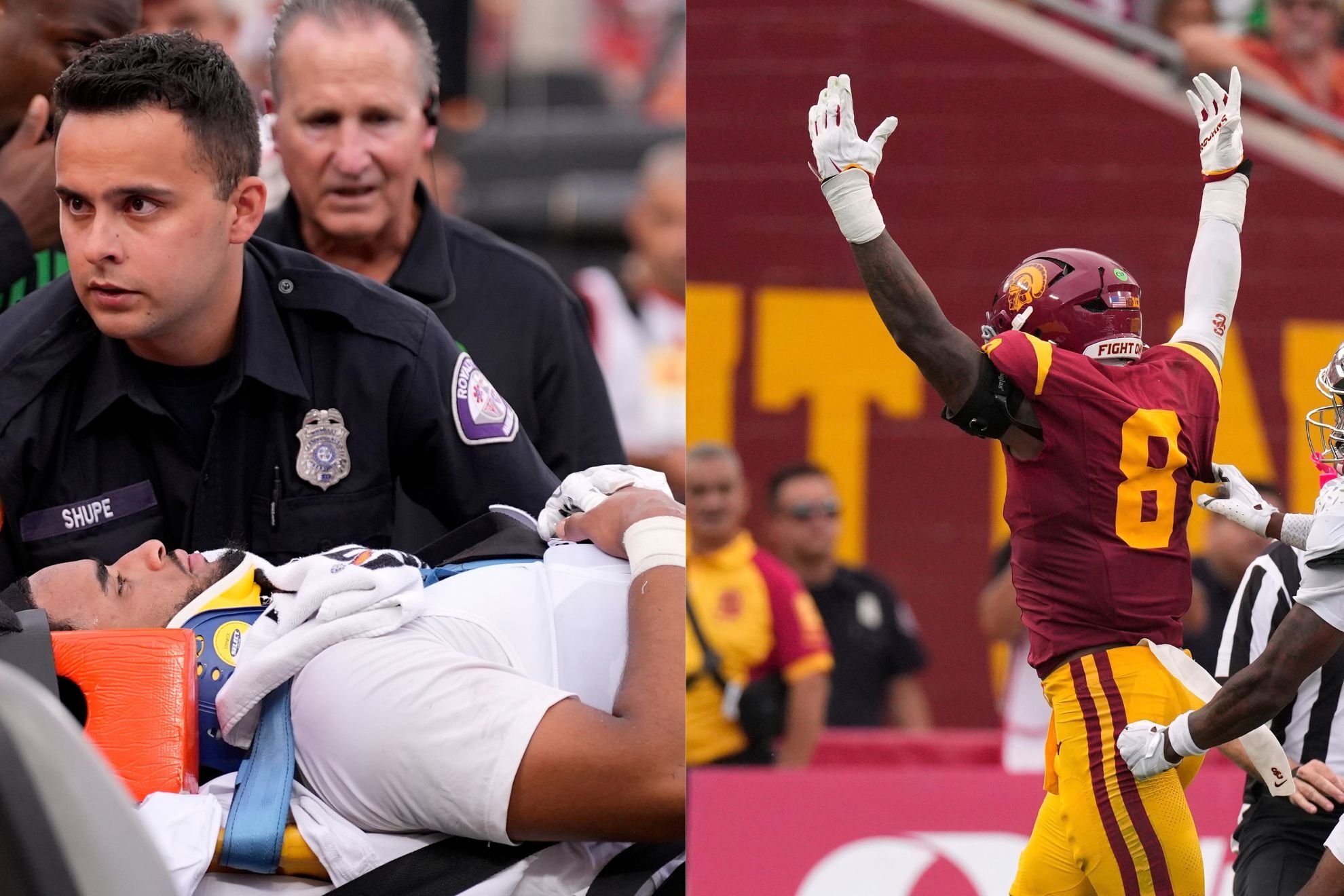
Dante Moore was receiving medical attention on the field. Desman Stephens II, whose hit had injured him, was celebrating . Whatever the USC linebacker understood about Moore’s condition at that moment, an opponent remained down and needed help. That should have been reason enough to stop.
What followed made the incident harder to dismiss as one impulsive reaction . Stephens appeared to celebrate shortly after the hit and exchanged greetings with teammates while medical personnel attended to Moore. He later remained on the sideline cheering for USC. That sequence became part of the controversy alongside the tackle itself.
His apology acknowledged the behavior. It did not explain it
Stephens subsequently accepted responsibility in a statement released by USC. He described his reaction as inappropriate and inexcusable, apologized to Moore and his family, and acknowledged there was no justification for celebrating while another player received treatment. Those words matter, but they leave a difficult question: why did the concern expressed afterward fail to appear in his public behavior during the emergency?
We cannot establish whether his apology came from genuine remorse, public pressure or both. Nor can the absence of a publicly reported visit or personal conversation prove that he has made no private contact. What can be assessed is the contrast between his visible conduct and his later acknowledgment that it was unacceptable. The statement begins the process of accountability; his actions from here will give it credibility.
USC suspended Stephens for its October 3 game against Washington. Moore’s recovery has no confirmed endpoint. Oregon announced that he suffered a concussion, with MRI and CT scans showing no additional injuries. Moore has expressed hope that he will return soon, but that is not medical clearance or a confirmed playing date.
What do NCAA targeting rules say about hits like the one on Dante Moore?
The NCAA’s targeting rules prohibit forcible contact to the head or neck of a defenseless opponent and contact with the crown of the helmet. A confirmed targeting foul carries a 15-yard penalty and disqualification. Stephens was ejected after striking Moore as the Oregon quarterback slid during the second quarter.
The suspension rules changed this year. On March 19, the NCAA’s FBS Oversight Committee approved a trial for the 2026 season that allows a player to participate in the next game after his first targeting disqualification. A second offense requires him to miss the first half of the following game; a third requires a full-game suspension.
That change does not explain Stephens’ entire punishment. The previous automatic carryover suspension applied to second-half targeting fouls, and his hit occurred before halftime. USC imposed the additional one-game ban. Conferences can also review conduct beyond the on-field penalty: the Big Ten’s published sportsmanship policy identifies disrespectful behavior and resulting injury as relevant to disciplinary decisions.
How many games Moore will miss remains unknown. Oregon has a bye before facing UCLA on October 10, so it is not yet established that his absence will exceed Stephens’ suspension. NCAA concussion requirements demand medical clearance before a diagnosed athlete returns to athletic activity. His recovery must follow that assessment, regardless of the schedule.
Previous cases show why counting games cannot predict recovery. Pittsburgh quarterback Mason Rudolph missed the next game after his 2019 concussion and later cleared the protocol. Miami’s Tua Tagovailoa missed four games after his September 2024 concussion, with injured reserve requiring that minimum absence. Their circumstances differed, and neither provides a timetable for Moore.
Former NFL quarterback Chase Daniel condemned the hit and emphasized that Moore was giving himself up.
The case still warrants a harder discussion about punishment and empathy. A suspension need not match an injured player’s recovery, but its length should come with a clear explanation of how the hit, the harm and the conduct afterward were weighed . Stephens has acknowledged that his celebration was inexcusable. Demonstrating concern for the person who was hurt is now the responsibility that extends beyond serving one game.