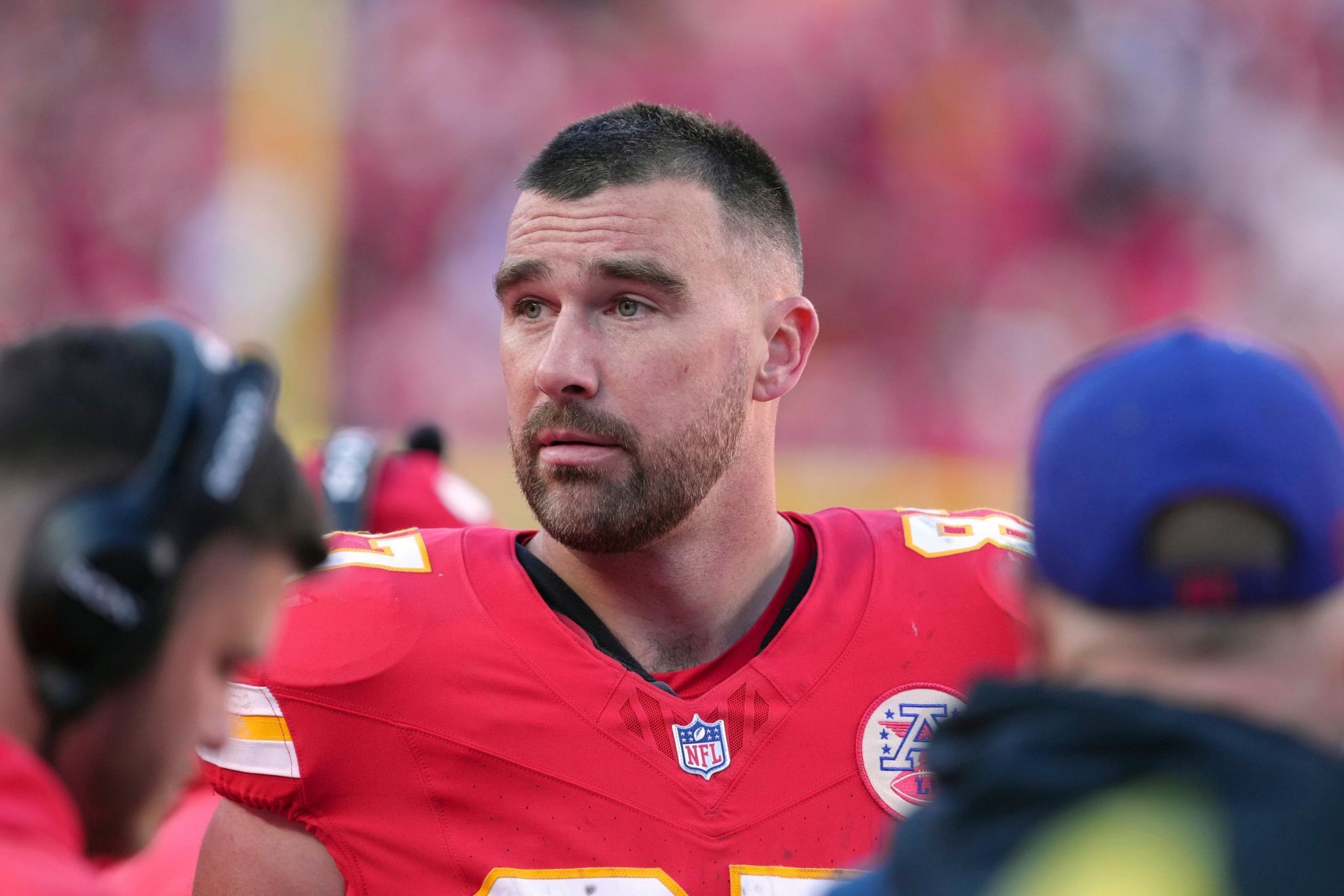
Could Travis Kelce be earning millions more as a wide receiver?
Current NFL numbers show a clear pay gap between wide receivers and tight ends
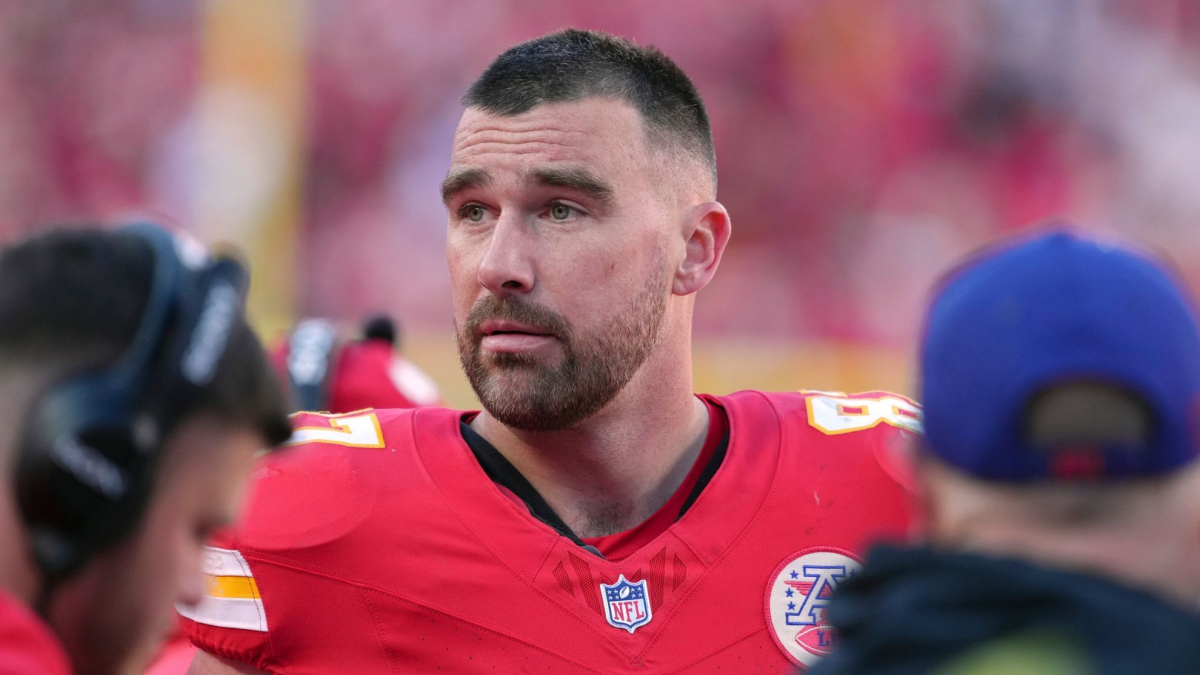
Would Travis Kelce make more money if he played wide receiver? A resurfaced clip of San Francisco 49ers tight end George Kittle arguing that Kelce deserved receiver-level pay puts that question back in play. The clearest test is to compare 2026 receiving production with current contract values.
One important detail: Kittle made those comments on Theo Von’s This Past Weekend podcast in March 2023. His franchise-tag figures and comparison to Kelce’s contract reflected that moment. They shouldn’t be presented as current numbers. The broader question, though, can be tested against this season’s stats and contracts.
How this season’s top receivers and tight ends compare
Through Week 11 , wide receivers Jaxon Smith-Njigba, CeeDee Lamb and Christian Watson lead the top-three group by receiving yards, with 1,207, 1,108 and 916, respectively. Their contract averages are $42.15 million, $34 million and a reported $27.62 million per year.
The top three tight ends by yards are Trey McBride with 689, Brock Bowers with 676 and Isaiah Likely with 610. Their deals average $19 million, about $4.53 million and about $13.33 million a year. Bowers is still on his rookie contract, so his figure is not a measure of what an established tight end might earn on a second deal.
Ranked together by receiving yards, the six go : Smith-Njigba first, Lamb second, Watson third, McBride fourth, Bowers fifth and Likely sixth. Across the entire league, those tight ends rank 16th, 17th and 21st, respectively. McBride comes close to Lamb in catches 87 to 88 and Likely’s seven touchdowns match Watson’s, even though the receivers have more receiving yards.
Bowers has played only eight games, compared with 10 or 11 for the others; he leads tight ends in yards per game, so total yards don’t tell the whole story.
Where Kelce fits and what the pay gap tells us
Kelce is currently fifth among tight ends in receiving yards, with 586 and four touchdowns in 10 games. That places him 24th overall not first, second or third among tight ends this season. His 2026 contract is a one-year deal worth $12 million, with incentives that could raise it to $15 million.
A close comparison shows why Kittle’s argument still resonates. Justin Jefferson, whose multiyear contract averages $35 million annually, has 553 yards and four touchdowns in nine games.
Kelce has 33 more yards in one additional game; on a per-game basis, Jefferson is slightly ahead, with 61.4 yards to Kelce’s 58.6. Those contract averages also don’t equal each player’s actual 2026 pay: Jefferson’s reflects a four-year deal, while Kelce’s is a one-year contract.
The wider market gap is unmistakable. The 2026 nonexclusive franchise tag is $27.298 million for wide receivers and $15.045 million for tight ends; the top receiver contract averages $42.15 million a year, compared with $19.1 million for the top tight end contract, Kittle’s.
So the answer is twofold: Kittle’s broader point still holds the NFL pays top wide receivers substantially more than top tight ends. But the current leaderboard does not show Kelce outperforming the top receivers; he is fifth among tight ends, and Jefferson is slightly ahead per game.