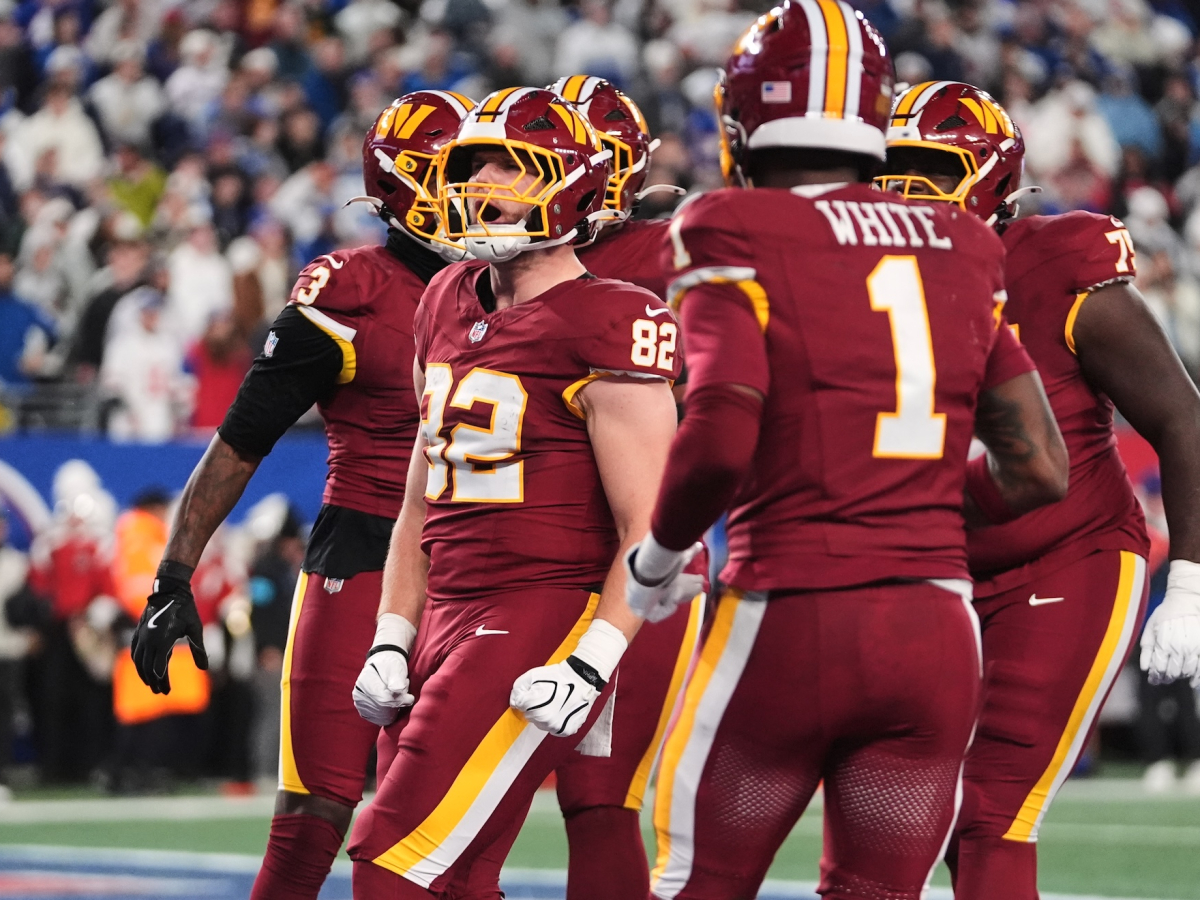
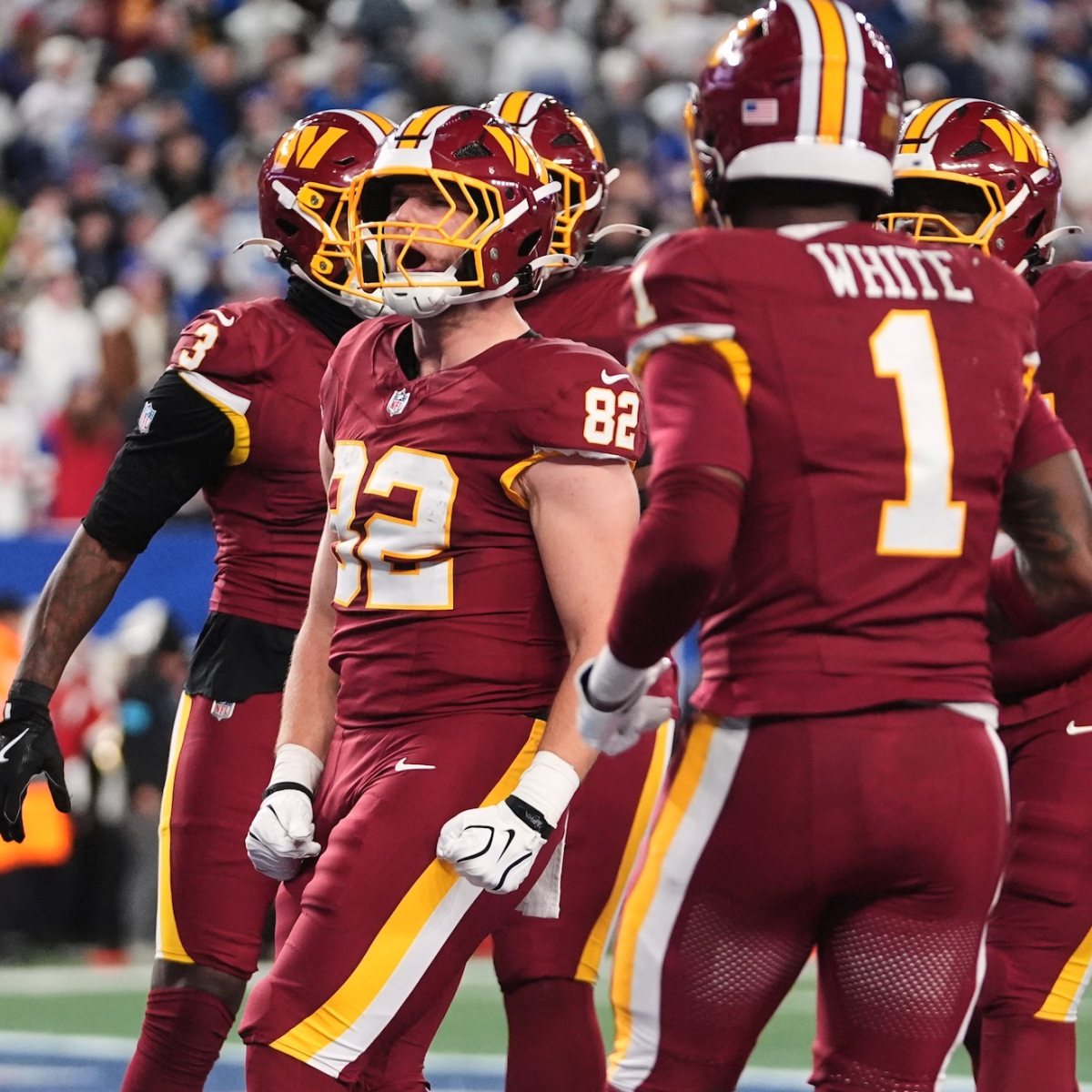
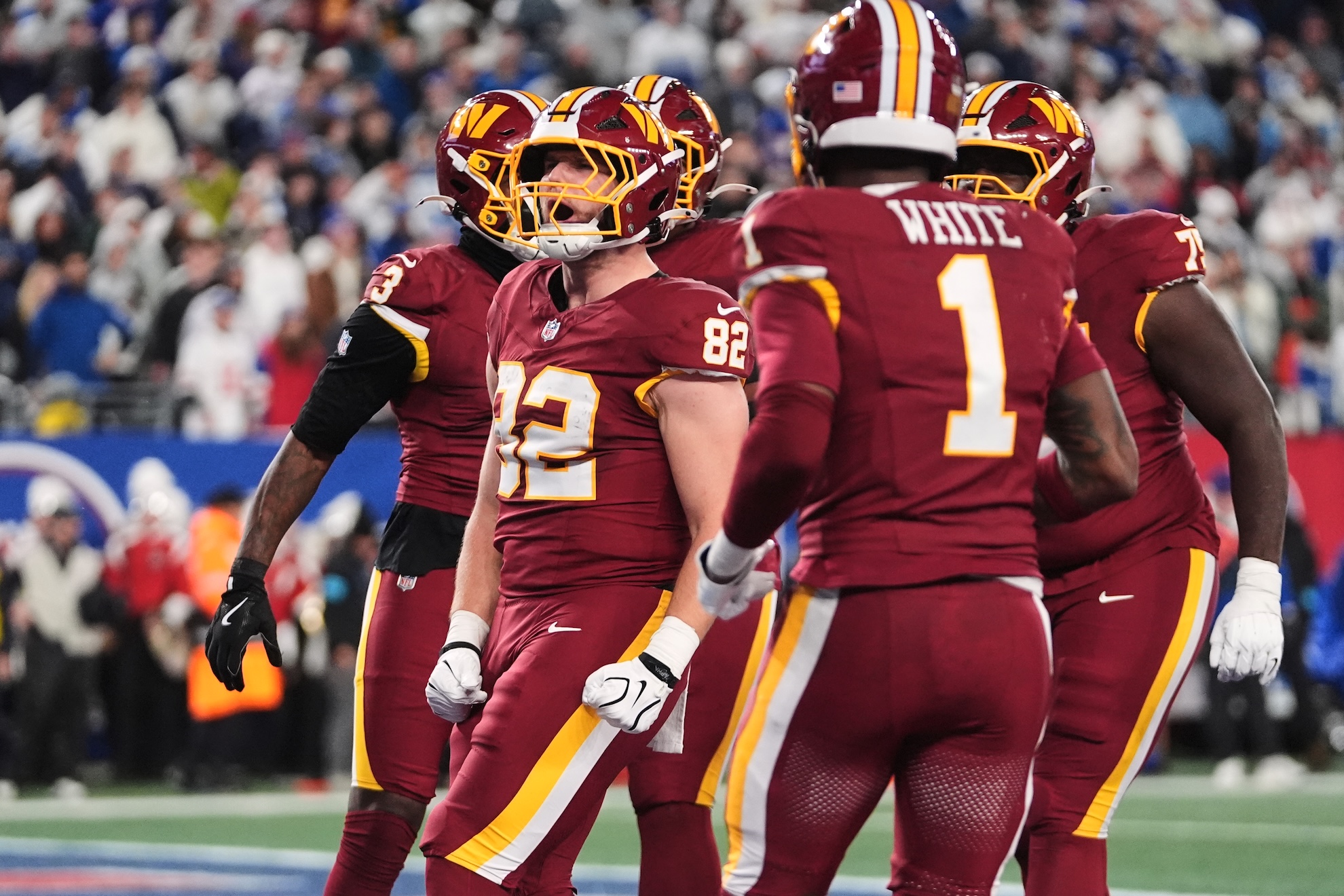
Luke McCaffrey and the improbable move he made with the Commanders because he knew the rules
The Washington wide receiver spotted an opportunity during a kickoff against the New York Giants and turned an unusual rule into a major field-position advantage without even attempting a return
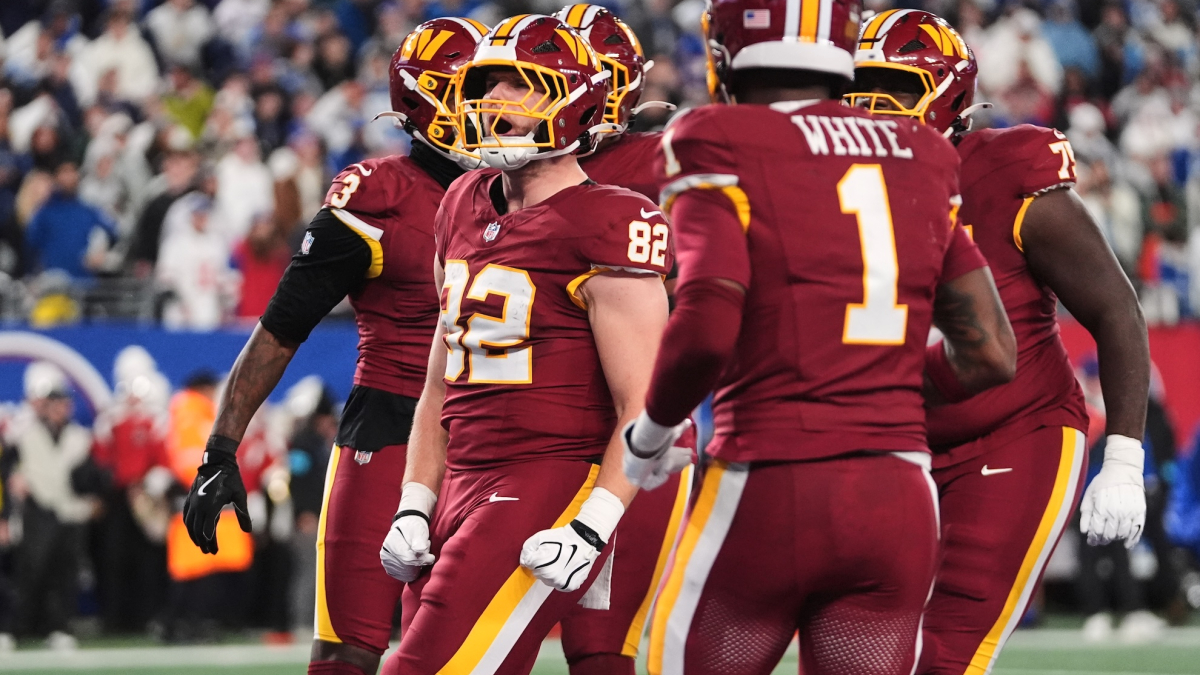
L uke McCaffrey did not need to break a tackle, find a gap or sprint down the sideline to make one of the smartest plays of Washington's victory over the New York Giants .
Instead, the Commanders receiver used his knowledge of the NFL rulebook to force an opposition penalty and give his team possession at the 40-yard line.
The unusual moment came during Thursday night's 24-21 win at MetLife Stadium, when McCaffrey was positioned to receive a Giants kickoff. The ball landed close to the sideline, around the five-yard line, but remained in bounds.
Most returners would probably have tried to collect the ball and make something happen. McCaffrey had a different idea.
Rather than picking it up while standing on the field, he allowed the ball to bounce before deliberately moving outside the boundary. Once his feet were on the sideline, he reached down and touched the football.
That small detail made all the difference. Under NFL rules, a ball becomes out of bounds when it touches a player who is already out of bounds. It does not matter that the football itself had remained inside the field moments earlier.
The officials therefore treated the kickoff as having gone out of bounds, giving Washington a significant improvement in field position. Instead of having to begin its possession deep in its own territory, the Commanders were awarded the ball at the 40-yard line.
It was an unusual piece of awareness that required McCaffrey to understand exactly how the rule worked and execute the move without hesitation.
Head coach Dan Quinn was impressed, admitting that even he was unsure how the officials would interpret the situation.
“I thought Luke McCaffrey made a really smart play that won’t show up on the stat sheet,” Commanders head coach Dan Quinn said. “That’s a difficult play. Is it out of bounds? Is it not? I was nervous about it, that’s one of the ones where you hold your breath.”
Why knowing the rule made all the difference
The NFL's 2026 rulebook contains specific provisions for kickoffs that go out of bounds. Under Rule 6, Section 2, Article 4, the receiving team can take possession 25 yards from the spot of the kick or at the inbounds spot, depending on the circumstances.
In this case, the penalty gave Washington the ball at its own 40.
McCaffrey 's decision was particularly impressive because there was little time to think through the possibilities. He had to recognize where the ball was landing, understand the boundary rule and position himself correctly before making contact.
The 25-year-old is already familiar with contributing to Washington's special teams. Selected in the third round of the 2024 NFL Draft with the 100th overall pick, he has played both wide receiver and returner during his time with the franchise.
He also comes from a prominent football family. His father, Ed McCaffrey , was a three-time Super Bowl champion with the Denver Broncos , while his brother Christian is one of the NFL's leading running backs with the San Francisco 49ers .
Luke began his college career as a quarterback at Nebraska before transferring to Rice and establishing himself as a wide receiver.
The clever kickoff moment was part of a dramatic evening for Washington. The Commanders recovered from a 21-17 deficit to defeat New York 24-21, with Jayden Daniels throwing a 32-yard touchdown pass to Stefon Diggs with 57 seconds remaining.
Rasul Douglas then sealed the result with an interception on the Giants' final possession.
Washington improved to 3-5-1, keeping its postseason hopes alive, while the Giants fell to 5-3-1 despite remaining top of the NFC East.
McCaffrey's contribution will not appear among the game's touchdowns or headline statistics, but it demonstrated why understanding the finer details of football can be just as valuable as physical ability. Sometimes, the smartest play is knowing when not to return the ball at all.