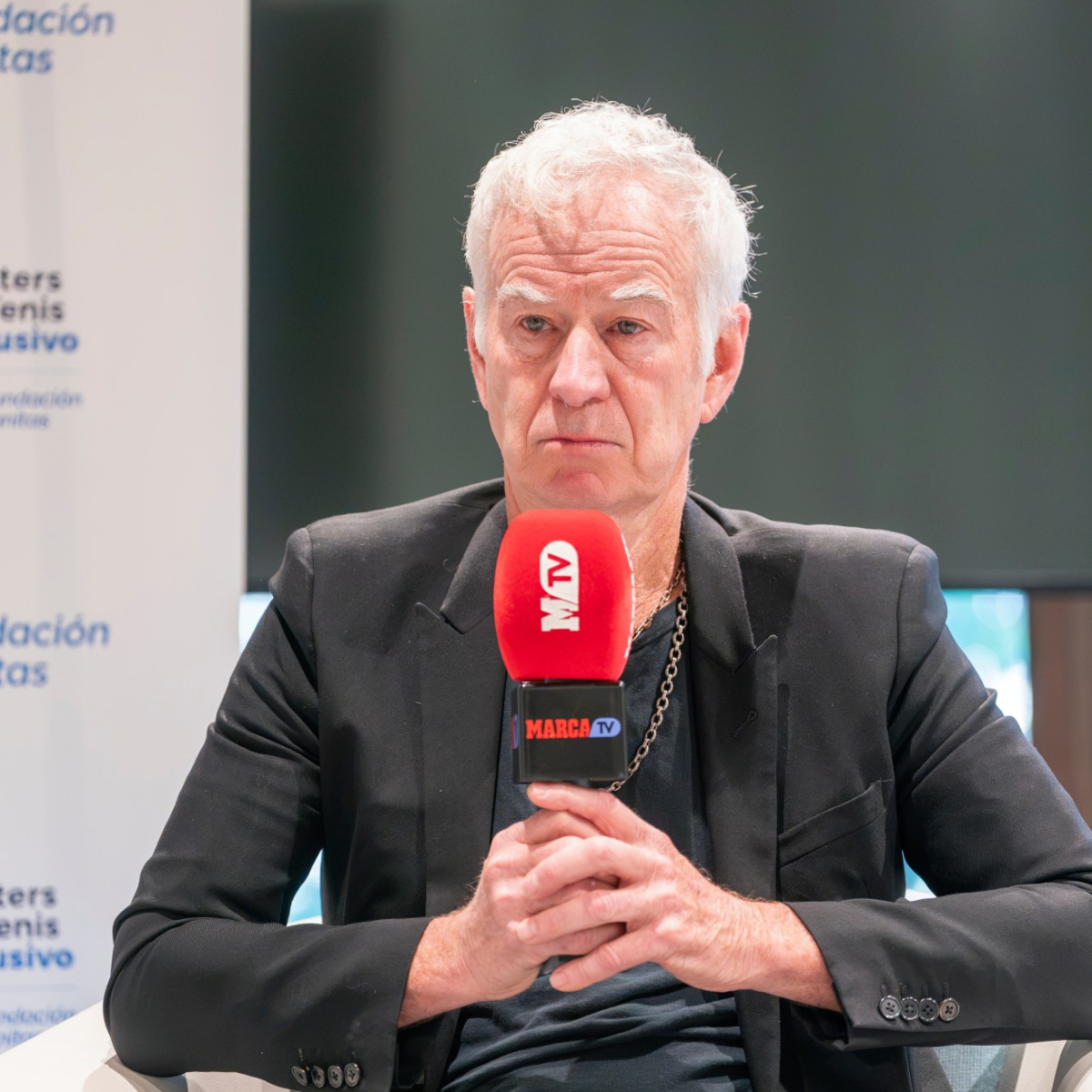
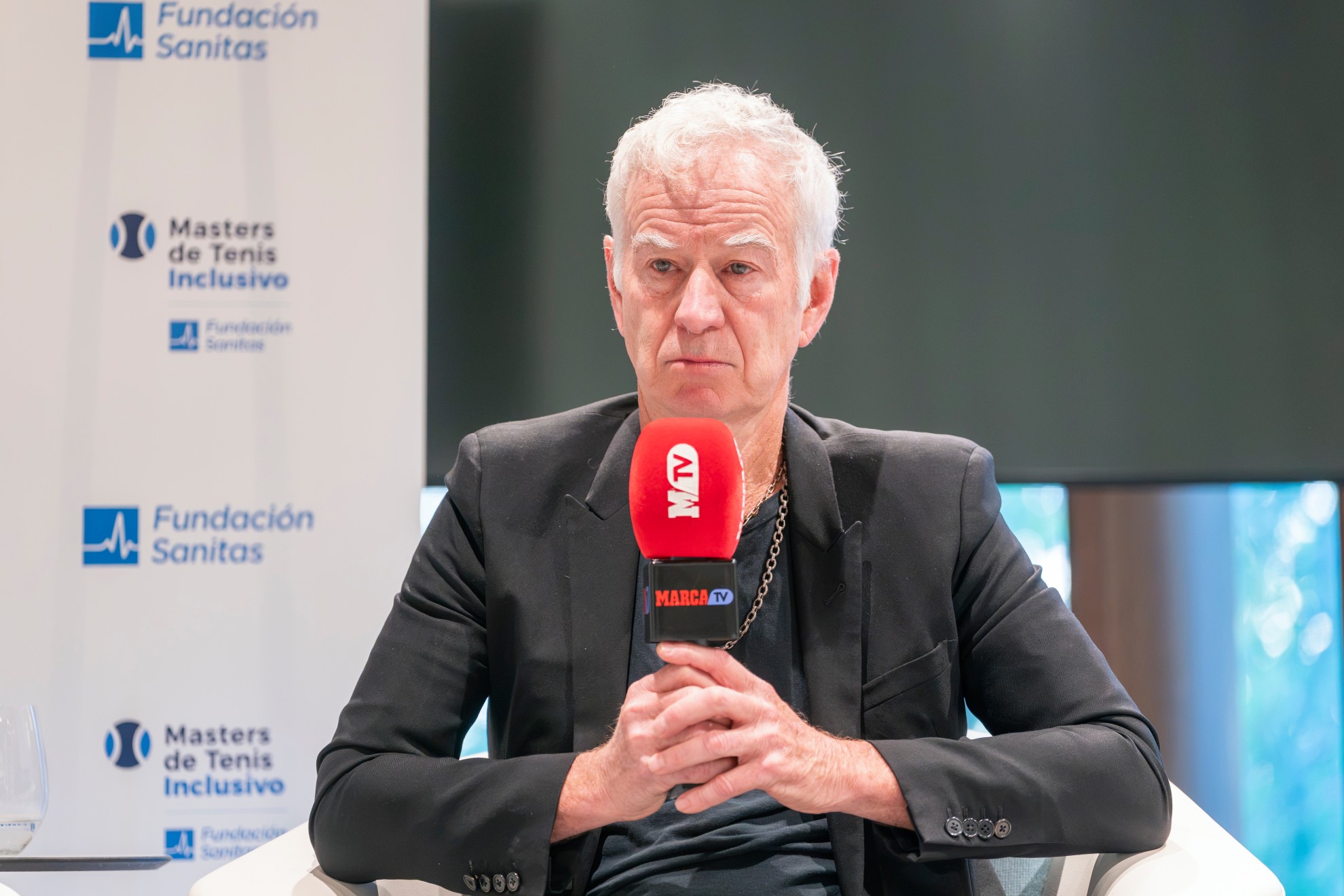
John McEnroe: "The United States should study Spain"
The legend praises this country's tennis in a meeting with MARCA, together with Gabriela Sabatini and Martín de la Puente, promoted by the Sanitas Foundation
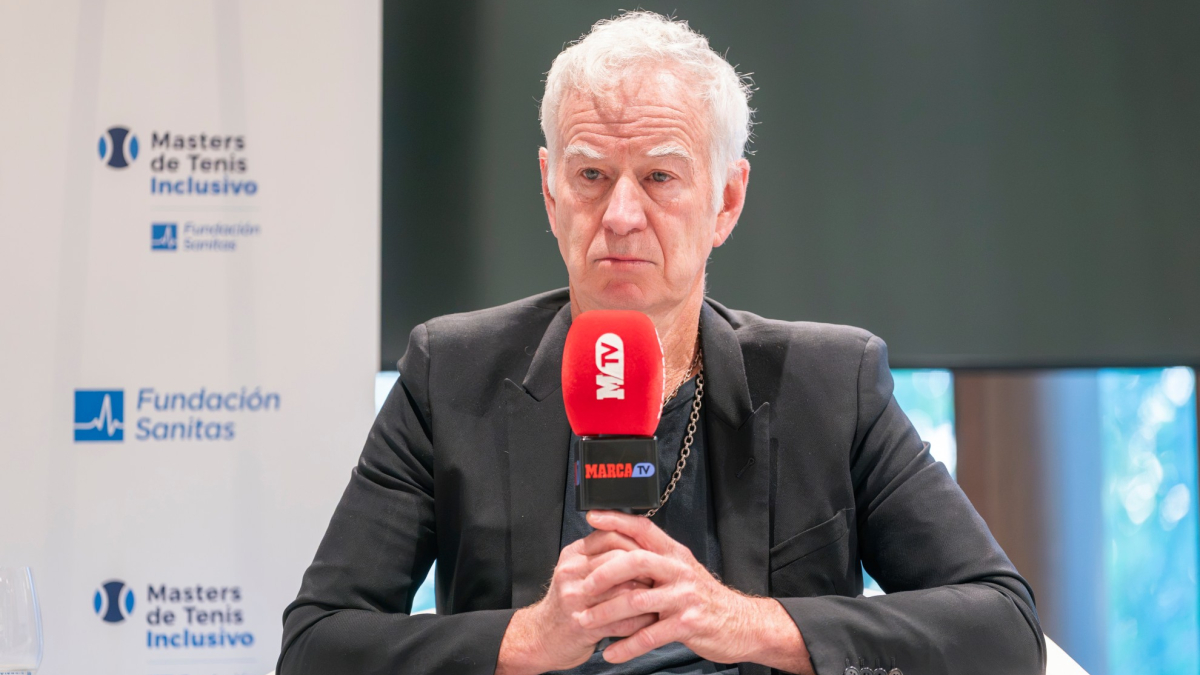
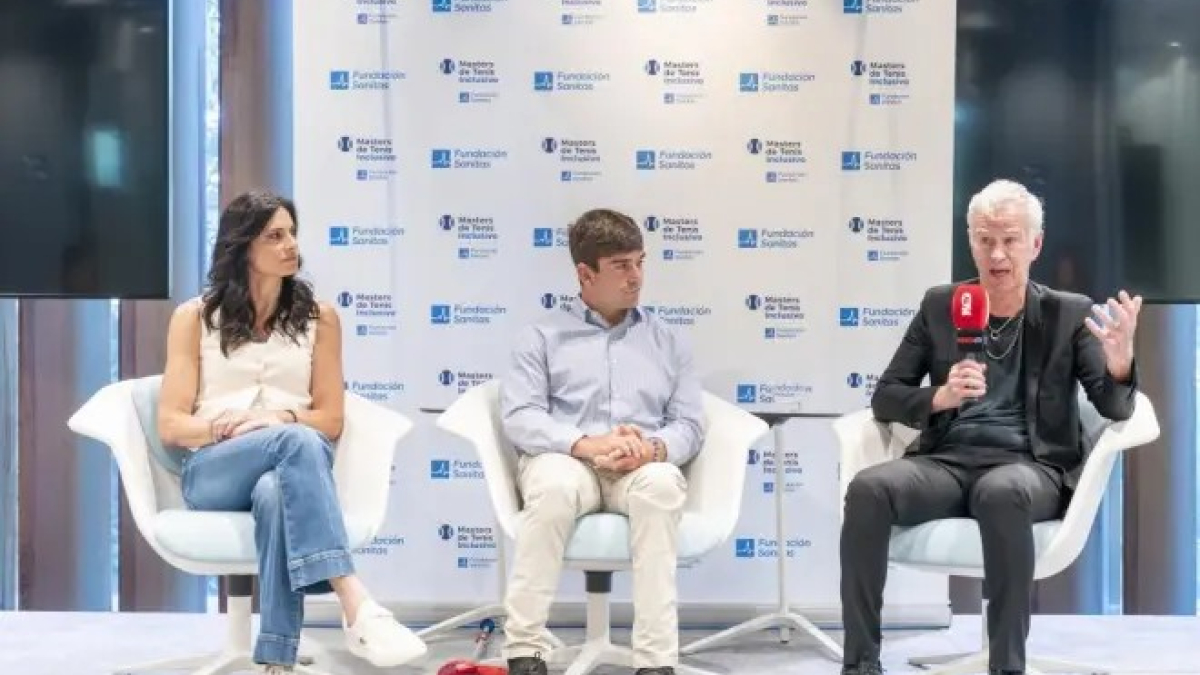
O n the big day of inclusive sport in Madrid, the Sanitas Foundation brought together the great Spanish wheelchair tennis player , Martín de la Puente, world number 2, with two legends such as John McEnroe and Gabriela Sabatini. The former, 67, still has that look somewhere between Mick Jagger and the tennis legend he is with his seven Grand Slams. She, now splitting her time between Zurich, Miami and Buenos Aires, retains the aura of the great tennis star she was, even greater than her record suggests. They spend some time alone with MARCA
QUESTION. Have you ever played in a wheelchair?
JOHN MCENROE. I think once or twice I've been in a chair, and you realize how difficult it is, but also how inspiring. I feel very fortunate to have been able to do this and to have kept playing all these years. As I said before, in the second week of the tournaments wheelchair tennis is a big part of the event, so I'm proud of what they contribute. But I find it very difficult to play like that.
Q. How has inclusive tennis changed compared to its golden age?
J.M. I think it gets much more attention now, and that's important. Martín can speak about it better than I can, because when I started playing I don't remember seeing any wheelchair event at the Grand Slams. I don't know exactly what year it started, but it's one of the things tennis has done as well as or better than any other sport. At the Grand Slams we've always had men and women playing together, which is very different from other sports. Equivalent prize money was also awarded, which is extremely different. We have made progress in certain aspects, also in how we have managed wheelchair tennis, which is inclusive and part of our event.
Q. Can you talk about your golden age of tennis and how you see it today?
J.M. I was lucky enough to be part of a moment when I felt tennis was growing, in the 70s and 80s. I had great rivals, like Björn Borg, Jimmy Connors and Ivan Lendl, and I think it is extremely important in tennis to have rivals, both in the men's and women's game. Gaby could also talk about that in the case of the women, from when she was playing. We could say that the three best players in history coincided at the same time: Rafa, Roger and Novak. They took the game to another level and those rivalries were incredible. We thought: "My God, we are in big trouble," because Roger retired, then Rafa, and with Novak I don't know how much longer he will keep playing. We have been very lucky that Carlos Alcaraz and also Jannik Sinner came along. We can look to the future and think that it is a great sport, bigger than any person, even though those people have contributed an incredible amount. Now we have to find a way to keep them all healthy.
Q: 25 years ago, we talked about the problems there were in the youth system when it came to producing stars in the U.S. Do you think it is improving right now?
J.M. Women have done a great job, and I think part of that is due to the prize money. I have six children, four of them girls, and while they were growing up I felt that, on an equal footing with boys, they could play a sport if they liked it. That is extremely important.
I think we should study more what has happened recently in Italy, which seems to be in a great moment, and how they compete. Spain has had an incredible record, especially the men, with Rafa, now Carlos and now Rafael Jódar. We should study it. Our country is bigger and there are other sports that, unfortunately, are bigger than tennis, like American football or basketball. In football, as you call it, you can fit 20 kids in the space of a tennis court, whereas in tennis you can only fit two or four. Some of the reasons are economic, but I think we are making progress and getting closer. The game is faster than ever, so we need better athletes, very fast, men and women. If you don’t have that, you’re in trouble, unless you’re seven feet tall and serve at 150 miles per hour.
Q. How important is a day like this for raising awareness, a global event that brings together tennis and disability?
GABRIELA SABATINI. It is a very special, unique event. For me, it is also a great pleasure to be alongside Martín and, obviously, John, and everyone who is going to play today. The wonderful thing about this is being able to share the passion we all have, being together on a court, which is what sport does: it brings us together. I had the chance to play with Martín a few years ago in Argentina, with him and with Gusti Fernández, and it was incredible, wonderful, and from then on we created a friendship and have stayed in touch. I think that is also the most beautiful part.
Q. Since Serena Williams retired, it seems there is no leader in women's tennis. What do you think?
G.S. Nowadays women’s tennis is rotating a lot, and that’s why sometimes it’s hard to know who number two, three, or four is. As John and Martín have mentioned, tennis is much faster: everything has changed, the technology, and the courts are much quicker. I think this rotation is going to continue. In my time, it was more or less the same players who reached the semifinals or the final, and today that has changed a lot. It’s good to see other players asserting themselves and winning tournaments; I think that’s a very good thing.
Q: Is winning a Grand Slam in an era of such rivalry more fulfilling than having won many in another with less competition?
G.S. It was more fulfilling for me to have won a Grand Slam, as Martín was saying. You aspire to win a Slam; I had come close a couple of years earlier and I always felt I had been so close, but I had never managed it. When I won it, that moment was inexplicable, truly unique. The following year, at Wimbledon, I was two points away from winning, and those are the thorns that remain. Naturally, I would have liked to win many more Grand Slams, but fortunately I was able to win the US Open, and I carry that inside me and it is among my greatest victories.
Q. Who was your greatest rival? Do you remember any anecdote from those matchups?
G.S. I would say Steffi Graf. We played a great many matches, we are more or less from the same era, and we started playing together in the juniors. She was my great rival, and for me she always brought out the best in me; that is what I highlight about the matches against her. Obviously I lost many more times, but I felt that I played my best tennis. I really liked playing those matches. There were times when I lost easily and others when I started out losing, turned the match around, and ended up winning. They have been unforgettable matches. Without a doubt, she was my great rival.
Q: What does it mean to you to share the court with these role models, and how important is this event for the visibility of wheelchair tennis?
MARTÍN DE LA PUENTE. I feel very fortunate to be alongside John and Gaby, who are icons of world tennis. Having them here at such an important event for Paralympic sport and for all people with disabilities is a great credit to them and also to the Sanitas Foundation, whom I thank for making it possible. It might seem like one of those typical events that get ticked off a list, but for those of us who have lived with disability, being able to share the court with sports idols, people you see on TV, is special. It is seeing that there are opportunities for everyone and that on a tennis court there are no differences: we are going to play tennis. We are becoming more integrated all the time. It is true that in John's day wheelchairs were not seen, and now we see them more and more. We are aware of that and are extremely grateful, but we are also very demanding: if we all push in the same direction, there will be more opportunities, which is what we want.
Q. You reached the very top of the doubles rankings and also became number two in singles. Is that what you expected it to feel like?
A. The competitor always wants more. I think the best victory is always the one yet to come. The competition, the nerves before stepping onto the court, and the tournament weeks are different, but special. I understand that in their case they also always want a little more: to compete more, to be better, and that is what motivates you to improve.
In my case, I was lucky, or unlucky—I’m still trying to decide—to go through 16 surgeries, to look at myself in the mirror and think "what a sight I have in front of me," and to devote myself to professional sport, something I never would have imagined. I consider myself fortunate to be among the top six. That my name appears in the ranking is a consequence of how lucky we are to share the court with these people and of the opportunities that events like this give us.
Q. Is your main goal the Paralympic gold at the Los Angeles Games?
A. It is difficult to decide between the Games and the Grand Slam. For every tennis player, the Grand Slam is the ultimate, but the Games are different: the fact that they are held every four years gives them an added incentive, and representing your country makes them even more special. I would like to be an individual Grand Slam champion, it is one of my dreams, and, obviously, to win the medal. It is true that in Paris the bronze gives you a bit of breathing room, but at the same time it makes you ask yourself: «why not more?». In Los Angeles, if all goes well, we will arrive full of excitement to get on the podium. We will try.
Q. In tennis, surfaces greatly affect the game, especially sliding. Is it the same in wheelchair tennis?
A. Yes. Let’s start from the premise that the chair is highly technological: narrow, made of a very light and agile material, so that movement is as easy as possible in a sport where the ball travels very fast and the surfaces vary a lot. On a more uniform surface, like Australia’s, you don’t need as many adjustments to the anti-tip device or the wheels. On clay, tire pressure is noticeable: you have to lower it a bit and adjust the height so you don’t slip when placing the wheels down. Grass is perhaps the most complex and the toughest, because you make one push and the chair stops after a meter. You have to use slightly thicker wheels so they don’t dig into the grass, and you have to be very careful. Every Paralympic sport has its adjustments, and tennis is, I think, one of the leading ones in the Paralympic world.