The US Open’s Honey Deuce is a $17 million tradition with a massive supply chain
How a simple vodka cocktail became one of the most recognizable symbols of tennis in New York
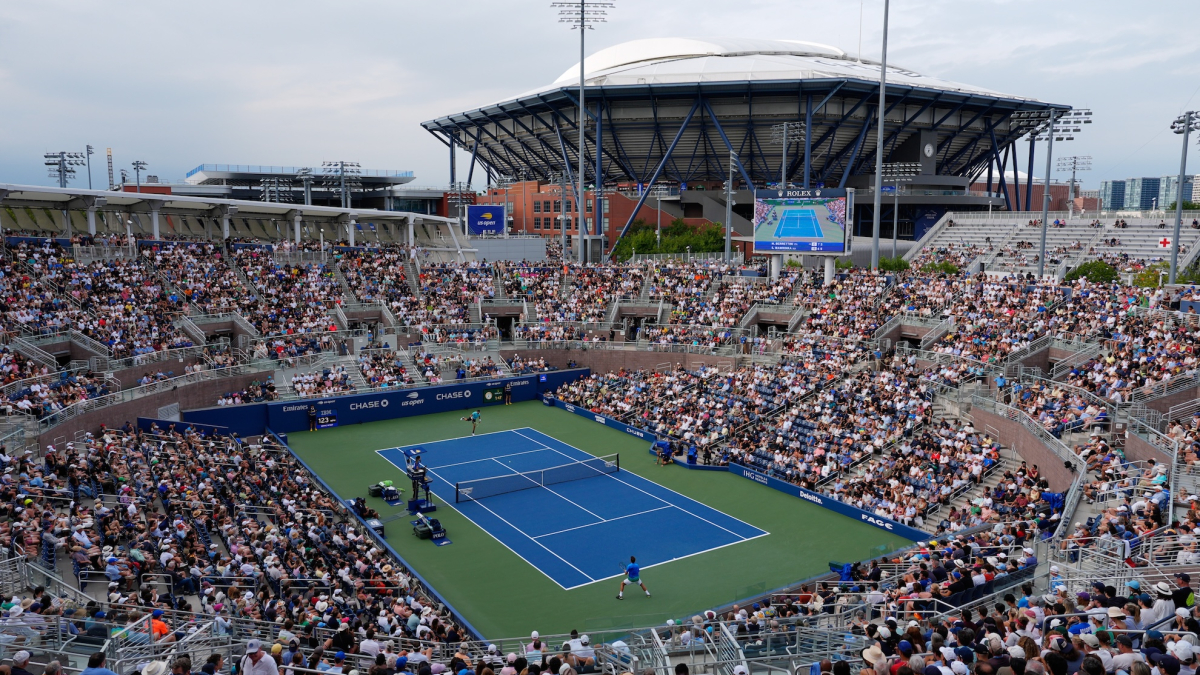
At the US Open , the biggest stars aren't the only ones drawing attention.
Every summer, thousands of fans arrive at the USTA Billie Jean King National Tennis Center looking for the same thing: a clear commemorative cup filled with a pink cocktail and topped by three green melon balls.
The Honey Deuce has become as closely associated with the US Open as packed sessions at Arthur Ashe Stadium, late-summer heat and the tournament's electric New York atmosphere. What looks like a simple courtside drink, however, requires months of preparation and an enormous agricultural operation.
The numbers tell the story.
In 2025, fans bought 738,459 Honey Deuces , producing more than $17 million in sales. For the 2026 tournament, roughly 8,000 cases of honeydew melons will travel from California to Queens, filling eight semi-trucks along the way.
Jared Walton , director of national accounts for Baldor Specialty Foods, starts thinking about those melons every spring. That's when he contacts Turlock Fruit Company in California to determine how much honeydew the US Open will need months before the tournament begins.
"I feel like people think honeydew balls show up in Queens every summer," Walton laughs. "And it just magically happens. But there's extensive planning."
The fruit eventually arrives in New York, where workers turn it into the cocktail's signature garnish. The operation has become a remarkable behind-the-scenes part of the tournament.
The melon balls measure roughly 1.57 inches across and come three to a skewer, creating the visual effect of miniature tennis balls. With 800,000 commemorative cups ordered for 2026, the tournament expects to need more than 2.4 million melon balls.
And there is no machine doing the work.
The melon balls must come from workers using handheld scoopers. Baldor orders roughly 500 melon ballers for the operation, while a team of more than 20 employees can begin work as early as 5:45 a.m.
"It's actually somewhat magical seeing them take a big, round sphere and turn it into multiple mini round spheres," Walton says.
The logistics become even more complicated because the melon balls have a shelf life of only about five days. Baldor has added a refrigerated trailer at the tournament to help maintain the supply throughout the event.
From Kentucky Derby inspiration to US Open icon
The Honey Deuce traces its origins to 2006, when Grey Goose asked restaurateur and mixologist Nick Mautone to create a signature cocktail for the US Open. The drink debuted at the tournament in 2007.
Mautone already had a connection to tennis. In his early 20s, he worked at the US Open, hauling ice and working as a barback. Years later, while preparing a summer fruit salad after returning from a Long Island farmers market, he noticed something familiar in the honeydew.
"It was divine inspiration, like 'Oh my god, this looks like a tennis ball," he says.
That observation became the foundation of the drink.
Mautone experimented with five or six versions before settling on the combination that fans now recognize: Grey Goose vodka, lemonade and raspberry liqueur, finished with the three honeydew balls.
The simplicity was intentional. A drink served to tens of thousands of people couldn't rely on complicated techniques or an elaborate ingredient list.
"We knew we were going to sell a lot, so we had to simplify the recipe and make it something that could work for everybody," says Mautone , creator of the Honey Deuce.
The name also fits perfectly. "Deuce" refers to a 40-40 tie in tennis, while the honeydew provides the drink's signature ingredient.
Mautone initially considered other names, including "30 Love," while another version called the "Courtside" featured rosemary citrus syrup, fresh lemon juice, vodka and raspberry liqueur. But the Honey Deuce's straightforward formula ultimately won.
Its rise also had a major influence from the tournament itself.
Daniel Zausner , COO at the USTA National Tennis Center, wanted the US Open to develop a signature drink after seeing the way spectators embraced the mint julep at the Kentucky Derby. The julep wasn't simply something people drank; it became part of the experience and something fans wanted to take home.
"You see all the imagery of women in their stiletto heels, with the large-brim hats and their dresses. Women were walking around with stacks of these glasses," Zausner says of his experience at Churchill Downs. "It meant so much to them to take home four, six glasses, whatever it might be."
That idea helped shape the Honey Deuce into something bigger than a concession item.
"I stole it from the Derby," Zausner says.
The USTA then moved quickly to secure a vodka partner.
"Literally the first call I made that Monday morning was to someone on our sponsorship team," Zausner says. "I said, 'We need a vodka sponsor and we need one tomorrow."
Grey Goose became that partner, and the relationship has continued for nearly two decades. The USTA and Grey Goose first partnered in 2007, with the brand becoming the tournament's official vodka and the Honey Deuce emerging as its signature cocktail.
The drink's growth has been extraordinary.
The US Open sold only about 24,000 Honey Deuces in its debut year at $12 apiece. By 2025, sales had climbed beyond 738,000 at $23 each. Grey Goose says more than 3.5 million Honey Deuces have been sold since 2011.
The rise mirrors the tournament's growing attendance and increasingly social atmosphere. The US Open surpassed 1 million spectators for the second straight year in 2025, giving the cocktail an enormous audience.
The Honey Deuce also benefits from something few other sports drinks can replicate: instant visual recognition.
A fan holding the distinctive cup doesn't need to explain where they are. The three melon balls, pink drink and US Open branding do the work.
"People come through the gates every morning and besides asking 'How do you find this court to find a player practice,' the most asked question is 'Where's the nearest Grey Goose cup?'" Zausner says. "They just want to get a Honey Deuce , take a picture with it, let the whole world know they're at the US Open."
That social-media appeal helped turn the cocktail into a piece of tournament culture. Taylor Swift, Kendall Jenner, Timothée Chalamet and Leonardo DiCaprio have all been photographed with the drink, while Mautone points to Bruce Springsteen's Honey Deuce as a personal highlight.
"Seeing Bruce Springsteen last year drinking a Honey Deuce, that was the pinnacle for me," Mautone laughs.
Aleco Azqueta , global vice president of marketing at Grey Goose, describes the cocktail's success as an "overnight success 19 years in the making."
The commemorative cup has become almost as important as the drink itself. Each cup features the names of previous US Open champions, giving fans a souvenir after the cocktail disappears. Some collectors stack the cups several feet high, while resale listings can push individual cups into the $10-to-$20 range.
The US Open has leaned into that demand, selling Honey Deuce-themed shirts, hats, towels, candles and even a branded melon baller.
The result is a rare sports tradition that lives simultaneously at the concession stand, on social media and in fans' homes.
And behind every photograph sits a supply chain that began months earlier in California.
"Everyone wants that picture with the cup saying, 'I got it this year,'" Walton says.