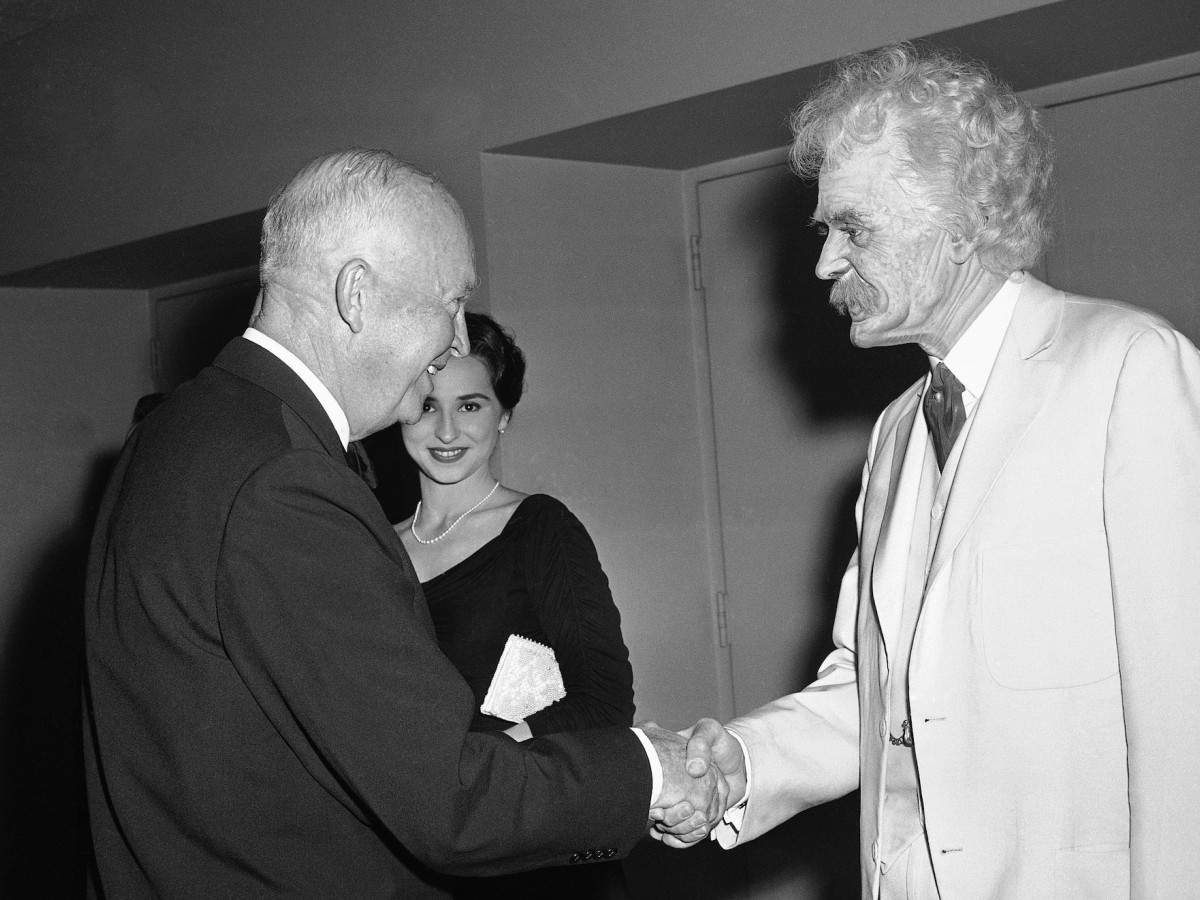
Mark Twain, Writer: ”Never argue with stupid people, they will drag you down to their level and then beat you with experience"
Researchers have traced the popular saying to a surprising Hollywood connection dating back to 1956
Some disagreements are impossible to resolve, not because the facts are unclear, but because the people involved have little interest in changing their minds.
That's the idea behind a famous quotation widely attributed to Mark Twain , the American author whose observations about human behavior continue to resonate more than a century after his death.
"Never argue with stupid people, they will drag you down to their level and then beat you with experience," Twain apparently said.
The message suggests that engaging with someone unwilling to reason can become an exhausting exercise, allowing the argument to deteriorate until the original point is forgotten.
Yet despite the quotation's popularity, researchers studying Twain 's writings have established that there's no credible evidence he ever used those words.
Did Mark Twain really say the famous quote about arguing?
The quotation's origins are more complicated than its familiar attribution suggests.
According to research by Matt Seybold of the Center for Mark Twain Studies, an earlier version appeared in a November 1956 newspaper interview with Hollywood actor Yul Brynner.
Speaking to Associated Press, Brynner recalled advice he attributed to his friend, French writer and filmmaker Jean Cocteau .
"Never associate with idiots on their own level, because, being an intelligent man, you'll try to deal with them on their level, and on their level they'll beat you every time," Brynner said.
By 1958, another newspaper columnist had altered the phrase to refer specifically to arguing rather than associating with people.
Over subsequent decades, variations circulated through newspapers, books and eventually social media, gradually losing their original attribution.
Twain 's reputation for wit and cutting observations made him a convenient figure to attach to the increasingly popular saying.
Warning about pointless arguments remains relevant
Regardless of its uncertain authorship, the quotation expresses a recognizable frustration with discussions that become more about winning than understanding.
An argument can be productive when participants are prepared to examine evidence, acknowledge mistakes and consider opposing perspectives.
However, conversations driven by personal insults, deliberate provocation or an unwillingness to engage honestly rarely produce meaningful progress.
The saying suggests that withdrawing from such exchanges isn't necessarily an admission of defeat. Sometimes, choosing not to participate protects time, energy and perspective.
That distinction has particular relevance in the age of social media, where disagreements can quickly escalate into personal confrontations watched by thousands of strangers.
The lesson behind the quote
The central message is not that people should avoid disagreement or dismiss anyone holding a different opinion.
Constructive debate remains essential to learning, challenging assumptions and understanding unfamiliar perspectives.
Rather, the quotation encourages people to recognize when a discussion has stopped being productive and become a contest of stubbornness.
Its enduring popularity also reveals something about how famous quotations spread, particularly when memorable language becomes detached from its original source.
Twain may never have offered this particular warning, but the principle remains that knowing when to walk away from an argument can sometimes demonstrate more judgment than continuing it.