Epstein was killed in a "violent struggle in his cell": Explosive investigation seeks to overturn official suicide ruling
An independent team of forensic specialists is preparing to present new findings about Jeffrey Epstein’s death, raising fresh questions about injuries found on his body and the handling of evidence at the New York prison
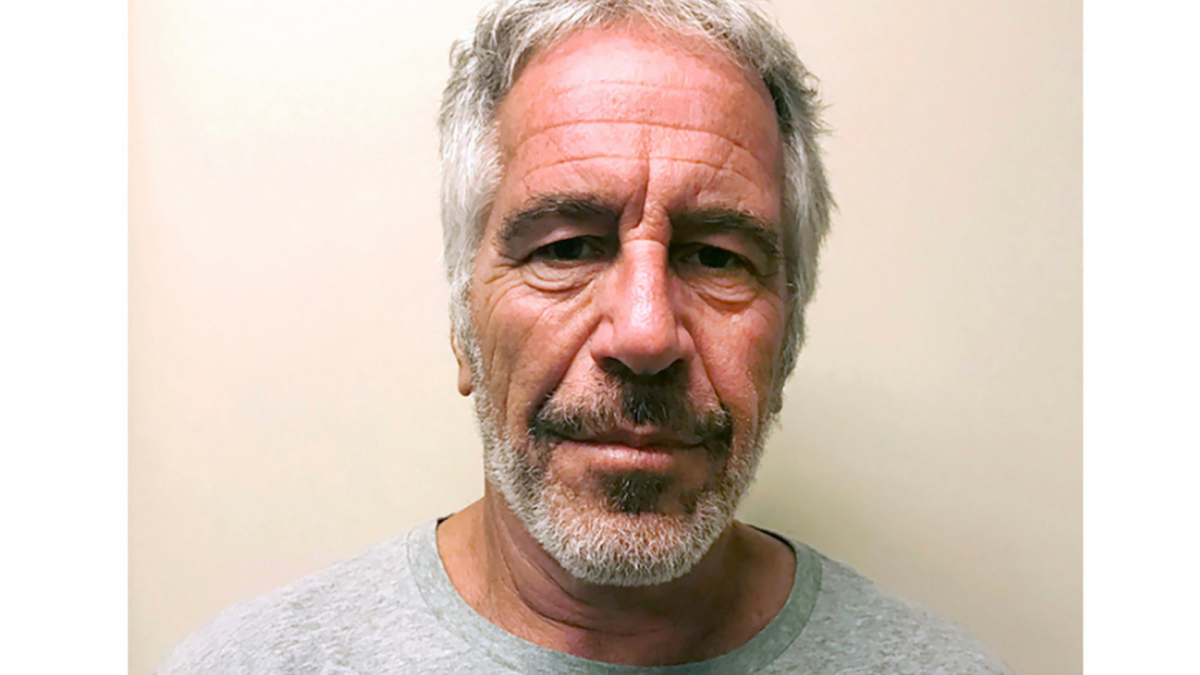
J effrey Epstein ’s death inside a Manhattan jail in August 2019 is once again under scrutiny, with an international team of forensic specialists preparing to challenge the official conclusion that the disgraced financier died by suicide.
Dr. Michael Freeman , a forensic medicine professor affiliated with the Royal College of Pathologists in London, is leading the review.
Following approximately a year of work, he is expected to present the findings to fellow specialists on November 16, potentially adding another chapter to one of the most controversial deaths in recent American criminal history.
According to the investigation reported by RadarOnline.com, Freeman’s team has examined medical records, photographs and hundreds of pages of material provided by Epstein’s brother, Mark.
The review has reportedly identified injuries that the researchers believe deserve further examination, including marks around the face, neck and shoulder, as well as scratches near the ligature marks.
Freeman believes some of these details could be significant when assessing whether Epstein struggled before his death. The official determination, however, remains suicide by hanging, and the new investigation has not established that a homicide occurred.
While the Department of Justice (DOJ) said: "Jeffrey Epstein died by suicide," Freeman asserted Epstein "was trying to get at the ligature that was around his neck, which would not have occurred in the circumstances of a hanging."
Freeman has also raised concerns about the transparency of the original investigation. He declined to disclose the full conclusions ahead of his November presentation, telling RadarOnline.com: "What I hope to show is that we need to have a little bit more transparency about how the investigation was done, because this whole thing has been very occult."
Questions surrounding the autopsy and missing evidence
The renewed examination also revisits concerns previously raised by Dr. Michael Baden , the independent pathologist appointed by Epstein’s brother to observe the 2019 autopsy.
Baden questioned whether fractures discovered in Epstein’s neck were consistent with suicide, arguing that they could indicate homicidal strangulation.
New York City’s Chief Medical Examiner, Dr. Barbara Sampson , rejected that interpretation and maintained that the injuries supported her office’s conclusion.
Baden’s concerns have remained part of the debate, although they have never resulted in an official change to the cause or manner of death.
Freeman has separately questioned why the ligature allegedly used in the hanging was not preserved for further examination. "They did not preserve the ligature," Freeman said.
The FBI disputed criticism of its handling of the case, stating: "This is completely false. FBI agents followed all appropriate procedures."
There are also serious questions about the prison’s security arrangements. Epstein was found dead at the Metropolitan Correctional Center on August 10, 2019, while awaiting trial on federal sex-trafficking charges.
Staff were supposed to conduct regular checks, but the Justice Department’s inspector general later established that required rounds and inmate counts were not completed during the night. Records were also falsified, and a malfunctioning recording system left investigators with limited surveillance footage.
The 2023 inspector general report nevertheless found no evidence contradicting the FBI’s conclusion that there was no criminality connected to Epstein’s death.
Investigators said the available footage showed nobody entering his cell tier during the relevant overnight period. The report also noted that the medical examiner found no defensive injuries expected in a fatal struggle.
A separate FBI review released by the Justice Department in 2025 again concluded that Epstein died by suicide, citing the autopsy and surveillance footage.
Freeman’s team includes Swedish forensic pathology expert Dr. Anders Eriksson and British specialist Dr. Itiel Dror, who studies bias and errors in forensic science. The group’s findings are expected to receive considerable attention when presented in November.
Mark Epstein has expressed support for the work, telling RadarOnline.com that "the truth will eventually come out," while describing the findings as "compelling and convincing."
Freeman also questioned why so little information was available about the circumstances surrounding the death of such a high-profile prisoner.
"We have one of the most notorious prisoners in a jail, a person of great public interest who dies under what is reasonably called suspicious circumstances, and we have virtually no information on what those circumstances are," said Freeman , pointing out only one person reportedly saw Jeffrey hanging.
"What makes this a very, very unusual suicide by hanging determination. In fact, I've never seen anything like this before."
The November presentation could renew pressure for greater disclosure and further scrutiny of the original investigation.
However, until the findings are made public and independently assessed, the official ruling remains unchanged: Epstein’s death was classified as suicide.