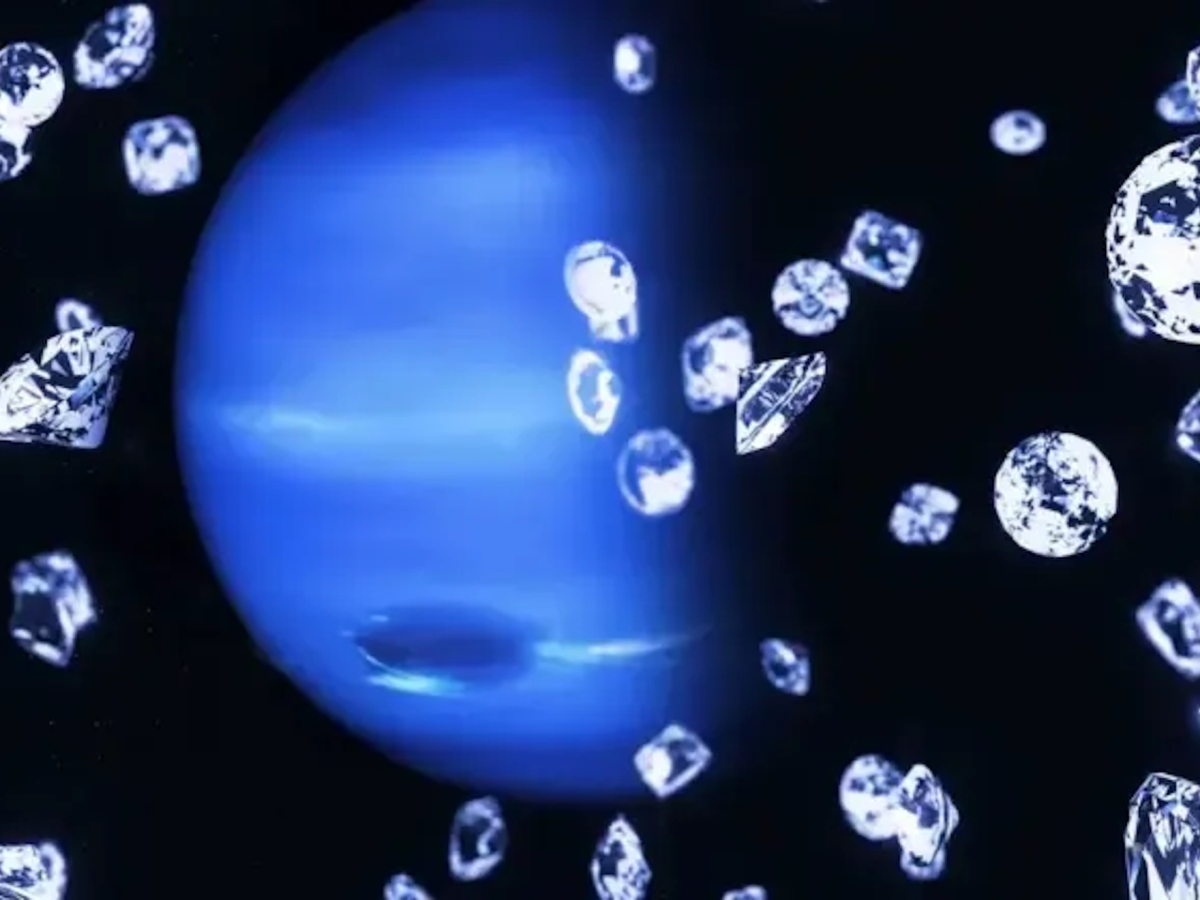
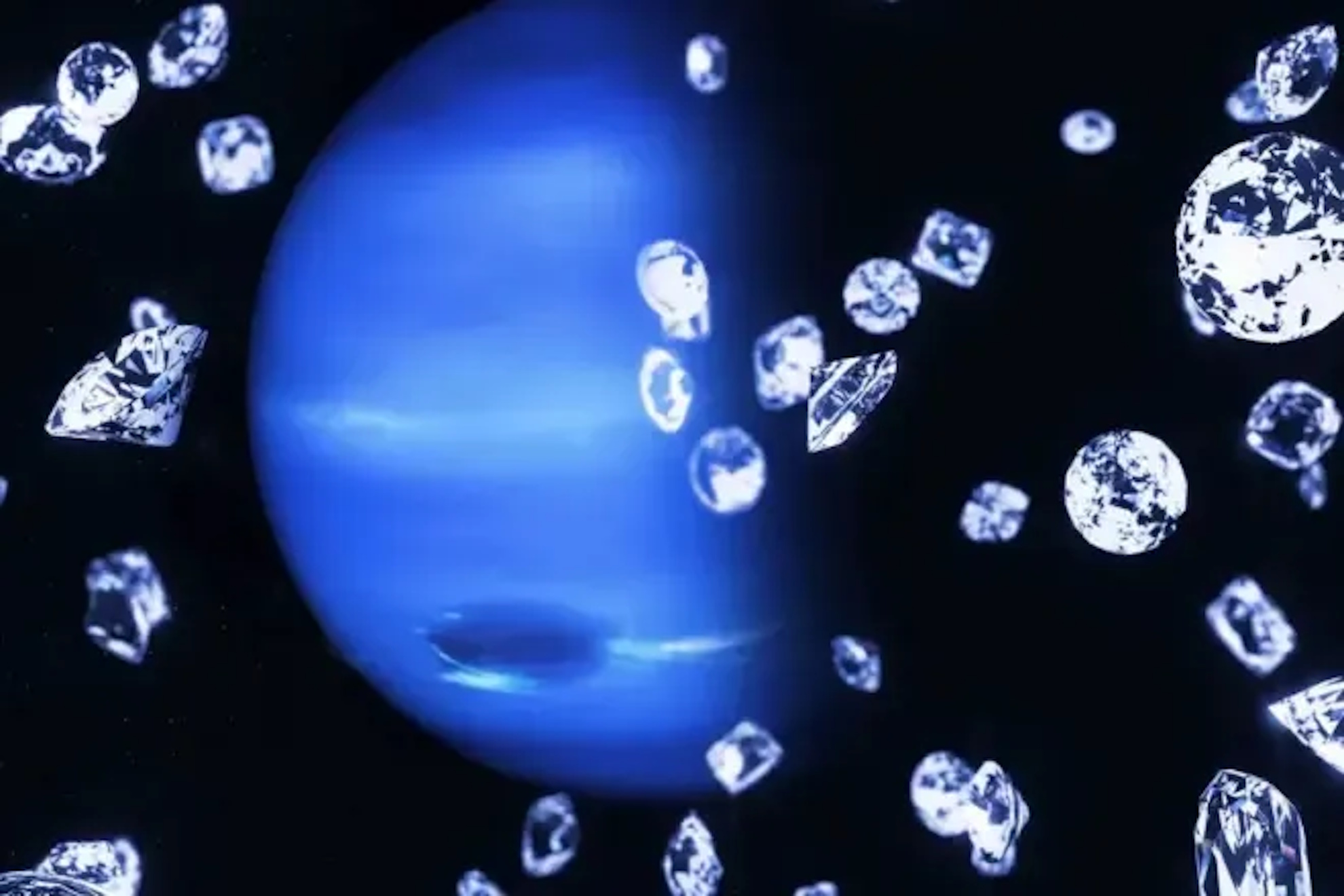
On Neptune, it rains diamonds, and some scientists have managed to make them on Earth using plastic bottles
The method could replace explosives in the industrial production of nanodiamonds
Turning the plastic from a water bottle into diamonds sounds like science fiction, but it is already a reality in the laboratory. A team of physicists from the Helmholtz-Zentrum Dresden-Rossendorf (HZDR) and the University of Rostock , in Germany , has managed to produce ten trillion nanodiamonds with each laser shot at a thin sheet of PET, the material used for bottles.
The big breakthrough is not only creating them, but having managed to recover them intact for the first time. The results are published in the journal Diamond and Related Materials .
The process is simple in appearance. A high-power laser hits the plastic three times per minute and generates a shock wave that compresses it to about 100 gigapascals, nearly a million times atmospheric pressure. In just a few nanoseconds, the carbon rearranges itself and forms diamonds.
The challenge came afterward: the crystals are shot out at more than ten kilometers per second, like a meteorite, and any rigid surface would destroy them. The solution was to place a soft gel behind the plastic that slows the impact and, when dissolved in water, releases the particles intact.
Each diamond measures about three nanometers and contains around 3,000 carbon atoms. “It was a special moment after years of work” , summarizes Ben Heuser, the study’s first author.
From Neptune's diamond rain to quantum sensors
The research originated to simulate the interior of Uranus and Neptune , where it is believed that diamonds rain down from methane subjected to enormous pressures. Now, the method could offer an alternative to current industrial production, which uses explosives and produces crystals with metal residues that have to be cleaned with acid.
Nanodiamonds are already used for polishing and, since the new method makes it possible to dope them with other atoms, they could be adapted for quantum sensors or contrast agents in magnetic resonance imaging. That said, three shots per minute are still not enough for industry, and the team is already thinking about a laser capable of firing ten times per second.