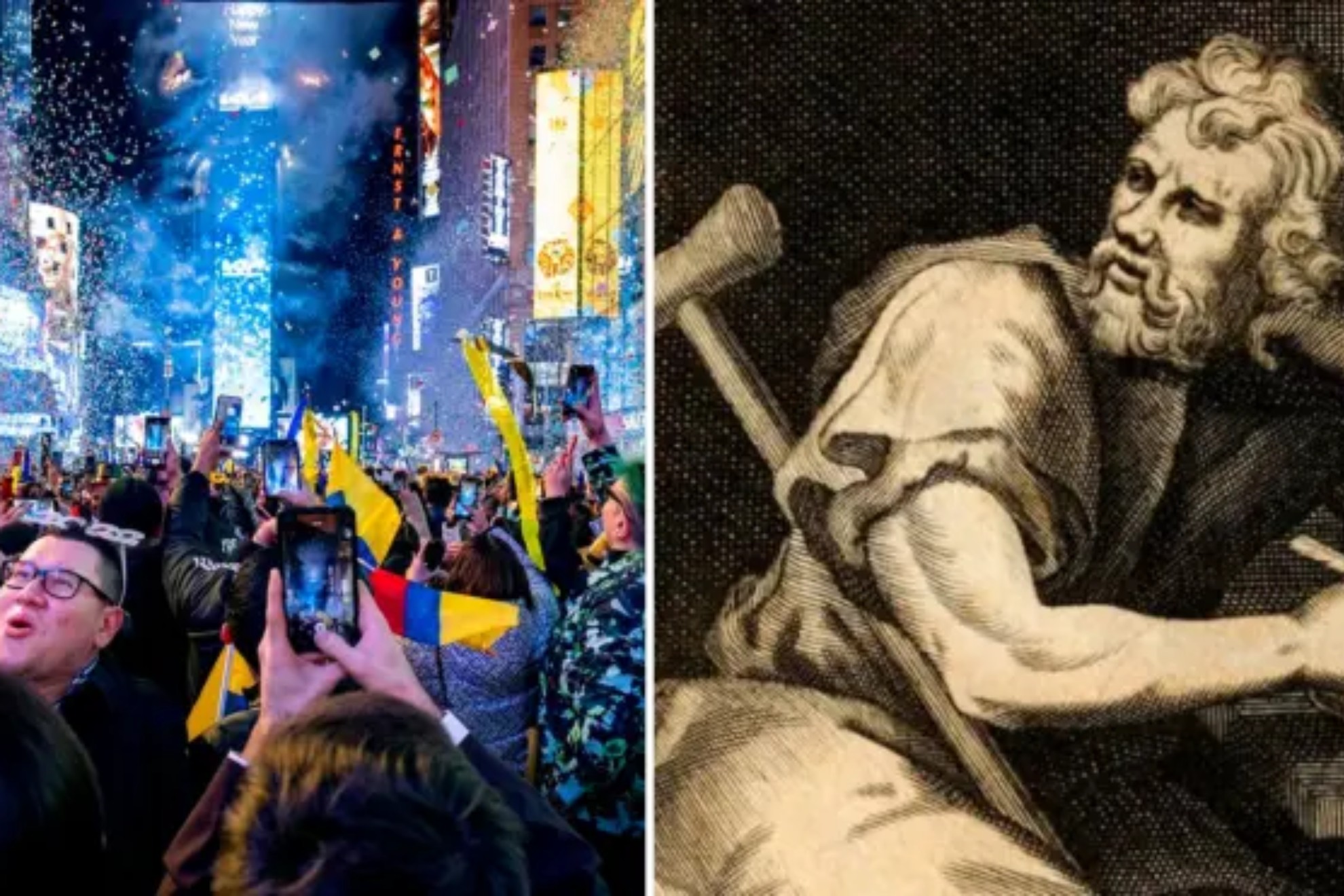
Epictetus, philosopher: “Men are disturbed not by things, but by the opinion they have of them”
The philosopher's phrase about things and our opinions explains one of the central ideas of Stoicism

There are problems that seem to grow the more we turn them over in our minds. A message that doesn’t arrive can become a worry; a criticism, insecurity; and a small mistake, the feeling that everything went wrong. For Epictetus , an ancient Stoic philosopher , there is a fundamental difference between what happens and what we think about what happens.
Men are disturbed not by things, but by the opinion they have of them
It is one of the best-known phrases associated with his thought. The idea appears in the Enchiridion or Manual , a compilation of Epictetus's teachings made by his disciple Flavius Arrian , and summarizes one of the foundations of his philosophy.
What does this phrase by Epictetus mean?
The phrase by Epictetus does not mean that problems are imaginary or that a person can avoid feeling pain simply by changing their thoughts. Epictetus proposes something more concrete: distinguishing the fact from the interpretation we make of it.
For example, someone taking a long time to reply to a message is a fact. Thinking “they no longer care about me” is an interpretation. That a boss makes a criticism is real; immediately concluding “I am a failure” is an evaluation that we add.
For stoicism , recognizing that difference makes it possible to regain a certain control over our reactions. The question can change from “why is this happening to me?” to “what am I thinking about what happened to me?”. Some questions can help put this idea into practice:
Do I have evidence to reach that conclusion?
Is there another way to interpret the situation?
“The teaching of Epictetus does not consist in ignoring emotions, but in preventing an automatic interpretation from completely determining our response.”
Epictetus was born around the year 50 AD in Hierapolis , a territory that currently corresponds to Turkey. He initially lived as a slave and later obtained his freedom. He was a disciple of the Stoic philosopher Musonius Rufus and ended up becoming one of the most important representatives of Roman Stoicism.
Unlike other philosophers, Epictetus left no writings of his own. His teachings were compiled by Flavius Arrian in the Discourses and the Enchiridion , works that made it possible to preserve much of his thought.
His philosophy revolved around a simple yet demanding question: what is really under our control? For Epictetus , our opinions, decisions, and responses depend largely on us, while fame, wealth, the body, or the actions of other people lie beyond our control.
That is why his Epictetus quote remains relevant centuries later. When something disturbs us, pausing to separate the fact from the story our mind has built around it can be a first step toward reacting with greater clarity.