Researchers believe they have found Amelia Earhart's lost plane after nearly 90 years of searching
An expedition backed by Purdue University is investigating a mysterious underwater shape near a remote Pacific island
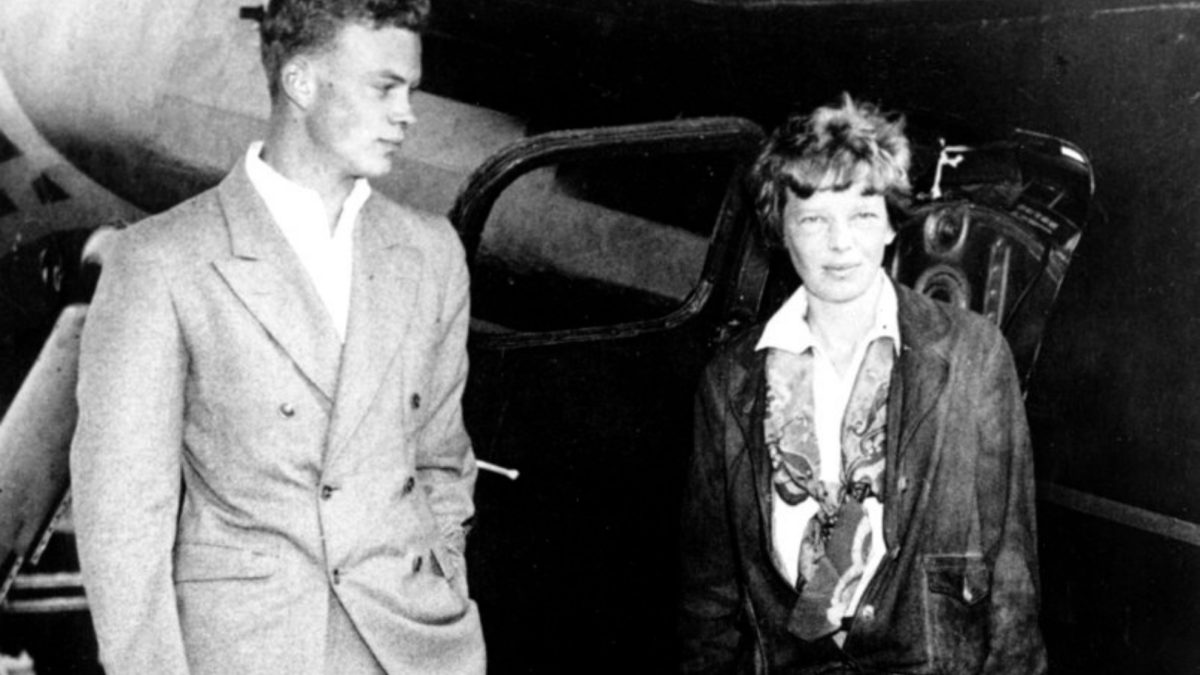
Nearly 90 years after Amelia Earhart disappeared during her attempt to fly around the world, researchers are investigating a new lead that could finally bring one of aviation history’s most enduring mysteries closer to a resolution.
A 17-member team supported by Purdue University and the Archaeological Legacy Institute (ALI) has reached Nikumaroro, a remote atoll in the Pacific Ocean, to examine a submerged object that could be part of Earhart’s missing Lockheed Electra 10E aircraft.
The discovery is not yet confirmed as the wreckage, but researchers believe the unusual shape could provide an important breakthrough in the search for the aviator and her navigator, Fred Noonan , who vanished on July 2, 1937.
The team arrived at the island on October 12 after travelling approximately 830 nautical miles from Tarawa, Kiribati. Expedition members began establishing their operations on shore the following day, preparing to investigate the object using specialist equipment.
The mission centres on what researchers call the “Taraia Object,” a shape identified in satellite imagery in 2020. According to the expedition organisers, the feature appears in historical aerial photographs dating back to 1938, raising the possibility that it has remained in the island’s lagoon since shortly after Earhart’s disappearance.
Rick Pettigrew , executive director of ALI and leader of the expedition, expressed hope that the investigation could settle the question surrounding the aviator’s final journey.
“It is incredibly rewarding to be this close to completing our inspection of the Taraia Object and potentially solving, at long last, the outstanding mystery of the disappearance of Amelia Earhart and Fred Noonan more than 89 years ago,” Pettigrew said.
However, researchers still need physical evidence before they can identify the object as an aircraft.
Why researchers are focusing on Nikumaroro
Earhart and Noonan were attempting to complete a pioneering flight around the world when they disappeared while travelling from Lae, in Papua New Guinea, towards Howland Island. The tiny island was their intended destination, but the aircraft never arrived.
Earhart had communicated with the U.S. Coast Guard cutter Itasca, which was waiting near Howland Island to assist with the flight.
Radio transmissions indicated that the plane was experiencing difficulties locating its destination, and Earhart reported having limited fuel. Contact was subsequently lost, prompting a major search by American forces.
Although the official search failed to locate the aircraft, investigators have spent decades exploring alternative explanations for what happened.
One prominent theory suggests that Earhart and Noonan failed to find Howland Island and instead reached Nikumaroro, which lies hundreds of miles away.
Supporters believe the pair may have landed on the island or its surrounding reef, survived temporarily as castaways and eventually died there.
The theory has attracted attention because of evidence previously discovered on Nikumaroro. Human bones were found there in 1940, and later analysis of measurements taken from the remains suggested that they could have belonged to a woman with physical characteristics similar to Earhart.
Researchers have also pointed to objects associated with the 1930s, including a woman's shoe and a container believed to have held freckle cream.
None of those discoveries conclusively establishes that Earhart and Noonan reached the island. Nevertheless, proponents argue that the combination of historical records, radio evidence and physical artefacts makes Nikumaroro worth investigating again.
The latest expedition is concentrating on the lagoon rather than relying exclusively on evidence found on land. The team plans to use a floating hydraulic dredge to remove underwater sediment around the Taraia Object and expose more of its structure.
Investigators will look for features that could be consistent with the Lockheed Electra, including aluminium aircraft skin and distinctive rivet patterns. Establishing that the material and construction match the missing plane would provide far stronger evidence than satellite images alone.
The operation has a limited working window of approximately five days. If the team finds convincing evidence that the object is Earhart’s aircraft, researchers intend to map the site before considering a more extensive recovery effort in 2027.
Purdue is also negotiating with Kiribati authorities over the possibility of bringing any recovered wreckage to the United States.
The remote location presents additional challenges. Nikumaroro is uninhabited and known for its large coconut crabs, powerful crustaceans that can grow to substantial sizes and scavenge animal remains.
The expedition’s members are sleeping aboard their vessel rather than staying on the island overnight.
The potential discovery also has a special connection to Purdue University. Earhart worked at the institution as a career counsellor for women and advised its Department of Aeronautics from 1935. She was already internationally recognised for her achievements, including becoming the first woman to fly solo nonstop across the Atlantic in 1932.
For now, the Taraia Object remains an intriguing possibility rather than a confirmed discovery.
The latest search could deliver the physical evidence investigators have sought for generations, but only a detailed examination can establish whether the shape beneath Nikumaroro’s waters is the missing Electra.
Until then, Earhart’s final flight remains unresolved, and the world must wait to learn whether this latest expedition can finally provide an answer.